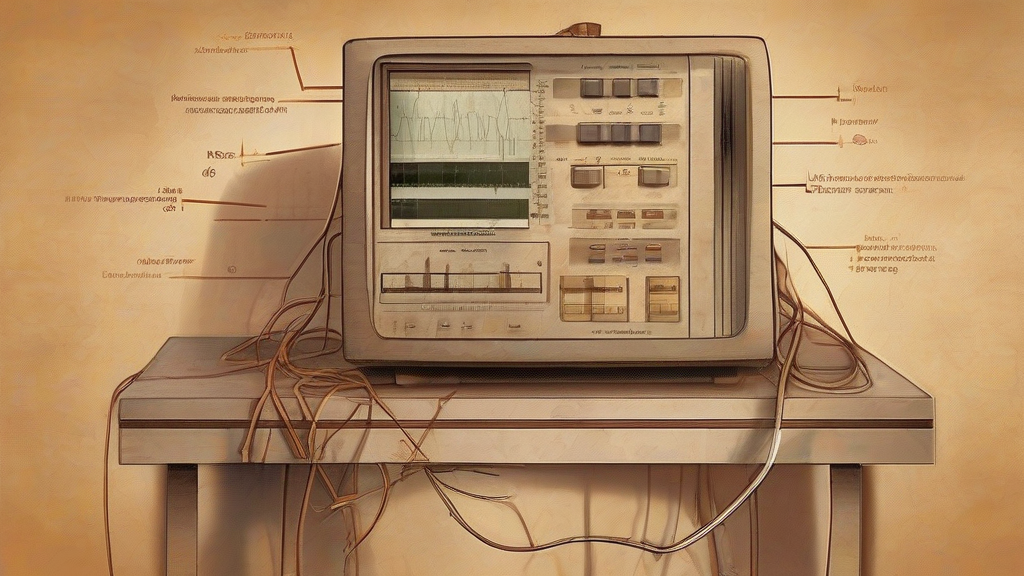
What does electromyograph mean?
An electromyograph is a scientific and medical instrument that measures the tiny electrical impulses generated when muscles contract. Because every muscle fibre fires electrical signals as it activates, placing sensors on — or needles into — the skin over a muscle allows the device to translate that activity into a visible trace or digital record. Physicians rely on electromyographs to help diagnose nerve and muscle disorders such as neuropathy, muscular dystrophy, and motor neurone disease, while researchers and sports scientists use them to study muscle function, fatigue, and coordination. The instrument is closely associated with the related terms electromyography (the technique) and electromyographic (the adjective). Though firmly technical in register, the word appears increasingly in discussions of prosthetics, biofeedback, and human–machine interfaces, where muscle signals are harnessed to control external devices. Its Greek-derived components literally combine 'electric', 'muscle', and 'write'.
nounAn instrument used to detect and record the electrical activity produced by skeletal muscles.
- An instrument that detects and records the electrical activity of muscles.
"The neurologist attached electrodes to the patient's forearm and fed the readings from the electromyograph into a computer for analysis."
"The physical therapist used an electromyograph to monitor which muscles the stroke patient was reactivating during therapy."
"Researchers connected the athlete's leg to an electromyograph to measure muscle fatigue during the sprint trial."
Standard English plural, formed by adding -s. Used when referring to multiple instruments or devices.
"The laboratory was equipped with two modern electromyographs for gait-analysis research."
Every time you move a finger, your muscles broadcast tiny electrical signals — and the electromyograph is the machine that eavesdrops on them.
Reviewed by Deb Chak, Editor. AI-assisted content curated by RJS Tech Solutions LLP.
Etymology of electromyograph
The word electromyograph is formed from three combining elements: the Greek-derived electro- (from ēlektron, meaning amber and later associated with electricity), myo- (from the Greek mys, meaning muscle), and -graph (from graphein, to write or record). It belongs to a family of scientific instrument names built on -graph, alongside electrocardiograph and electroencephalograph, all coined in the late 19th and early 20th centuries as electrophysiology matured as a field.
Related word forms
How electromyograph is actually used
A technical, clinical term used mainly in medicine, physiology, sports science, and biofeedback research. In everyday speech, clinicians more often refer to the procedure or recording (electromyography, or EMG) than to the instrument itself. The abbreviation EMG is widely used in professional contexts but usually denotes the test or tracing rather than the machine.
Easily confused with electromyograph
An electromyograph records electrical activity of muscles, whereas an electroencephalograph records electrical activity of the brain.