
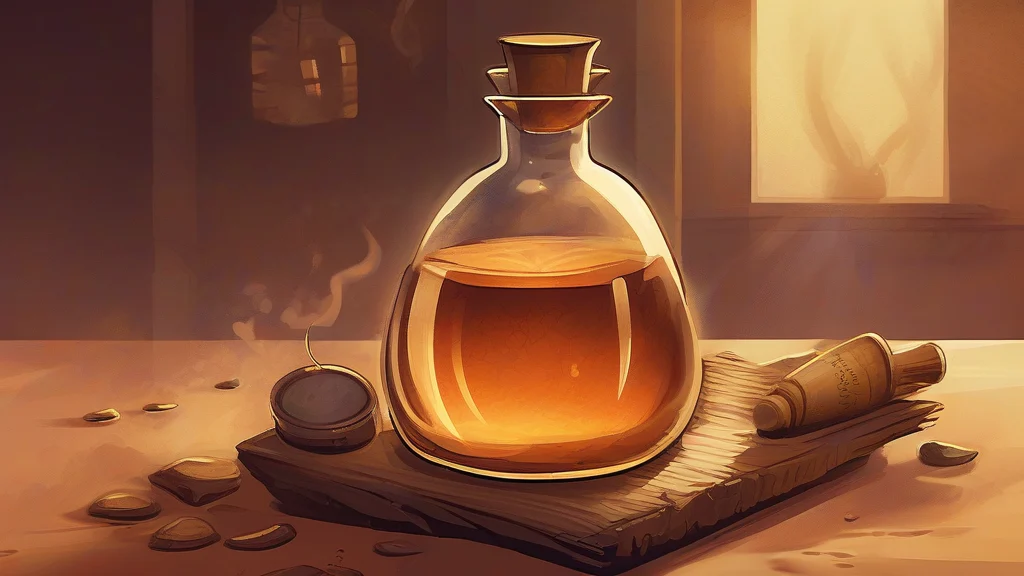
What does elixir mean?
An elixir is traditionally understood as a miraculous potion — one capable of curing disease, extending life indefinitely, or even transforming base metals into gold. The word originates from the practices of medieval alchemy and Arabic pharmacology, where it named both the philosopher's stone's supposed liquid form and potent medicinal preparations. In modern English, elixir has two principal uses: figuratively, it describes anything thought to restore vitality, happiness, or excellence (as in "the elixir of youth" or "music was her elixir"); technically, in pharmacy, it denotes a sweetened, alcohol-based liquid vehicle for administering medicines. Because of its alchemical heritage, the word carries strong connotations of mystery, magic, and transformation, lending any sentence it appears in a slightly elevated or romantic tone. Whether describing a legendary life-giving draught, a bottle on a pharmacist's shelf, or a metaphorical source of renewal, elixir remains a vivid word for anything believed to possess extraordinary curative or perfecting power.
nounA magical or medicinal potion believed to cure all ills, prolong life indefinitely, or even transmute base metals into gold; more broadly, a substance or thing held to have the power to restore vitality or transform something for the better.
- A magical or alchemical preparation believed to cure all diseases or confer immortality.
- A medicinal substance, especially a sweetened aromatic solution containing alcohol, used as a vehicle for drugs.
- (Figurative) Something regarded as having the power to transform, revitalize, or perfect whatever it touches.
"The alchemists of medieval Europe searched tirelessly for an elixir that would grant immortality."
"Legend claimed the sorcerer guarded an elixir capable of curing any illness."
"The pharmacist measured out a dose of cough elixir from the amber bottle."
"For her, music was the elixir that made every hardship bearable."
Standard pluralization by adding -s; used both for multiple magical potions and for multiple pharmaceutical preparations.
"The apothecary stocked dozens of herbal elixirs on his cluttered shelves."
For centuries alchemists burned through fortunes chasing the elixir of life — and along the way accidentally invented distillation, gunpowder advances, and modern chemistry.
Reviewed by Deb Chak, Editor. AI-assisted content curated by RJS Tech Solutions LLP.
Etymology of elixir
The word elixir entered English in the Middle Ages via Medieval Latin and Old French, ultimately deriving from the Arabic al-iksīr, meaning "the philosopher's stone" or a powder used in transmutation. Arabic scholars had themselves likely adapted the term from earlier Greek exērion, referring to a healing powder or desiccative substance. From its original association with alchemy and the quest to turn base metals into gold, the word broadened to cover life-prolonging potions and, later, legitimate pharmaceutical preparations.
How elixir is actually used
In everyday modern usage, "elixir" often appears in figurative or slightly poetic contexts to describe anything with transformative or revitalizing power. In pharmacy it retains a precise technical meaning. The word carries a faintly mystical or old-fashioned connotation in most registers.
Easily confused with elixir
"Elixir" is the general term for a magical or medicinal potion, while "elixir vitae" specifically denotes the legendary potion of life said to grant immortality.
A tonic is a real (usually non-magical) restorative drink or medicine, whereas elixir typically carries connotations of magic, alchemy, or exaggerated healing power.