
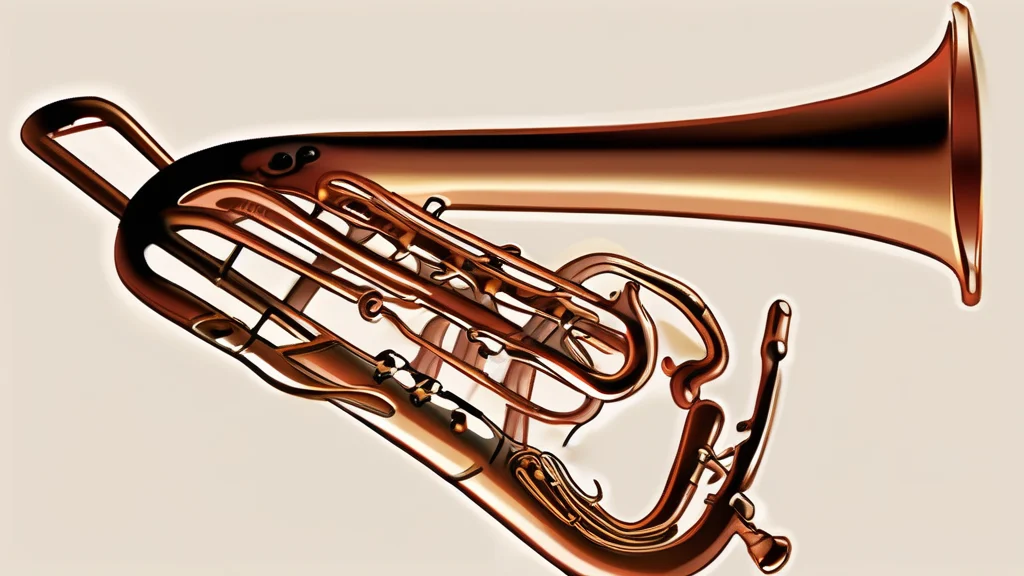
What does embouchure mean?
Embouchure refers to the precise way in which a musician positions and uses the lips, jaw, tongue, and facial muscles against the mouthpiece of a wind instrument — such as a trumpet, flute, clarinet, or oboe — in order to produce and control sound. It is one of the most fundamental elements of wind playing: a well-formed embouchure allows a performer to achieve good tone, accurate pitch, dynamic range, and stamina, while a poor one can make even simple passages difficult. Players often spend years refining it under a teacher's guidance, and injuries or fatigue affecting the embouchure are taken seriously among professionals. The word comes from French, where it literally means 'mouth', and it entered English in the eighteenth century alongside the growth of formal instrumental training. Beyond music, embouchure has a minor technical sense describing the mouth or outlet of a river where it discharges into the sea or another waterway. It remains a specialised, somewhat formal term, encountered chiefly in conservatories, method books, and writing about brass and woodwind performance.
The way in which a player applies the mouth to the mouthpiece of a wind instrument, using the lips, jaw, and facial muscles to shape and control the sound.
"Her teacher adjusted the angle of her embouchure until the tone opened up beautifully."
Almost always used in musical contexts; considered a technical term among brass and woodwind players.
The mouth or outlet of a river, where it flows into another body of water.
"The city grew up near the embouchure of the great river."
Rare and chiefly found in geographical or technical writing; the more common English word for this sense is simply 'mouth'.
The plural is regular but uncommon, since the word typically refers to an individual player's mouth formation and is usually discussed in the singular.
"Brass teachers must adapt their methods to suit the very different embouchures of individual students."
Every trumpet fanfare and flute melody you've ever heard began with a tiny, invisible sculpture made of lips and muscle — the embouchure.
Reviewed by Deb Chak, Editor. AI-assisted content curated by RJS Tech Solutions LLP.
Etymology of embouchure
Embouchure comes from French, derived from the verb 'emboucher' meaning 'to put in or apply to the mouth', which itself comes from 'bouche' (mouth), ultimately from Latin 'bucca' meaning cheek. English adopted the word in the eighteenth century as instrumental teaching became systematised, borrowing it directly from French usage. It shares its Latin root with words such as 'buccal' (relating to the cheek) and is related to 'debouche' and 'debouch', which describe something emerging from a mouth-like opening.
How embouchure is actually used
A technical term used mainly by musicians, music teachers, and brass or woodwind specialists; it is formal rather than colloquial. In everyday speech it appears almost exclusively in musical contexts. The geographical sense (river mouth) is rare and largely confined to technical writing.
Easily confused with embouchure
Despite a superficial sound resemblance in some accents, a debutante is a young woman making her formal entrance into society, whereas embouchure refers to mouth positioning on a wind instrument.
A brochure is a small booklet or pamphlet, while embouchure is a musician's mouth formation or a river's mouth.