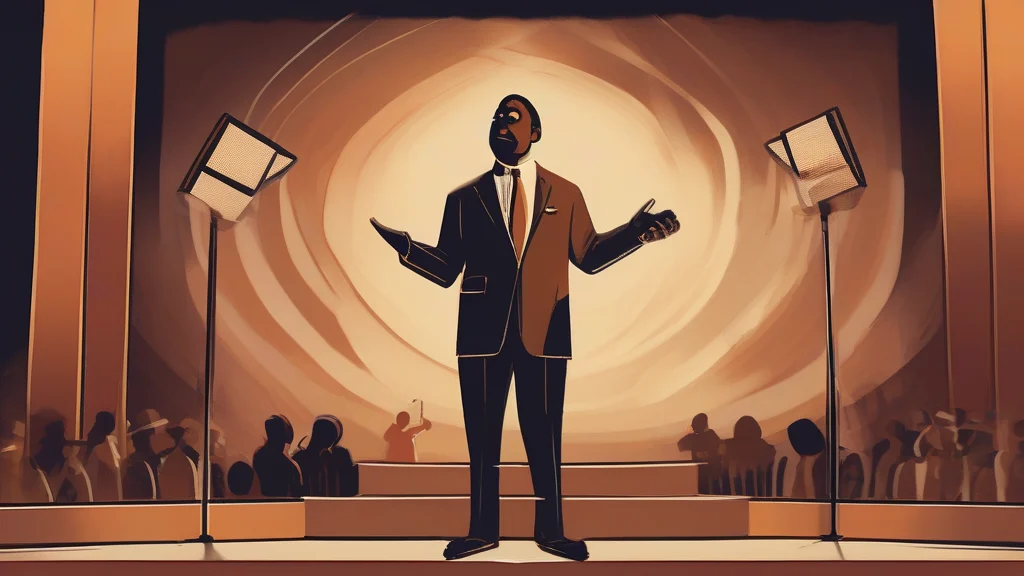
What does emceed mean?
"Emceed" is the past tense and past participle of "emcee," a verb meaning to serve as master of ceremonies at an event. An emcee introduces speakers or performers, keeps the program moving between acts, fills gaps with banter or announcements, and generally sets the tone for the occasion. The word appears most often in connection with weddings, award shows, galas, conferences, and comedy nights, and it implies a degree of showmanship: an emcee entertains as well as organizes. The term originated as a phonetic spelling of the initials "M.C." (master of ceremonies), illustrating how spoken abbreviations can harden into ordinary words. It is informal to neutral in tone, common in American English and widely understood in British English, where the French loanword "compère" competes as an alternative. Typical constructions include "emceed the ceremony," "emceed the event," and passive forms such as "a gala emceed by a local celebrity." The related noun "emcee" denotes the person performing this role.
verb (past tense and past participle of 'emcee')Past tense and past participle of the verb 'emcee': to act as master of ceremonies at an event, introducing performers or speakers, keeping proceedings moving, and entertaining or directing the audience.
- To serve as master of ceremonies at an event, introducing speakers or performers and keeping the program running.
- (Less common, extended use) To host or preside over any proceeding in an animated, entertaining way.
"She emceed the charity gala with such warmth that even the silent auction felt lively."
"He emceed his sister's wedding reception, blending heartfelt toasts with well-timed jokes."
"The late-night comedian emceed the awards ceremony for the third year running."
'Emcee' is what linguists call a phonetic spelling — someone literally wrote out how the letters M-C sound, and it stuck so well it became a real word.
Reviewed by Deb Chak, Editor. AI-assisted content curated by RJS Tech Solutions LLP.
Etymology of emceed
"Emceed" derives from "emcee," a phonetic rendering of the pronunciation of the initials "M.C.", short for "master of ceremonies." The phrase "master of ceremonies" came into English from Latin via French usage, originally denoting an official responsible for ceremonial protocol at royal courts. The respelled form "emcee" arose in American English in the early 20th century and soon developed verb use; its derivative forms include "emcees" and "emceeing." A close cousin in function, if not in origin, is the French-borrowed "compère." Because "emcee" is an initialism turned word rather than a classical root formation, it has no true cognates beyond the underlying phrase itself.
Related word forms
How emceed is actually used
Informal to neutral in register; common in entertainment, corporate-event, and wedding contexts. In British English the French-derived spelling 'compère' is often preferred for the noun, though 'emcee' is widely understood. The word carries a connotation of showmanship and audience engagement rather than mere administrative hosting.
Easily confused with emceed
'MC' is the noun abbreviation for master of ceremonies (or, in hip-hop, a rapper), while 'emceed' is the verb form describing the act of hosting an event.