
What does emeraude mean?
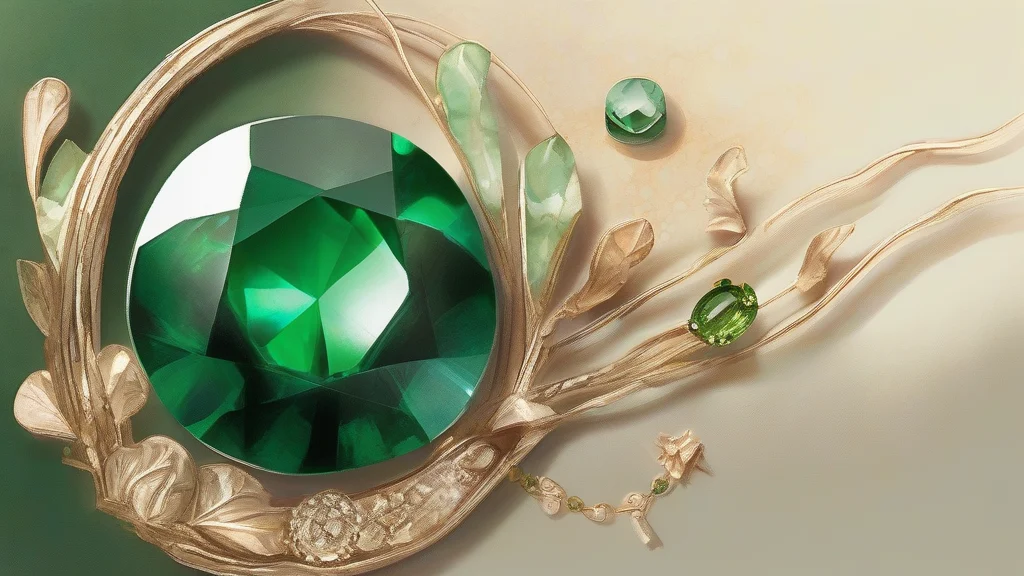
Emeraude is a rare English noun denoting a green precious stone, especially the richly coloured green beryl commonly called emerald. In older usage, it can also function as an alternative form of emerald, so its identity overlaps with both the gemstone and the familiar word for it. Modern speakers overwhelmingly use emerald; emeraude sounds more formal, old-fashioned, or decorative and occurs chiefly in literary prose, catalogues, jewellery descriptions, and similarly elevated contexts. In sentences, it normally stands for a physical gem rather than merely the colour, although it can also be used attributively in descriptive compounds such as emeraude-coloured. Because it came into English through French, emeraude retains an unusual spelling that can sound marked to native speakers. Its value lies in illustrating how vocabulary preserves the history of international trade and gemstone description: a once-current borrowed term survives, while the everyday synonym has taken over. Used deliberately, it can add a period flavour, though the standard word remains clearer and more natural in contemporary English.
nounA green precious stone, especially the richly coloured green beryl commonly called emerald. In older and literary usage, it can also serve as an alternative form of the word emerald.
- A green gemstone, especially the green beryl known as emerald.
- An archaic or literary alternative form of the word emerald.
"The crown was displayed with a large emeraude set at its centre."
"The jeweler displayed a row of emeraudes from the collection."
"The cabinetmaker chose an emeraude-coloured veneer for the desk."
This plural is rare in English; emeralds is the usual modern form.
"The jeweler displayed a row of emeraudes from the collection."
The ancient Greek root behind emeraude also gave English smaragdite, a mineral whose green colour earned it an emerald's name.
Reviewed by Deb Chak, Editor. AI-assisted content curated by RJS Tech Solutions LLP.
Where does emeraude come from?
Emeraude entered English from French émeraude, which developed from Old French esmeraud. These forms drew on Medieval Latin smaragdus, ultimately from Ancient Greek smaragdos, a name associated with emerald or a similar green precious stone. The same root is reflected in cognates such as smaragdite and smaragdine, while emerald developed through the same Latin and French channels.
How emeraude is actually used
This is a marked and uncommon choice in contemporary English, suited chiefly to literary, antiquarian, or decorative contexts.
Easily confused with emeraude
Emeraude is a rare, French-derived English form naming the green gemstone, whereas emerald is the standard modern word for both the gemstone and its characteristic colour.