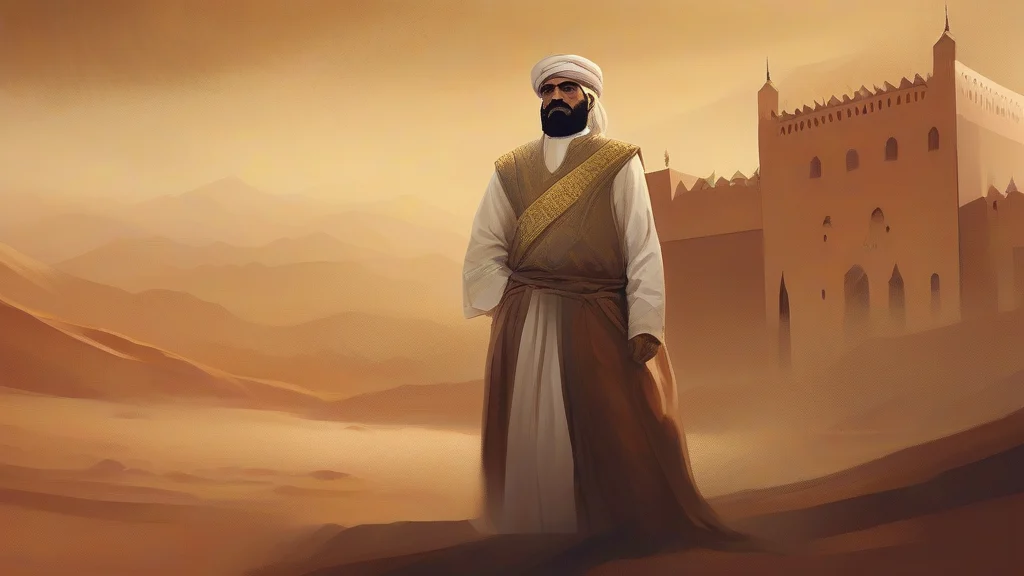
What does emir mean?
An emir is a ruler, prince, or commander in Muslim countries, most prominently associated today with the sovereign heads of state of Gulf nations such as Kuwait, Qatar, and formerly several emirates of the UAE. The title derives from the Arabic word amir, meaning 'commander', and has been borne historically by provincial governors, military leaders, and princes throughout the Islamic world. In contemporary usage the word appears chiefly in political and journalistic contexts, referring either to reigning monarchs — as in 'the Emir of Qatar' — or to historical figures in discussions of Islamic governance. It is a formal term with no informal register, and it capitalises when used as a title. The related noun 'emirate' denotes both the office or domain of an emir and the state he rules. The word entered English through contact with the Arabic-speaking world during the medieval and early modern periods.
nounA ruler, chief, or commander in certain Muslim countries, especially one of independent or high rank; historically, the title was used for military commanders and princes in the Islamic world.
- A ruler or monarch of an Islamic state, especially one of the Gulf states such as Kuwait or Qatar.
- Historically, a military commander or governor under a caliph or sovereign in the Islamic world.
"The emir of Kuwait addressed the nation on the anniversary of its independence."
"The new emir pledged to modernise the country while preserving its traditions."
"Under the caliphate, each province was administered by an emir appointed by the ruler."
Standard plural; simply add -s. Used when referring to multiple rulers collectively.
"The conference brought together emirs and sheikhs from across the region."
The English word 'admiral' is literally a distant cousin of 'emir' — both trace back to the same Arabic word for commander.
Reviewed by Deb Chak, Editor. AI-assisted content curated by RJS Tech Solutions LLP.
Etymology of emir
Emir comes from the Arabic amir, meaning 'commander' or 'prince', from the verb amara, 'to command'. It passed into European languages via medieval contacts with the Islamic world; French émir and English forms such as 'ameer' and 'amir' reflect varying transliteration conventions before 'emir' became standard. A notable cognate is 'admiral', which descends from the same Arabic root via the medieval Latin phrase amiralis, originally meaning 'commander (of the sea)'.
Related word forms
How emir is actually used
The word carries a formal register and is most often encountered in news coverage of Middle Eastern politics. Capitalised when used as part of an official title before a name (e.g., Emir Tamim). Variant spellings 'amir' and 'ameer' exist, reflecting different transliterations from Arabic.
Easily confused with emir
An admiral is a senior naval officer, while an emir is an Islamic ruler or commander — though both words ultimately descend from the same Arabic root 'amir', meaning commander.