What does emo mean?
Emo is both a genre of rock music and the youth subculture that grew up around it. Musically, emo descends from hardcore punk: bands in the Washington, D.C. scene of the mid-1980s played an intensely personal, confessional variant of hardcore that critics dubbed "emocore," short for emotional hardcore. Over the following decades the sound softened and spread, producing melodic 1990s underground scenes and a mainstream wave in the 2000s marked by expressive vocals and introspective lyrics. Alongside the music, emo came to denote a recognizable aesthetic — dark clothes, straightened black hair, eyeliner — and, informally, a young person who wears that look. Because the word is sometimes used teasingly to suggest oversensitivity or self-pity, tone matters when applying it to people; as a musical label, however, it is entirely standard. Few genre names have traveled so far from their punk origins into everyday vocabulary.
A genre of rock music characterized by expressive, confessional lyrics, originating in the mid-1980s hardcore punk scene.
"Sunny Day Real Estate helped define second-wave emo in the early nineties."
Often modified by era or scene, as in "Midwest emo" or "screamo's emo roots."
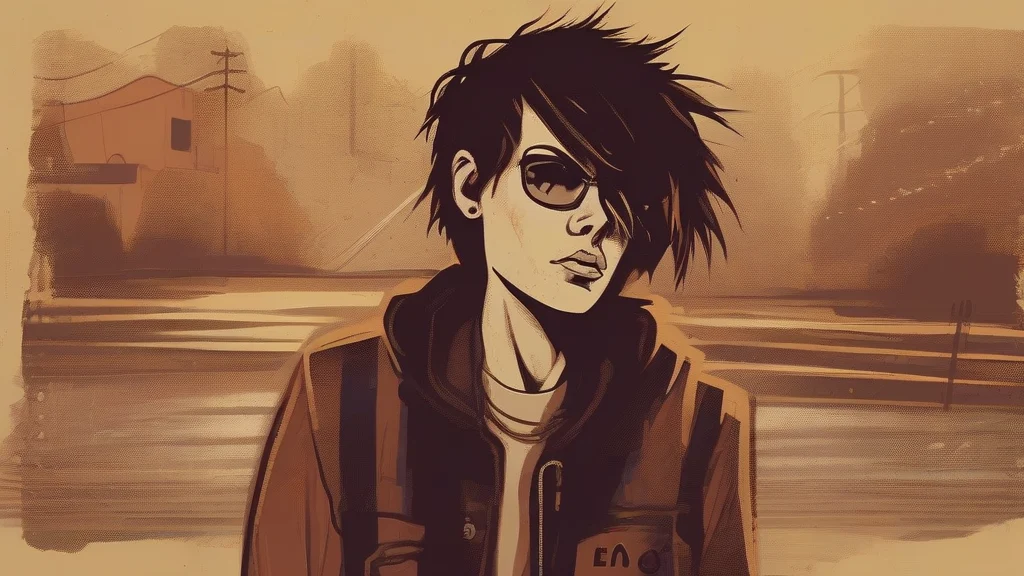
The fashion and subculture associated with emo music, or informally, a person who adopts that look or manner.
"He was the only emo at a school full of skaters and jocks."
Relating to emo music or its associated style; also, informally, overly sentimental or moody.
"She wore an oversized emo band tee with ripped skinny jeans."
The informal sense ("that's a bit emo") can be dismissive; use with awareness of connotation.
Used informally to refer to multiple people who identify with the emo subculture.
"The mall crowd on a Saturday afternoon was mostly emos and skaters."
Emo began as a niche offshoot of 1980s hardcore punk called 'emocore' — a label many of its own musicians spent decades trying to escape.
Reviewed by Deb Chak, Editor. AI-assisted content curated by RJS Tech Solutions LLP.
Etymology of emo
Emo is a clipping of "emocore," itself a blend of "emotional hardcore," coined for the emotionally confessional hardcore punk that emerged in Washington, D.C. in the mid-1980s. The underlying root traces back through English "emotion" to Latin "emovere," meaning "to move out or stir up." As the music evolved, the shortened form "emo" became the standard name for both the genre and its associated subculture, spreading internationally with the alternative-rock boom of the 1990s and 2000s.
Related word forms
How emo is actually used
Register is informal to neutral; the word is well established in music journalism but casual in everyday speech. When applied to a person, "emo" can carry a mildly pejorative connotation implying moodiness or self-pity, so care is warranted; as a music-genre label it is standard and unmarked. The term functions both as a noun and, commonly, as an adjective ("an emo band", "emo hair").
Easily confused with emo
"Emote" is a verb meaning to express emotion, especially theatrically, whereas "emo" is a noun or adjective referring to the music genre or associated youth subculture.