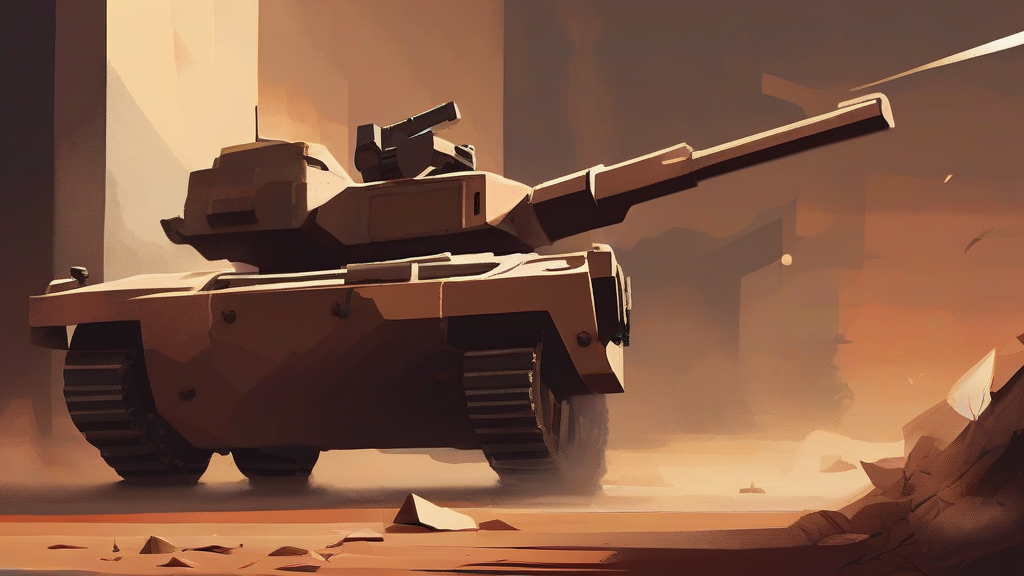
What does emplaced mean?
Emplaced is the past tense and past participle of the verb 'emplace', meaning to place or install something in a fixed position, typically with deliberation and precision. The word is most strongly associated with military usage — artillery pieces are emplaced on ridgelines, mines are emplaced across approaches, and observation posts are emplaced at strategic points — but it also appears in engineering, geology, and other technical fields where something is deliberately set in place. What distinguishes an emplaced object from one that is merely placed is the sense of purposeful installation: the position was chosen for a reason and the object was put there with care. Because of this technical flavor, the word rarely appears in casual speech; writers who reach for it usually want to convey methodical, professional placement rather than everyday handling.
verb (past tense and past participle of 'emplace')Placed, positioned, or installed in a fixed or specified position, especially with care, precision, or deliberate intent. Most commonly used of military equipment such as artillery, mines, or sensors being set into position.
- (of equipment, especially military) placed or installed in a fixed position.
- More generally: carefully positioned or established in a particular place.
"The engineers emplaced the howitzers along the ridge under cover of darkness."
"The battalion emplaced its mortars on the high ground before dawn."
"Sensors were emplaced around the perimeter to detect any movement."
When soldiers say a gun has been 'emplaced,' they mean it's not just sitting there — it's been deliberately, precisely installed to do its job.
Reviewed by Deb Chak, Editor. AI-assisted content curated by RJS Tech Solutions LLP.
Etymology of emplaced
Emplaced derives from the verb 'emplace', formed from the French prefix 'en-' plus the noun 'place', which itself traces back through Old French 'place' to Latin 'platea', meaning broad street or open space, ultimately from Greek 'plateia'. The word entered English in the early 17th century. Its relatives include 'placement', 'replacement', and 'emplacement' (the military term for a prepared gun position), all sharing the same Latin root that also gave English 'plaza' via Spanish and Italian.
Related word forms
How emplaced is actually used
'Emplaced' is chiefly a technical term, most frequent in military contexts (artillery, weapons, mines) but also found in engineering, geology, and scientific writing. It carries a connotation of deliberate, careful positioning rather than casual placement. In everyday conversation it would sound formal or jargonistic; 'placed' is the natural alternative outside specialist use.
Easily confused with emplaced
While 'emplaced' means deliberately put into position, 'displaced' means forced out of one's usual place or position.