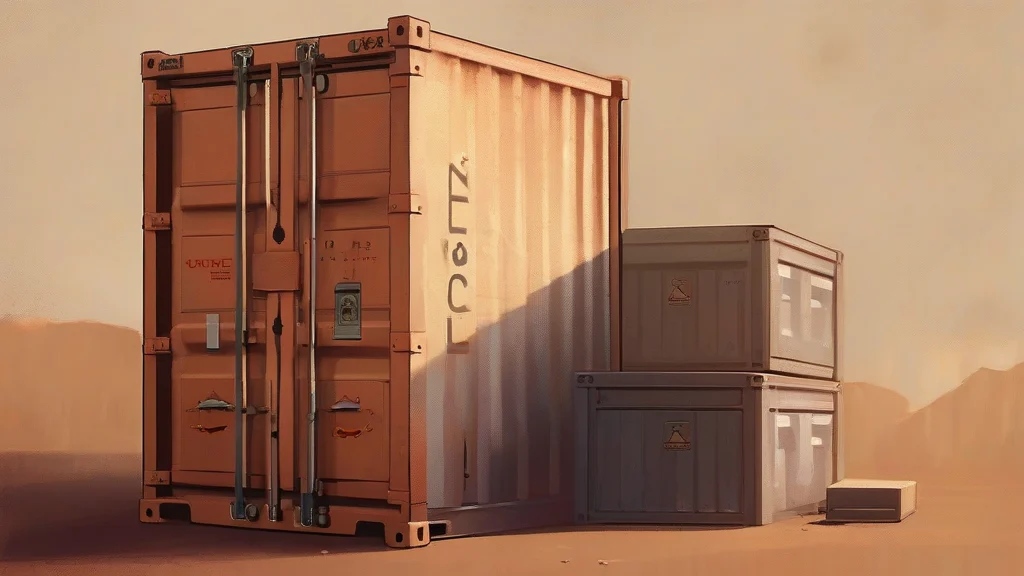
What does encase mean?
To encase something is to surround it completely, sealing it inside a protective or confining covering such as a case, shell, layer of material, or container. The word is most often used with the preposition 'in', as in a fossil encased in rock, documents encased in plastic, or a statue encased in scaffolding during restoration. It carries a connotation of thoroughness and permanence: whatever is encased is not merely covered but fully enclosed, often deliberately, for protection, preservation, display, or concealment. The verb appears frequently in scientific, archaeological, legal, and industrial writing — engineers encase pipes in concrete, conservators encase artefacts in acrylic — but it also works naturally in everyday description. A related noun, 'encasement', denotes the covering itself. Useful and precise, 'encase' is a more vivid alternative to plainer verbs like 'cover' or 'wrap', emphasising total enclosure rather than superficial protection.
verbTo enclose or cover something completely, typically in a case, container, or surrounding material.
- To enclose or cover something fully within a surrounding case or material (e.g. glass, concrete, ice).
"The jeweller encased the diamond in a velvet-lined box."
"The ancient sword was found encased in a thick layer of rust."
"Engineers encased the steel beams in fireproof concrete to protect the structure."
Mummies, museum gems, and even dinosaur fossils all have one thing in common — at some point, someone decided to encase them.
Reviewed by Deb Chak, Editor. AI-assisted content curated by RJS Tech Solutions LLP.
Etymology of encase
'Encase' derives from the prefix 'en-' (from French/Latin, meaning 'to cause to be in') combined with 'case', which comes from Latin 'capsa', meaning a box or container. The verb emerged in English in the late 16th to early 17th century, following the pattern of other 'en-' verbs formed from nouns. Its cognates include 'case' itself, as well as French-derived terms sharing the same Latin root, such as 'capsule'.
Related word forms
How encase is actually used
Typically formal or technical in register; almost always followed by 'in' plus the enclosing material.
Easily confused with encase
'Encase' is the standard spelling meaning to enclose; 'incase' is a rare variant spelling sometimes seen but widely considered nonstandard.