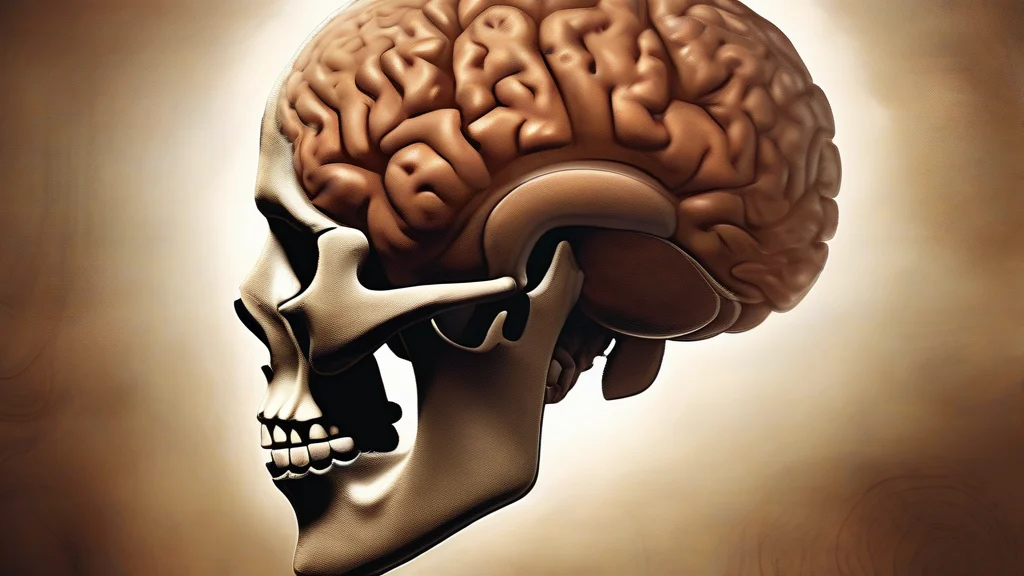
What does encephalon mean?
Encephalon is the anatomical term for the brain — the mass of nervous tissue housed within the skull that serves as the body's control center. Borrowed from Greek roots meaning "within the head," it entered English through Latin and remains in use primarily among anatomists, physicians, zoologists, and historians of science. Where everyday speech simply says "brain," writers may choose "encephalon" to lend precision or formality, particularly when distinguishing the brain as an organ from related structures such as the spinal cord. It also anchors a family of medical terms: encephalitis denotes inflammation of the brain, while encephalography refers to imaging or recording its activity. The word takes the classical plural "encephala" alongside the anglicized "encephalons." Though rarely heard in casual conversation, encephalon offers writers and speakers a precise, dignified alternative whenever the brain must be named with scientific exactness rather than colloquial ease.
nounThe brain of a vertebrate, especially regarded as an anatomical structure; the part of the central nervous system enclosed within the cranium.
- The brain of a vertebrate animal as an anatomical organ, especially when considered formally or technically rather than colloquially.
"In the dissection lab, the students carefully lifted the encephalon from the cranial cavity."
"Damage to the encephalon can affect movement, memory, and personality alike."
"Early anatomists mapped the ventricles of the encephalon long before modern imaging existed."
The classical plural "encephala" is standard in anatomy and scholarly writing; "encephalons" is acceptable but less formal.
"Comparative studies of vertebrate encephala reveal striking differences in cerebral development."
"Encephalon" is just the brain wearing its ancient Greek formalwear — literally 'in-the-head,' from kephalē, the same root that gives us cephalopod.
Reviewed by Deb Chak, Editor. AI-assisted content curated by RJS Tech Solutions LLP.
Etymology of encephalon
Encephalon comes from Ancient Greek enkephalon, formed from en- ("in") plus kephalē ("head"), so it literally means "that which is inside the head." The term passed into New Latin before being adopted into English in the early modern period, where it became established in anatomy and medicine. It shares its head-root with words such as cephalic, hydrocephalus, and cephalopod.
Related word forms
How encephalon is actually used
A technical, Latinate term used chiefly in anatomy, medicine, and older scientific writing; in ordinary speech and most clinical contexts, "brain" is preferred. The anglicized plural "encephalons" exists, but the classical plural "encephala" is common in scholarly texts.
Easily confused with encephalon
Cephalon refers to the head region of arthropods such as crustaceans and trilobites, whereas encephalon refers specifically to the brain itself.