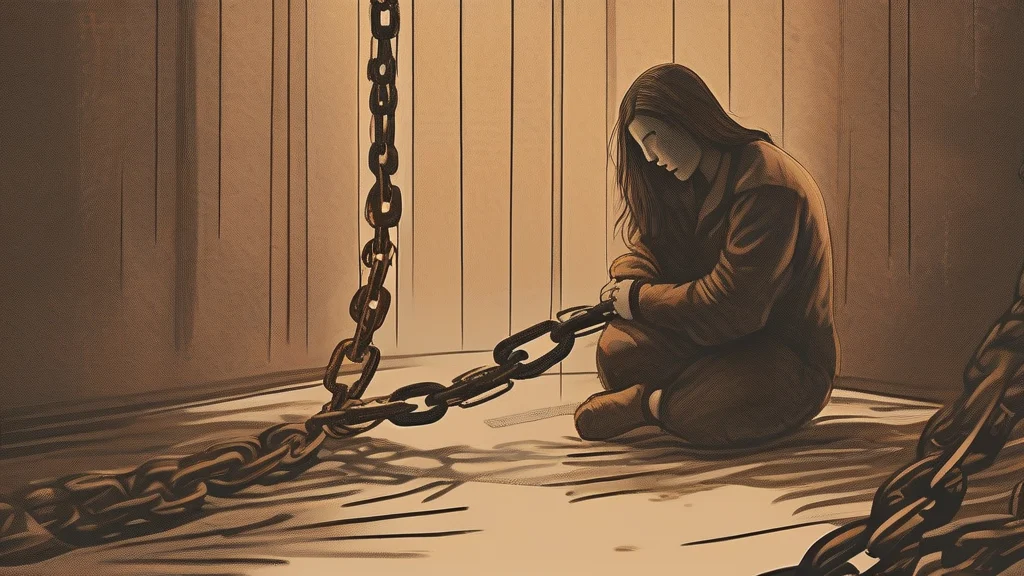
What does enchain mean?
To enchain is to bind with chains, literally or figuratively. In its literal sense the word describes shackling a person or animal so that movement becomes impossible — a usage now found mostly in historical or literary writing. Far more common today is the figurative sense: people are said to be enchained by grief, debt, fear, addiction, or duty, meaning they are held fast by forces they cannot easily break free of. The word is formal and somewhat elevated in register, lending gravity to descriptions of captivity and constraint, which is why it appears frequently in poetry, rhetoric, and serious prose rather than casual conversation. It derives from Old French enchaîner, formed from en- ('to cause to be') plus chaîne ('chain'), ultimately from Latin catena. Closely related words include chain itself and enchant, which shares the same prefix and root lineage but took on an entirely different meaning. Enchain remains useful precisely because it evokes both physical restraint and inner captivity at once, making it a compact, vivid alternative to longer phrases like 'held prisoner by' or 'bound up in.'
verbTo bind with or as if with chains; to restrain or confine someone or something. Figuratively, to hold captive or restrict, as by passion, habit, or obligation.
- To bind physically with chains; to shackle or fetter a person or animal.
- To hold captive or restrict figuratively, as by emotion, duty, habit, or circumstance.
"The prisoner was enchaîned in the dungeon for years — no. The prisoner was enchained in the dungeon, unable to escape his captors."
"The guards enchained the captives before marching them aboard the ship."
"He remained enchained by debts he could never repay."
Enchain and enchant come from the same Latin root — but one binds you in iron while the other binds you with delight.
Reviewed by Deb Chak, Editor. AI-assisted content curated by RJS Tech Solutions LLP.
Etymology of enchain
Enchain comes from Old French enchaîner, formed from the prefix en- ('to put into or onto') and chaîne ('chain'), which traces back through Latin catena, meaning chain or fetter. English adopted the word in the late Middle Ages, and it appears in literary texts from the early modern period onward. Its Latin root also gives us related borrowings such as chain itself, while the parallel formation enchant shows how the same en- prefix combined with other roots to produce very different meanings.
How enchain is actually used
Enchain is formal and literary; everyday English usually prefers 'chain' or 'shackle'. The figurative sense is common in poetry and rhetoric, where it often carries connotations of suffering, obsession, or inescapable obligation.
Easily confused with enchain
Unchain means the opposite of enchain: to release from chains rather than bind with them.