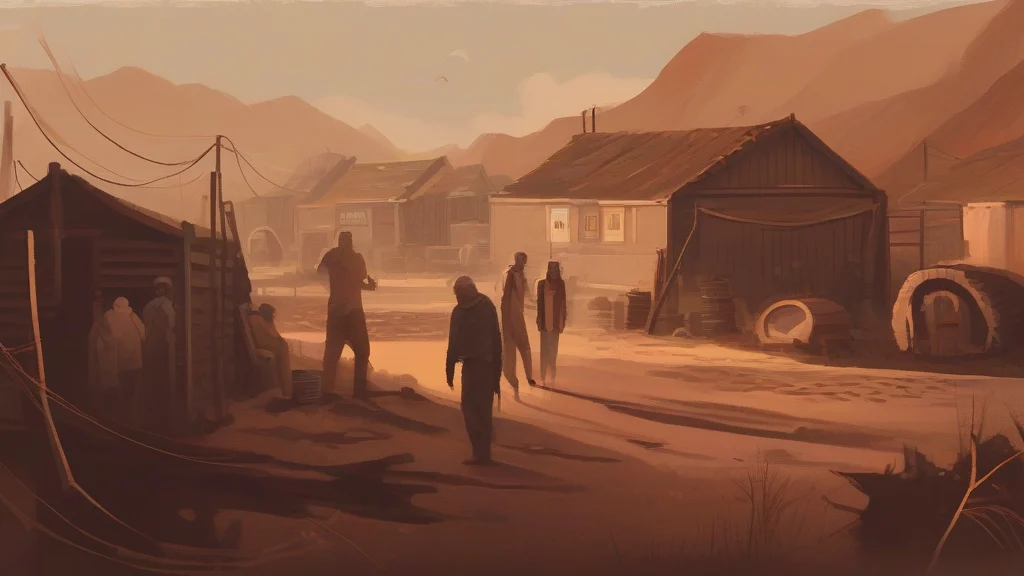
What does enclave mean?
An enclave is a distinct territory that is entirely enclosed within the borders of another, larger territory — a nation within a nation, so to speak. The word is most familiar in geography and politics, describing places such as Lesotho, which sits wholly within South Africa, or Vatican City, surrounded by Rome. Beyond physical land, 'enclave' also describes communities of people who live clustered together within a larger society, often bound by shared ethnicity, language, religion, or culture — as in an ethnic enclave in a major city. The term carries a sense of enclosure and separateness, sometimes suggesting insulation from the surrounding environment, whether protective or isolating. It derives from French, ultimately from Latin roots meaning 'to lock in,' capturing the image of something sealed off. Useful in journalism, history, and social science, 'enclave' precisely names pockets of difference set within larger wholes.
nounA territory, or a distinct group of people, entirely surrounded by and enclosed within the territory or community of another.
- A territory wholly surrounded by the territory of another state or entity.
- A distinct group of people living within a larger, different community, often sharing culture, language, or ethnicity.
"The old town remains a charming enclave of cobblestone streets amid the glass towers of the financial district."
"The Vatican City is an independent enclave within the city of Rome."
"Immigrants settled in a vibrant ethnic enclave where their native tongue was widely spoken."
Standard pluralization; commonly used when discussing multiple distinct enclosed regions or communities.
"The empire's map was fragmented into dozens of enclaves controlled by rival powers."
Lesotho is one of only three countries on Earth that exist completely inside another country — a true national enclave.
Reviewed by Deb Chak, Editor. AI-assisted content curated by RJS Tech Solutions LLP.
Etymology of enclave
The word 'enclave' entered English in the mid-19th century from French, where it meant a piece of land locked within foreign territory. It derives from the Old French verb 'enclaver,' meaning 'to enclose' or 'to lock in,' formed from Latin 'in-' ('in') and 'clavis' ('key'), suggesting something fastened or shut up. Related words from the same Latin root include 'conclave' (literally 'with a key,' referring to the locked room where cardinals gather) and 'clavicle' (the 'little key' bone of the shoulder).
How enclave is actually used
Often used in geopolitical and sociological contexts; can carry neutral or slightly evocative connotations depending on whether it refers to territory or communities. Common in academic and journalistic registers.
Easily confused with enclave
An enclave is a territory surrounded by another state's territory (from inside), while an exclave is a portion of a state geographically separated from its main part.