What does encomienda mean?
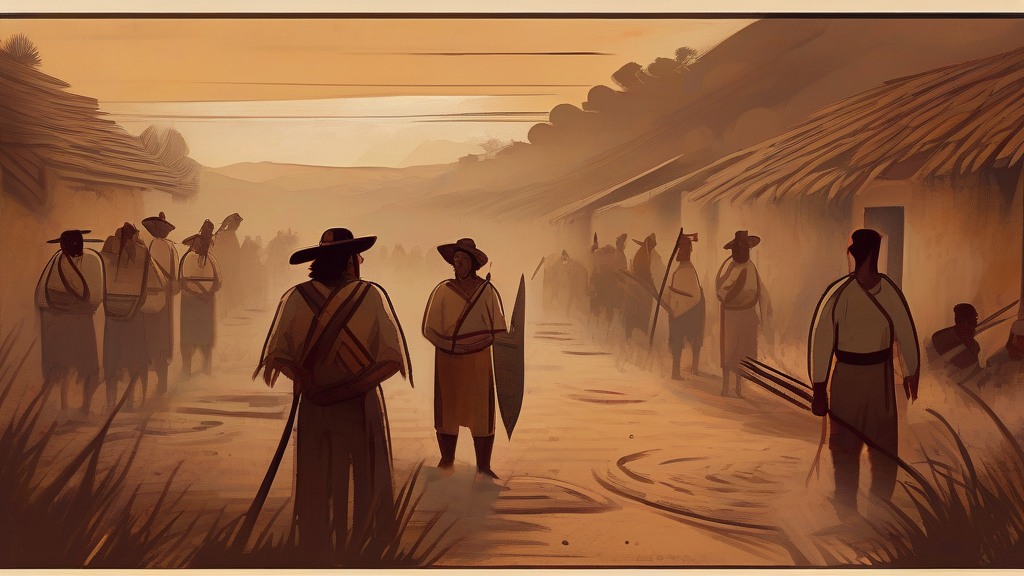
The encomienda was a labor and tribute institution established by the Spanish crown during the colonization of the Americas, most notably in the Caribbean, Mexico, and Peru. Under this system, groups of Indigenous people were 'commended' — formally entrusted — to individual Spanish settlers known as encomenderos, who were expected in return to provide military protection and religious instruction. In practice, the arrangement functioned as a form of coerced labor: Indigenous workers were compelled to mine, farm, and pay tribute, often under brutal conditions, while the profits flowed to colonial elites. The word can refer both to the overall system and to a single grant or estate operating under it. Because it is tied so closely to one historical episode, encomienda appears almost exclusively in academic writing and discussions of colonial history. It remains a potent symbol of imperial exploitation and a key term in debates over conquest, labor, and human rights in the early modern Spanish empire.
nounA system of forced labor and tribute used by the Spanish crown in its American colonies, in which Indigenous people were granted or 'commended' to individual Spanish colonists who were nominally obliged to Christianize and protect them in exchange for their labor. By extension, the grant of labor itself, or an estate held under this system.
- The Spanish colonial labor-and-tribute system in which Indigenous people were assigned ('commended') to Spanish colonists.
- An individual grant of such labor rights, or the estate/community subject to it.
"The encomienda system reduced countless Indigenous communities to servitude while enriching a small class of Spanish grantees."
"Under the encomienda, Indigenous villagers owed tribute and labor to the Spanish grantee who held them in trust."
"Reformers in the sixteenth century campaigned tirelessly for the abolition of the encomienda system."
Standard plural, formed by adding -s; commonly used when referring to multiple grants or the institution collectively.
"By the mid-sixteenth century, thousands of encomiendas had been established across New Spain."
Spain's encomienda system let colonists 'own' people's labor while officially promising to save their souls — Bartolomé de las Vegas's eyewitness accounts of it helped launch the modern human-rights debate.
Reviewed by Deb Chak, Editor. AI-assisted content curated by RJS Tech Solutions LLP.
Etymology of encomienda
Encomienda comes from Spanish encomendar, meaning 'to entrust' or 'to commend', which derives from Latin commendare, formed from com- ('with') plus mandare ('to commit, entrust'). The same Latin root gives English words such as commend, commandment, and commander. The term entered English in the sixteenth century through accounts of Spanish colonial administration, retaining its original sense of a formal act of entrusting that masked a coercive labor regime.
Related word forms
How encomienda is actually used
Almost always encountered in historical contexts concerning Spanish colonial rule in the Americas; the word is a historical term of art rather than part of everyday vocabulary. It carries strongly negative connotations of exploitation and coercion.
Easily confused with encomienda
An hacienda is a large estate focused on agriculture or ranching, whereas an encomienda was a crown-granted right to Indigenous labor and tribute rather than a landholding.