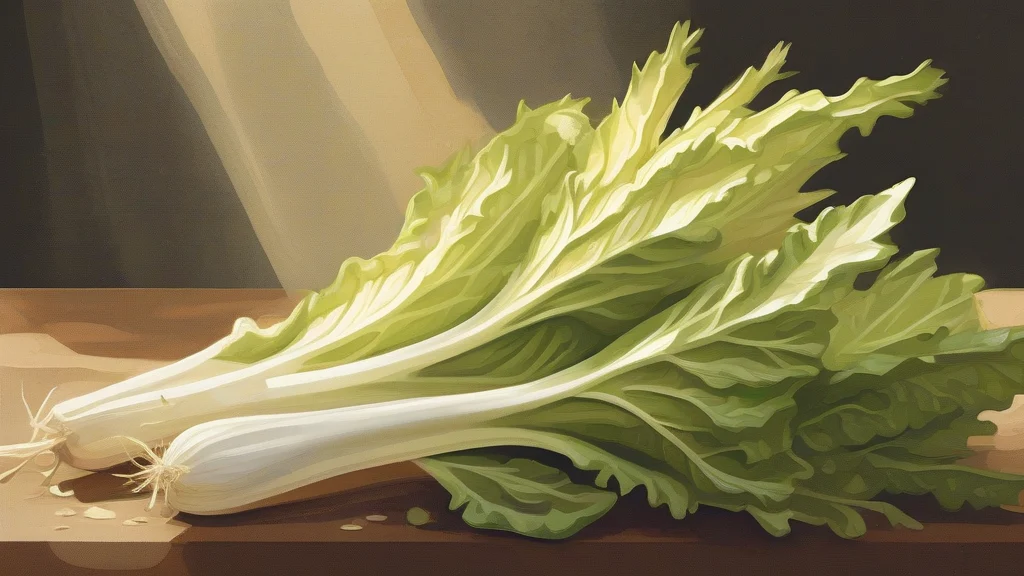
What does endive mean?
Endive is a leafy vegetable belonging to the chicory genus Cichorium, prized in European and American kitchens for the pleasant bitterness its crisp leaves bring to salads and cooked dishes. Two main forms exist under this name: the curly, fringed green type often used as a salad base, and the pale, torpedo-shaped heads known as Belgian endive, which are grown in darkness to keep them white and mildly flavored. The word functions as both a countable noun, naming the plant, and an uncountable one, naming the vegetable as food. Endive carries a connotation of refined, somewhat continental cookery — it appears frequently on restaurant menus and in recipes alongside ingredients like walnuts, blue cheese, citrus, and vinaigrettes. Its bitterness can be mellowed by braising, grilling, or pairing with sweet and rich flavors. For cooks and readers alike, knowing the term helps navigate menus and markets where regional labels differ.
nounAn edible leafy plant of the daisy family (genus Cichorium), cultivated for its slightly bitter leaves, which are eaten raw in salads or cooked; also, the leaves of this plant used as a vegetable.
- The leafy vegetable itself — a plant of genus Cichorium grown for its bitter leaves.
- The leaves of this plant served as food, especially raw in salads.
"She arranged the endive on a platter and dressed it with walnut oil and sherry vinegar."
"Toss the frisée-style endive with mustard vinaigrette just before serving."
"Braised endive with a touch of honey balances its natural bitterness beautifully."
Regular plural; used when referring to individual plants or heads, e.g. at market or in recipes.
"She bought three endives at the farmers' market."
That fancy 'Belgian endive' on the menu isn't Belgian at all in origin — it was discovered by chance in the 1830s when a farmer hid his chicory harvest in a dark shed and found it had sprouted pale, tender heads.
Reviewed by Deb Chak, Editor. AI-assisted content curated by RJS Tech Solutions LLP.
Etymology of endive
Endive entered English in the early modern period, borrowed from Old French endive, which in turn came from Medieval Latin endivia. The Latin form is generally thought to derive from Latin intybus (or intibus), the classical name for a chicory-like plant — the same word preserved today in the botanical name Cichorium intybus. The word has close counterparts across Romance languages, such as French endive and Italian indivia, all tracing back to that shared Latin root.
How endive is actually used
'Endive' is used in both everyday cooking talk and culinary writing; it is neutral in register. In American usage it often refers to the pale, tightly wrapped heads known as Belgian endive, while British usage more often applies the word to the curly, green-fringed salad plant that Americans call curly endive or frisée — so the exact referent can vary regionally.
Easily confused with endive
Escarole is a broad-leaved, less bitter variety of chicory, while endive typically refers to the narrower, more fringed and bitter-leaved types.
Chicory is the broader genus and also names the plant whose roasted root is used as a coffee substitute, whereas endive refers specifically to the salad varieties grown for their leaves.