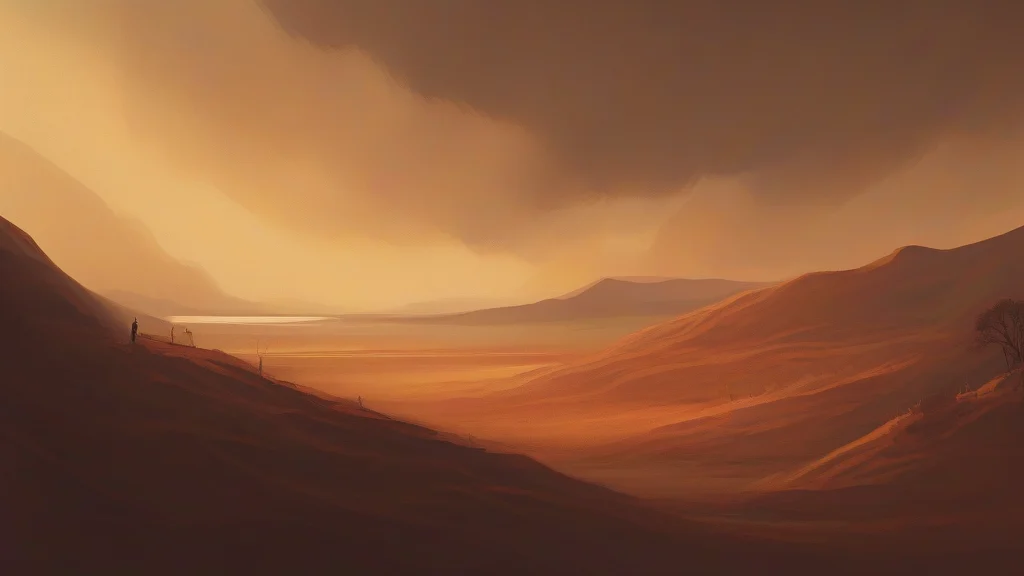
What does endless mean?
"Endless" describes something that has no end or limit, whether in time, space, quantity, or degree. It can be applied literally to things conceived as infinite, such as the endless expanse of the universe, but far more often it functions as vivid exaggeration: an endless meeting, an endless queue, an endless stream of emails. In such uses the word frequently carries a note of weariness or frustration, suggesting that whatever is being described has gone on longer than anyone can bear. In other contexts it is positive and expansive — endless energy, endless curiosity, endless possibilities — conveying abundance and freedom from constraint. The word is built from the Old English noun "end" combined with the ancient suffix "-less," meaning "without," the same element found in careless and lawless. Its adverbial and noun forms are "endlessly" and "endlessness." Because everyday experience offers few genuinely infinite things, "endless" almost always signals either poetic grandeur or expressive impatience, which makes it one of English's most versatile intensifying adjectives.
adjectiveHaving or seeming to have no end or limit; continuing indefinitely in time or extent.
- Extremely great in number, amount, or degree; seemingly without limit (an endless supply of ideas).
- Continuing for so long that it seems it will never stop; tiresome or tedious by its duration (an endless wait at the airport).
"She grew weary of the endless meetings that consumed her afternoons."
"The desert stretched before them like an endless sea of sand."
"He endured endless questions from the press after the announcement."
The "-less" in endless is the very same ancient suffix that gives us careless and harmless — literally "without an end."
Reviewed by Deb Chak, Editor. AI-assisted content curated by RJS Tech Solutions LLP.
Etymology of endless
Endless descends from Old English endeleas, formed from ende ("end") plus the suffix -lēas ("free from, lacking"), the ancestor of modern -less. It has been part of the language continuously since before the Norman Conquest, making it one of the older native formations in English vocabulary. The suffix -leas itself comes from the Proto-Germanic *lausaz, related etymologically to the word "loose," and appears across Germanic languages in cognate formations.
Related word forms
How endless is actually used
Common in both formal and informal registers. When describing tedious durations (endless meetings, endless waiting), the word often carries a negative, hyperbolic connotation; when describing scale or possibility (endless possibilities), it is positive and expansive. Strictly speaking, nothing human-made is truly endless, so the word is frequently figurative or exaggerated.