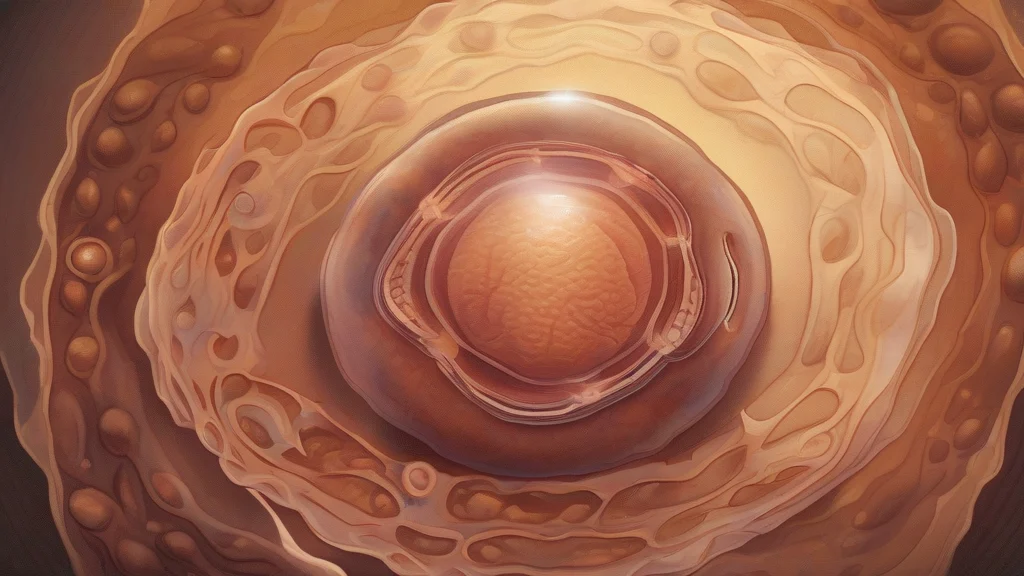
What does endodermic mean?
Endodermic is a technical adjective used in embryology and developmental biology to describe anything pertaining to the endoderm, the innermost of the three germ layers formed during early animal development. As an embryo undergoes gastrulation, its endodermic cells fold inward to create the primitive gut, which later differentiates into the epithelial lining of the digestive tract along with organs such as the liver, pancreas, thyroid, and the airways of the lungs. The word derives from Greek roots meaning 'inner skin' and functions almost exclusively in formal scientific contexts, appearing in anatomy texts, research papers on cell lineage, and medical descriptions of developmental processes. Its everyday counterpart 'endodermal' carries identical meaning and is more common in current usage, but 'endodermic' remains fully accepted. For students of biology, the term marks a useful distinction between the body's outer covering (ectodermic), middle muscular and skeletal layers (mesodermic), and this deepest, organ-lining layer.
adjectiveRelating to or situated in the endoderm — the innermost of the three primary germ layers of an animal embryo, which gives rise to the lining of the gut and associated organs.
- Of or relating to the endoderm, the innermost germ layer of an animal embryo, which develops into the lining of the digestive tract and its associated organs such as the liver, pancreas, and lungs.
"The endodermic tissue lining the embryonic gut eventually develops into the epithelium of the digestive tract."
"Cells of endodermic origin migrate inward during gastrulation to form the primitive gut tube."
"The researchers traced the tumour's endodermic lineage by analysing molecular markers in the tissue sample."
Every organ you own that touches your food — from stomach lining to lungs — began life as a single sheet of endodermic cells folded inside a ball no bigger than a poppy seed.
Reviewed by Deb Chak, Editor. AI-assisted content curated by RJS Tech Solutions LLP.
Etymology of endodermic
The word combines three elements of Greek origin: 'endo-' meaning 'within', 'derm' from 'derma' meaning 'skin', and the adjectival suffix '-ic'. The underlying term 'endoderm' was coined in the nineteenth century, during the period when embryologists were establishing the theory of germ layers, alongside parallel formations such as 'ectoderm' and 'mesoderm'. An earlier variant, 'entoderm', used the more purely Greek form 'ento-', giving rise to the now-rare adjective 'entodermic'. Cognate terms sharing the same root include ectoderm, mesoderm, epidermis, and hypodermic.
How endodermic is actually used
Strictly technical vocabulary used in embryology and developmental biology. In modern scientific writing, 'endodermal' is the more frequent adjectival form, though 'endodermic' appears regularly in both historical and contemporary literature. The older variant 'entodermic' (from the Greek-derived 'entoderm') is now largely obsolete.
Easily confused with endodermic
Endodermal is the more common adjective form with the same meaning as endodermic; the two are interchangeable synonyms rather than distinct concepts.
Hypodermic refers to tissues or injections beneath the skin, whereas endodermic refers to the innermost germ layer of an embryo.