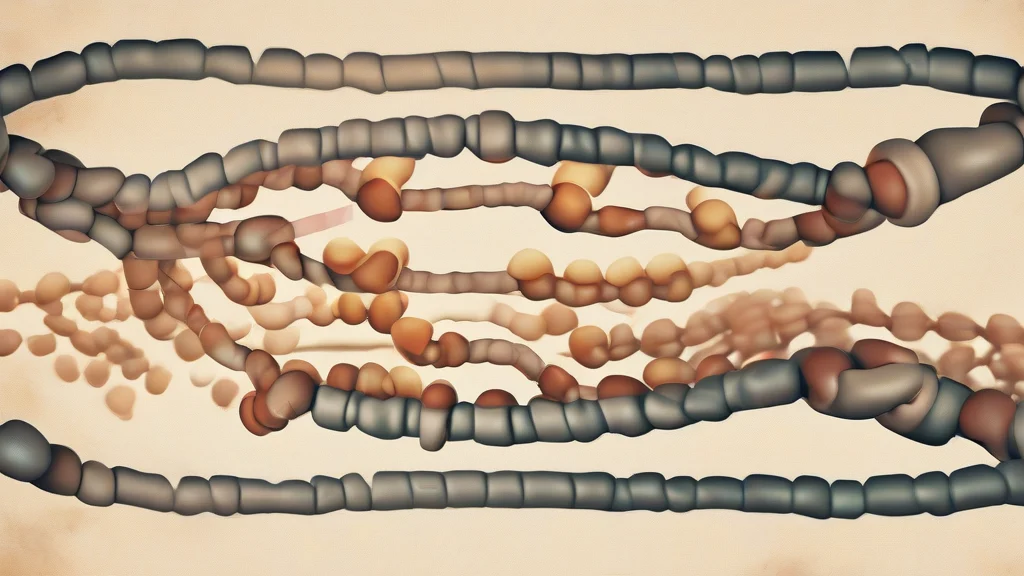
What does endonuclease mean?
An endonuclease is an enzyme that breaks the internal bonds of a nucleic acid — DNA or RNA — cutting the strand somewhere along its middle rather than nibbling away at its ends. This distinguishes it from an exonuclease, which removes nucleotides only from the termini of a chain. Endonucleases come in many forms: some are relatively nonspecific, while restriction endonucleases, found naturally in bacteria, recognize precise short sequences of DNA and slice them there. That specificity transformed biology. Because each restriction endonuclease reliably cuts at its own target site, these enzymes became the essential tools of recombinant DNA technology, enabling scientists to isolate genes, construct plasmids, and lay the groundwork of modern genetic engineering and biotechnology. More recently, programmable endonucleases such as Cas9, the cutting component of CRISPR systems, have made genome editing routine in laboratories worldwide. The word belongs to technical registers — textbooks, research papers, and laboratory protocols — and carries no figurative or informal use.
nounAn enzyme that cleaves phosphodiester bonds within a nucleic acid chain, at positions in the interior of the molecule rather than at the ends.
- Any enzyme that cleaves the interior phosphodiester bonds of a nucleic acid molecule.
- Specifically, a restriction endonuclease: a bacterial enzyme that recognizes and cuts a particular short DNA sequence, used extensively in molecular cloning.
"The restriction endonuclease EcoRI cuts DNA at a specific six-base sequence, allowing scientists to splice genes with precision."
"Cas9 is an RNA-guided endonuclease that can be programmed to cut almost any chosen sequence of DNA."
"After treatment with the endonuclease, gel electrophoresis revealed fragments of predictable lengths."
Regular plural. The plural is standard when discussing multiple enzyme types or instances, e.g. different restriction endonucleases.
"Hundreds of different endonucleases have been isolated from bacterial strains."
Endonucleases are the molecular scissors that made genetic engineering possible — and bacteria have been using them as weapons against viruses for billions of years.
Reviewed by Deb Chak, Editor. AI-assisted content curated by RJS Tech Solutions LLP.
Etymology of endonuclease
The word combines the Greek-derived prefix 'endo-', meaning 'within' or 'inside', with 'nuclease', itself formed from 'nucleic acid' plus the enzyme suffix '-ase', which entered English in the late nineteenth century from German usage. The compound was coined in the twentieth century to describe enzymes that cleave within, rather than at the ends of, nucleic acid chains — contrasting directly with 'exonuclease', built on the prefix 'exo-', meaning 'outside'. The '-ase' suffix appears throughout biochemistry in words like polymerase and ligase, making endonuclease part of a large family of enzyme names.
How endonuclease is actually used
A technical term confined to biochemistry, genetics, and related laboratory contexts; it is not used figuratively. In everyday scientific writing, 'restriction enzyme' often stands in for 'restriction endonuclease'.
Easily confused with endonuclease
An exonuclease removes nucleotides from the ends of a DNA or RNA strand one at a time, whereas an endonuclease cuts within the strand's interior.