What does ensemble mean?
An ensemble is a collection of people or things regarded as a unified whole rather than as separate elements. Most familiarly, it denotes a small group of musicians, actors, or dancers who perform together, such as a string ensemble or an ensemble cast in which no single performer dominates. The word also has a well-established place in fashion, where it describes a complete, coordinated outfit whose individual pieces are chosen to complement one another. More abstractly, ensemble can refer to any aggregate considered in its totality, as when scientists speak of an ensemble of data points. Borrowed from French, where it literally means 'together,' the word carries connotations of harmony, balance, and deliberate coordination — its parts fit because they were made or chosen to fit. It is standard vocabulary in the arts and reasonably common in general usage, lending a slightly refined tone wherever it appears.
nounA group of people or things that work together as a whole, especially a small group of musicians, actors, or dancers who perform together. It can also refer to an outfit of clothing worn together as a coordinated set.
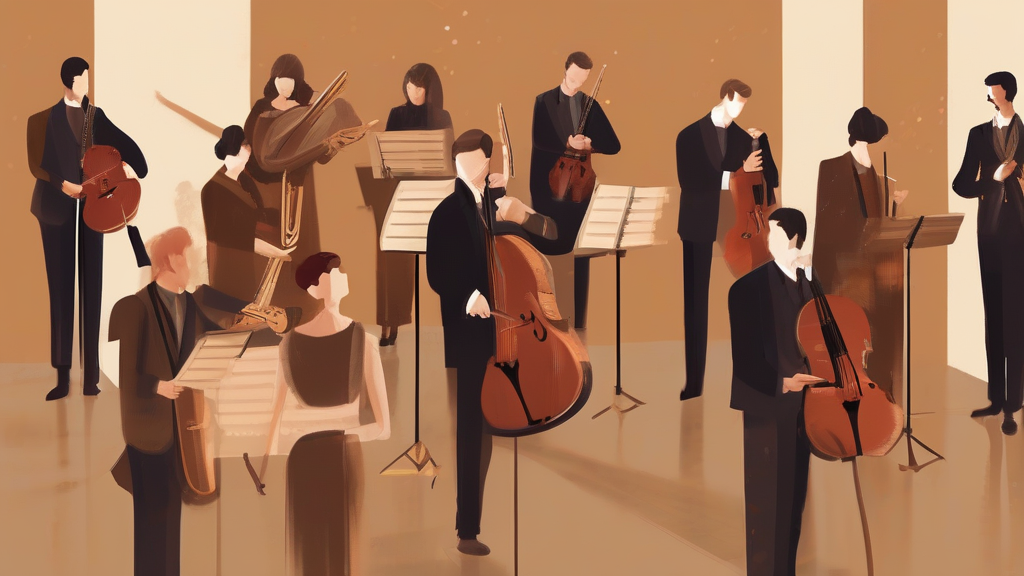
- A group of musicians, actors, or dancers who perform together.
- A complete outfit of clothing; a coordinated set of garments.
- The whole as distinct from the parts; something considered as a unified entity.
"The jazz ensemble played to a packed house every Friday night."
"She joined a chamber ensemble after graduating from conservatory."
"His autumn ensemble — a wool coat, scarf, and boots — turned heads on the street."
Regular plural; used for multiple groups or outfits.
"The festival featured ensembles from across Europe."
"Ensemble" comes from the French for "together," which is why a group of actors and a matching outfit both share the word — they're both about parts working in harmony.
Reviewed by Deb Chak, Editor. AI-assisted content curated by RJS Tech Solutions LLP.
Etymology of ensemble
Ensemble was borrowed into English from French around the late 17th century, deriving from the Latin insimul, meaning 'at the same time' or 'together.' Its original English senses related to togetherness and unity before narrowing toward performance groups and coordinated dress. Cognates include the English verb assemble and the noun assemblage, all tracing back to the same Latin root.
How ensemble is actually used
Borrowed directly from French, so the pronunciation often retains a French flavour (final consonant softened or silent). In music and theatre contexts it is standard professional vocabulary; in fashion contexts it is somewhat more formal than simply saying 'outfit.'
Easily confused with ensemble
An assemblage is any collection of gathered things or people, whereas an ensemble implies coordination and unity of purpose among the parts.