What does ensilage mean?
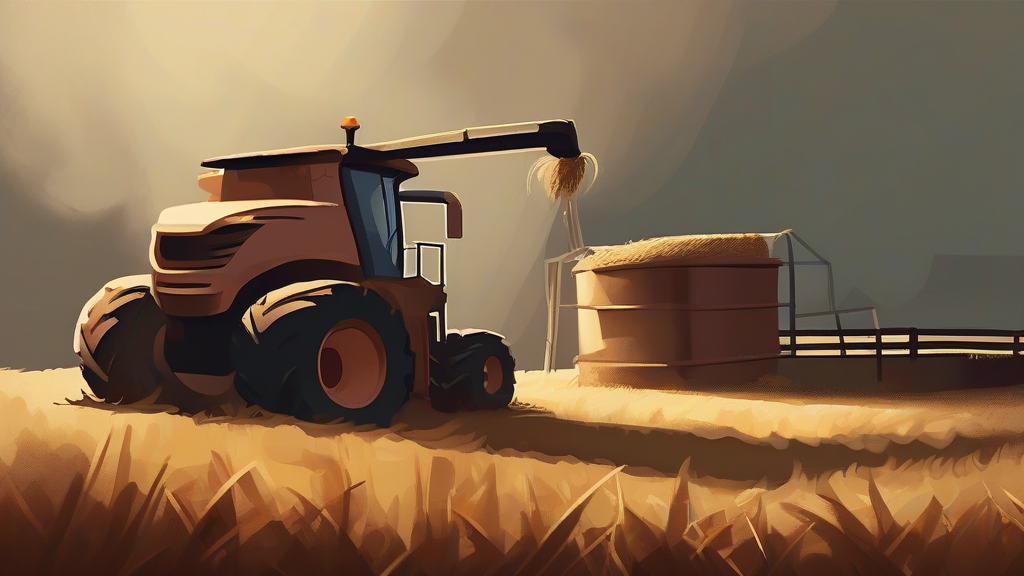
Ensilage is fodder—typically chopped green crops such as maize, grass, or sorghum—that has been packed into a silo, pit, or other airtight container and preserved by natural fermentation. The process, also known as ensiling, keeps the crop moist and nutritious so livestock can be fed fresh-tasting green forage through months when pasture is unavailable. The word entered English from French in the nineteenth century and was once standard vocabulary in agricultural writing; over time the shorter term 'silage' came to dominate ordinary usage, leaving 'ensilage' sounding somewhat formal or dated. Today the word appears mainly in older farming manuals, historical accounts of agriculture, and technical discussions of fermentation-based preservation. For readers of nineteenth-century literature or histories of dairying, recognizing 'ensilage' is useful, since it names one of the most important innovations in livestock husbandry of its era.
Green fodder preserved by fermentation in a silo or other airtight structure; silage.
"The cattle thrived all winter on well-made ensilage."
Often used attributively, as in 'ensilage corn' or 'ensilage cutter'.
To preserve (green fodder) by storing it in a silo or pit where it ferments; to convert into ensilage.
"Farmers learned to ensilage the whole corn plant while it was still succulent."
A less common verbal use, derived from the noun.
Rarely pluralized, as the word usually functions as a mass noun; a plural may appear when referring to different kinds or batches of preserved fodder.
"The station tested several ensilages made from different grass mixtures."
Before refrigeration reached the farm, ensilage let farmers 'pickle' an entire summer's worth of green crops inside an airtight tower.
Reviewed by Deb Chak, Editor. AI-assisted content curated by RJS Tech Solutions LLP.
Etymology of ensilage
Ensilage comes from French, formed on the verb 'ensiler,' meaning to store in a silo, which combines 'en-' with 'silo.' The ultimate root is Latin 'sirus,' meaning a pit for storing grain, itself borrowed from Greek 'siros,' an underground grain pit. The English noun became widespread in the late nineteenth century, when silo construction swept through American and European agriculture, and the verb 'ensile' derives back-formationally from it.
How ensilage is actually used
Ensilage is now largely a technical and historical term; in everyday farming speech 'silage' has mostly displaced it, though 'ensilage' survives in older literature and as the name of the process ('to ensile'). It carries no strong connotation of register beyond being somewhat formal or old-fashioned.
Easily confused with ensilage
Silage refers generally to fermented stored fodder, while ensilage can refer both to the same product and to the process of making it.