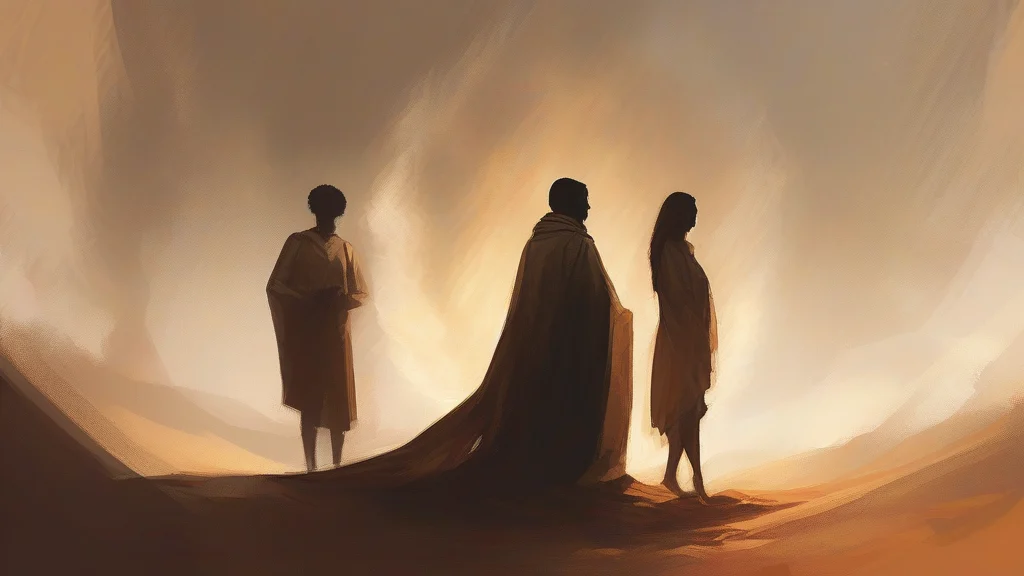
What does enthrallment mean?
Enthrallment is the state of being utterly captivated—so absorbed by a person, performance, story, or spectacle that attention becomes fixed and involuntary. It is the abstract noun corresponding to the verb 'enthrall,' and it typically appears in formal or literary contexts: a reader's enthrallment with a novel, an audience's enthrallment at the theatre. The word carries a strongly positive connotation of delighted, willing absorption rather than mere interest. Its history is striking: it derives from 'thrall,' an Old Norse word for a slave or serf, so enthrallment originally carried the sense of being held in bondage; over centuries the metaphor softened into emotional captivity, where fascination takes the place of chains. This layered heritage makes it especially evocative when writers want to suggest that something has seized the imagination completely. Related forms include 'enthrall,' 'enthralled,' and 'enthralling.'
The state of being fascinated or spellbound; complete captivation of the attention or emotions.
"He spoke of his travels with such vividness that the whole room fell into enthrallment."
Almost always used with a prepositional complement such as 'with,' 'by,' or 'in.'
(Archaic or rare) The state of being enslaved; servitude or bondage.
"The chronicle described the peasants' enthrallment under the feudal lord."
This older sense survives mainly in historical writing.
The plural is rare because the word usually denotes an uncountable state; it may be pluralized when referring to multiple distinct instances or episodes of fascination.
"The memoir recounts the various enthrallments of her youth—theatre, poetry, and travel."
Reviewed by Deb Chak, Editor. AI-assisted content curated by RJS Tech Solutions LLP.
Etymology of enthrallment
Entthrallment comes from the verb 'enthrall,' formed from the prefix 'en-' plus 'thrall,' which entered Middle English from Old Norse 'þræll,' meaning slave or bondsman. In its earliest uses, enthralling meant literally enslaving or subjugating someone; the sense of captivating or fascinating arose later, treating wonder as a form of willing bondage. The noun 'enthrallment' developed from this figurative verb, and cognates of 'thrall' appear in other Germanic languages, reflecting its Norse origin.
Related word forms
How enthrallment is actually used
Formal to literary in register; more common in written than spoken English. 'Enthralment' is an acceptable variant spelling (especially British), though 'enthrallment' is standard. Carries a strongly positive connotation of rapt, willing absorption.
Easily confused with enthrallment
'Thrallment' is a rare, archaic noun meaning bondage or servitude, whereas 'enthrallment' refers to captivated fascination.