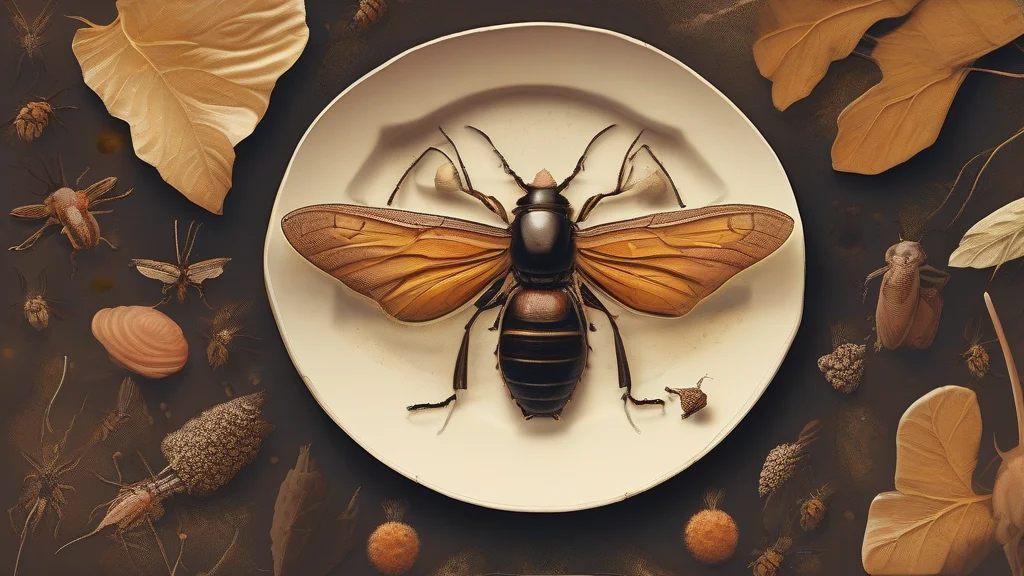
What does entomophagous mean?
Entomophagous is an adjective describing organisms that feed on insects — literally 'insect-eating'. It derives from Greek roots: 'entomon' meaning insect and '-phagous' meaning eating. The word appears most often in scientific writing about entomology, ecology, and agriculture, where it labels predators, parasites, and even certain plants whose diets centre on insects. Ladybirds devouring aphids, parasitoid wasps laying eggs in caterpillars, antlions trapping ants in sandy pits, and sundews or Venus flytraps digesting trapped flies are all classic examples of entomophagous organisms. In agricultural contexts the term carries a positive connotation, since entomophagous species serve as natural pest control, reducing or eliminating the need for chemical pesticides. While closely related to 'insectivorous', which is the more familiar general-purpose synonym, 'entomophagous' tends to appear in technical discussions of feeding behaviour and biological control programmes rather than in casual conversation.
adjectiveFeeding on insects; insect-eating. The term applies chiefly to animals and plants that consume insects as a significant part of their diet.
- Of an animal or organism: feeding on insects as food.
- In biological control: describing organisms used or adapted to prey upon pest insects.
"The entomophagous habits of the hedgehog make it a welcome guest in any garden plagued by pests."
"Ladybirds, lacewings, and many wasps are entomophagous insects prized by farmers for controlling aphid populations naturally."
"The pitcher plant's entomophagous strategy allows it to thrive in soils too poor to sustain ordinary plant life."
From ladybirds to Venus flytraps, entomophagous creatures are nature's own pest control — and scientists deliberately deploy them to protect crops without a drop of pesticide.
Reviewed by Deb Chak, Editor. AI-assisted content curated by RJS Tech Solutions LLP.
Etymology of entomophagous
Entomophagous comes from the Greek 'entomon', meaning insect (itself from 'entomos', 'notched', referring to insects' segmented bodies), combined with '-phagos', meaning eating, from the verb 'phagein', to eat. The combining form entered scientific Latin and thence English in nineteenth-century natural-history writing. It shares its roots with 'entomology' (the study of insects) and with other '-phagous' compounds such as 'sarcophagous' (flesh-eating).
Related word forms
How entomophagous is actually used
A technical term used mainly in entomology, ecology, and agriculture; it is rare in everyday speech, where 'insect-eating' or 'insectivorous' is more common. In biological control literature, 'entomophagous' often specifically denotes beneficial predators or parasites deployed against crop pests.
Easily confused with entomophagous
'Entomophilous' means pollinated by insects, while 'entomophagous' means feeding on insects — the former describes reproduction, the latter describes diet.