What does envelope mean?
An envelope is most familiarly a flat paper container with a gummed or sealable flap, designed to hold a letter, card, or document for mailing or safekeeping. Beyond this everyday sense, the word extends metaphorically and technically to any enclosing layer — the membrane surrounding a virus, the gaseous shell of a star, or the protective casing of a spacecraft. In aviation and engineering, an 'envelope' denotes the full range of conditions within which a machine can operate safely, giving rise to the popular idiom 'to push the envelope,' meaning to test or exceed established limits. Derived from the French 'enveloppe,' itself rooted in the notion of wrapping up, the word carries no strong connotation of its own; it is functional and neutral in tone. Its close visual and phonetic kinship with the verb 'envelop' makes careful spelling worth noting.
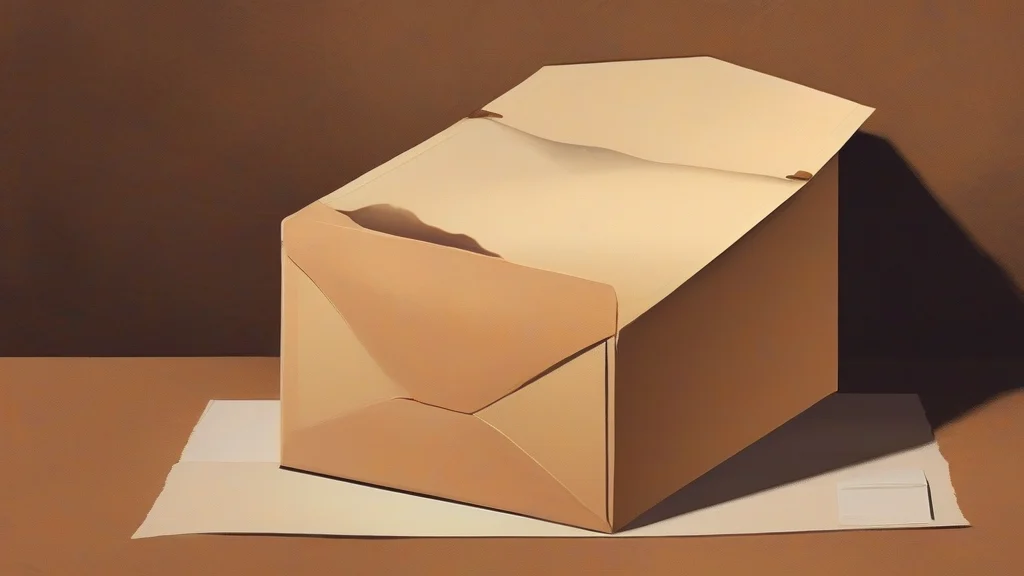
A flat, usually rectangular paper container with a sealable flap, used to enclose letters or documents.
"She wrote the address carefully on the front of the envelope."
In postal contexts, standard types include business, window, and padded envelopes.
An enclosing natural or technical covering, such as the outer membrane of a virus or the atmospheric layers surrounding a planet.
"The balloon rose until only a thin envelope of atmosphere remained above it."
The range of operating conditions within which a system, particularly an aircraft, functions safely.
"Test pilots routinely fly at the edge of the aircraft's flight envelope."
Standard English plural; simply add -s.
"She bought a box of envelopes from the stationery shop."
The phrase 'pushing the envelope' didn't come from stationery — it came from test pilots charting the limits of aircraft performance on mathematical graphs.
Reviewed by Deb Chak, Editor. AI-assisted content curated by RJS Tech Solutions LLP.
Etymology of envelope
Envelope comes from French 'enveloppe,' a noun formed from the verb 'envelopper,' meaning to wrap up or enclose. This in turn traces to Old French 'envoluper,' combining 'en-' (in) with 'voloper,' a word of uncertain Germanic origin meaning to wrap. English adopted the noun in the early 18th century in its literal paper-container sense, though the related verb 'envelop' had been in use earlier. Cognates include 'develop,' which shares the same root but evolved through a sense of unwrapping or unfolding.
Related word forms
How envelope is actually used
Pronunciation varies notably by region: American speakers typically stress the first syllable as /ˈɛn-/, while British speakers often use /ˈɒn-/ (like 'on'). The word is neutral in register. Note that 'envelope' is sometimes misspelled as 'envelop' due to the related verb.
Easily confused with envelope
'Envelope' is the noun meaning a paper wrapper or enclosing layer; 'envelop' is the verb meaning to wrap or surround something completely.