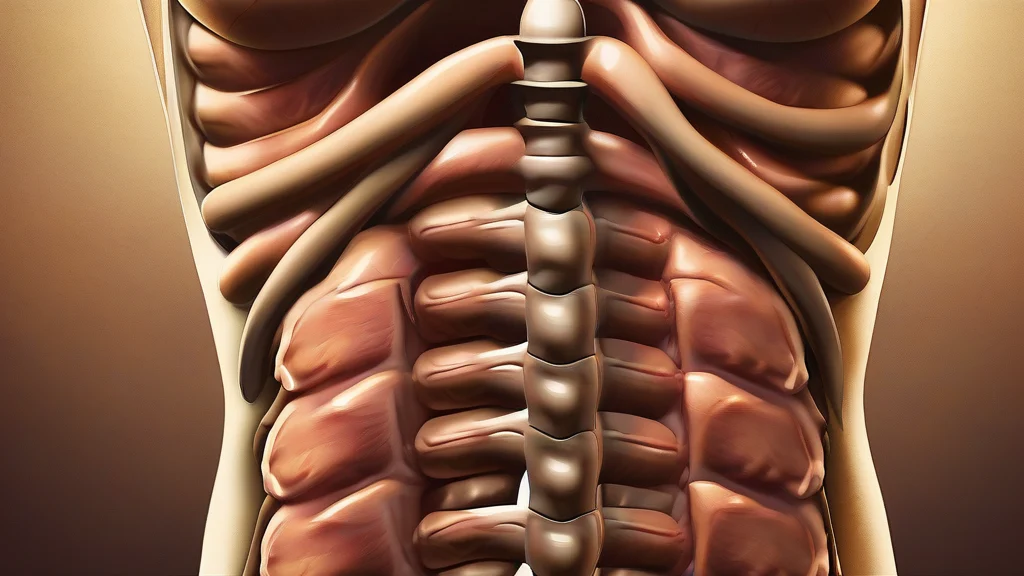
What does epigastric mean?
Epigastric is an adjective used in anatomy and medicine to describe anything situated in, or relating to, the epigastrium — the upper central part of the abdomen, lying just below the ribcage and directly above the navel. The term appears most often in clinical descriptions of symptoms: patients commonly report epigastric pain, burning, or tenderness associated with conditions such as indigestion, gastritis, peptic ulcers, or gallbladder disease. It also labels anatomical structures found in that area, such as the superior and inferior epigastric arteries, and is used in surgical contexts, as in an epigastric hernia, where tissue protrudes through the abdominal wall in that region. Because it pinpoints a precise location rather than the abdomen generally, epigastric allows clinicians to communicate findings accurately and unambiguously. Though formal in register and rarely heard outside medical settings, it is worth knowing, since recognising it can help anyone interpret their own symptoms or a doctor's description more precisely.
adjectiveRelating to the epigastrium, the upper central region of the abdomen just below the ribs and above the navel. Used chiefly in anatomy and medicine to describe pain, tenderness, or other features located in this area.
- Of or relating to the epigastrium, the upper middle portion of the abdomen.
- (Anatomy, of structures such as arteries or veins) Situated in or supplying the epigastric region.
"The patient reported a burning epigastric pain that worsened after meals."
"She described a dull, aching epigastric discomfort that had persisted for several days."
"The surgeon ligated the inferior epigastric vessels during the procedure."
Doctors divide your belly into nine regions like a tic-tac-toe board — and 'epigastric' names the one right at the top centre where heartburn strikes.
Reviewed by Deb Chak, Editor. AI-assisted content curated by RJS Tech Solutions LLP.
Etymology of epigastric
Epigastric derives from New Latin 'epigastricus', built on the Greek prefix 'epi-' meaning 'upon' or 'over' combined with 'gaster', meaning 'stomach' or 'belly'. The underlying noun, epigastrium, was adopted into anatomical Latin to name the region of the abdomen lying over the stomach. The word entered English scientific vocabulary during the early modern period, when Latin and Greek compounds were being systematically coined for anatomy, and it shares its root with related terms such as gastric and gastroenterology.
How epigastric is actually used
A technical term used almost exclusively in medical and anatomical contexts; it is unlikely to appear in everyday conversation except in discussions of symptoms with healthcare professionals.
Easily confused with epigastric
Epigastric refers to the upper abdomen below the ribs, while hypogastric refers to the lower abdominal region beneath the navel.