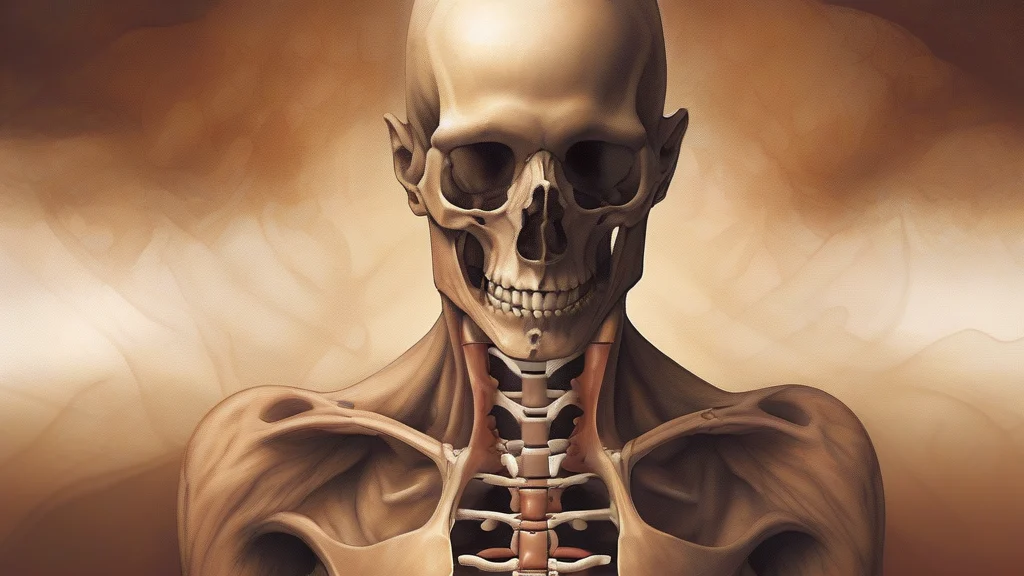
What does episternal mean?
Episternal is an adjective used almost exclusively in anatomy and zoology to describe structures associated with the episternum. In human anatomy, the episternum corresponds to the manubrium — the broad, uppermost segment of the sternum, or breastbone, which articulates with the clavicles and the first ribs. An episternal notch, for instance, lies at the top of this bone, and clinicians may describe tenderness, fractures, or surgical landmarks as episternal when they involve this region. In entomology and general zoology, the term has a second life: the episternum is a sclerite, or hardened plate, on the ventral side of an insect's or other arthropod's thorax, and episternal describes features relating to it. Because the word derives from Greek roots meaning 'upon the chest', it belongs to a precise family of anatomical vocabulary — alongside sternal, xiphisternal, and hyposternal — that allows scientists to locate structures exactly. Outside these specialist contexts, however, episternal is essentially never used, making it a marker of formal scientific writing rather than everyday English.
adjectiveOf or relating to the episternum; in human anatomy, situated on or pertaining to the uppermost part of the breastbone (the manubrium).
- Relating to the episternum, the upper segment (manubrium) of the sternum in humans and other mammals.
- Relating to the episternum in arthropod anatomy, a sclerite of the ventral thorax.
"The surgeon noted a small fracture across the episternal region of the chest."
"Palpation revealed tenderness over the episternal area, consistent with mild costochondritis."
"In many beetles the episternal sclerite forms part of the ventral wall of the prothorax."
Every breath you take involves your episternum — the ancient 'upon-chest' bone at the top of your ribcage that anatomists named using Greek over two thousand years ago.
Reviewed by Deb Chak, Editor. AI-assisted content curated by RJS Tech Solutions LLP.
Etymology of episternal
Episternal combines the Greek prefix epi-, meaning 'upon' or 'above', with sternon, the ancient Greek word for the chest or breastbone, via the noun episternum. The term entered modern scientific Latin and then English alongside the systematic anatomical nomenclature developed from the Renaissance onward, as scholars revived and regularised Greek descriptive terms for skeletal parts. It shares its root with sternum and with related compounds such as xiphisternal and hyposternal, which pinpoint lower regions of the same bone.
Related word forms
How episternal is actually used
A technical term confined to anatomy, zoology, and veterinary medicine; it is rarely encountered outside specialist literature and is not used figuratively.
Easily confused with episternal
Intrasternal refers to something located or occurring within the sternum itself, whereas episternal refers specifically to the upper portion of the sternum (the episternum) or the area above it.