
What does epithelioid mean?
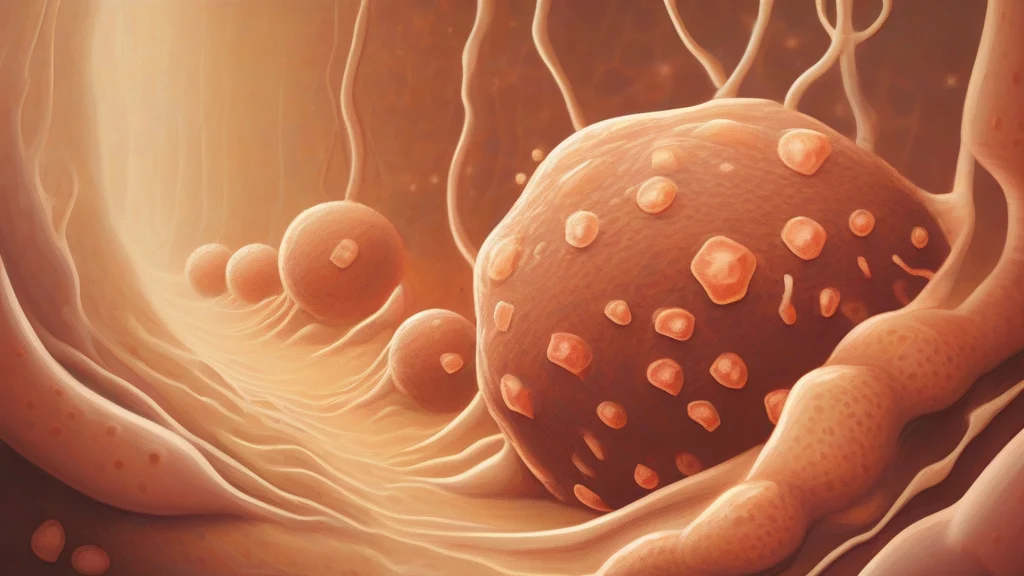
Epithelioid is a technical adjective used almost exclusively in medicine and biology to describe something that resembles epithelium, the tissue that lines body surfaces and organs. Its most important application is in pathology, where 'epithelioid cells' are not true epithelial cells but large, pale-staining macrophages that have become activated during chronic inflammation. Because these immune cells flatten out and cluster together much like epithelial tissue, early microscopists named them for the resemblance. Aggregations of epithelioid cells form granulomas, the hallmark lesions of diseases such as tuberculosis, sarcoidosis, and Crohn's disease, making the term central to diagnostic histology. It also appears in oncology, as in 'epithelioid sarcoma', where a tumour's cells take on an epithelial-like appearance despite a different origin. The word derives from 'epithelium', itself from Greek roots meaning 'upon the nipple'. While indispensable to clinicians and researchers, epithelioid remains firmly specialist terminology and carries no figurative use.
adjectiveResembling or characteristic of epithelium; in pathology, describing large activated macrophage cells that resemble epithelial cells and aggregate to form granulomas in chronic inflammation.
- Resembling epithelium in structure or appearance.
- (Pathology) Describing modified macrophages found in granulomas of chronic inflammatory conditions such as tuberculosis and sarcoidosis.
"The biopsy revealed a dense cluster of epithelioid cells surrounded by lymphocytes."
"Microscopic examination showed sheets of plump epithelioid histiocytes forming well-defined granulomas."
"The tumour displayed an epithelioid growth pattern that initially suggested carcinoma."
An epithelioid cell isn't an epithelial cell at all — it's a macrophage so transformed by chronic inflammation that pathologists thought it looked like skin.
Reviewed by Deb Chak, Editor. AI-assisted content curated by RJS Tech Solutions LLP.
Where does epithelioid come from?
Epithelioid is formed from 'epithelium', a term coined in 18th-century anatomical Latin from Greek elements — 'epi-' meaning 'upon' and 'thele' meaning 'nipple', originally applied to thin tissue covering lip and nipple surfaces — combined with the suffix '-oid', from Greek '-oeides', meaning 'resembling'. The adjective thus literally means 'epithelium-like'. Its cognates include epithelial and other derivatives of the same anatomical root.
Related word forms
How epithelioid is actually used
Strictly technical vocabulary confined to medicine, pathology, and histology; it is rarely encountered outside clinical or research contexts and is not used figuratively.
Easily confused with epithelioid
'Epithelial' means belonging to or composed of actual epithelium tissue, whereas 'epithelioid' means merely resembling epithelium, as with macrophages that mimic its appearance.