
What does equipage mean?
Equipage refers to the complete outfit of equipment, furnishings, or attendants appropriate to a person, household, or enterprise, with a strong historical association with the carriages, horses, and liveried servants that announced a family's rank in earlier centuries. By extension it can denote any matched set of articles, such as a silver tea service or a gentleman's dressing kit, and in specialist use it names the internal mechanism of a timepiece. Today the word survives mainly in historical writing, biography, and deliberately elevated prose, where it evokes formality, ceremony, and old-world splendor. A novelist might describe an ambassador's equipage drawing up before a palace, while a collector might admire a Victorian toilette equipage arranged on a dressing table. Though rare in conversation, it remains useful precisely because no common modern synonym captures that same sense of elaborate, status-bearing completeness.
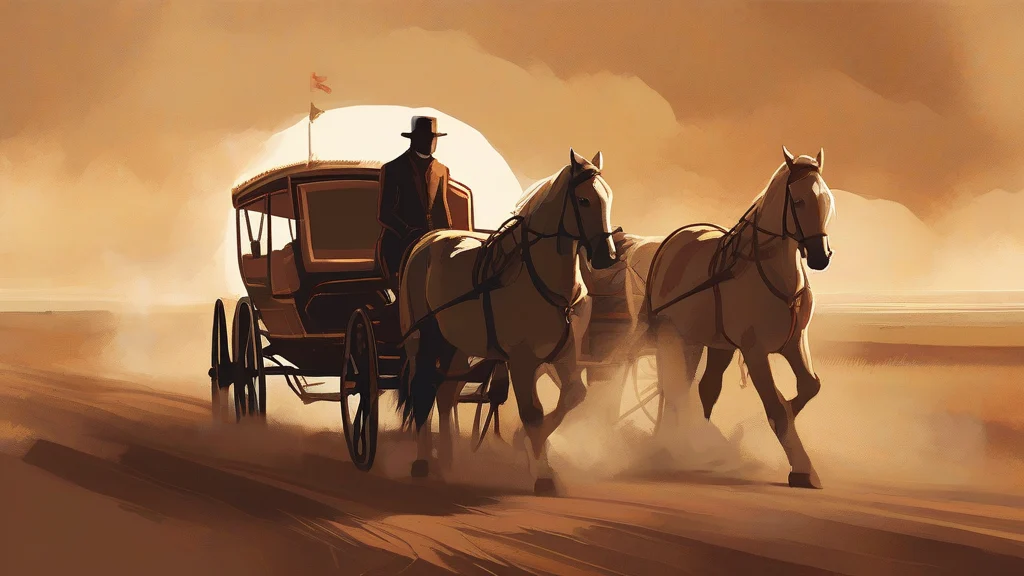
The equipment or furnishings appropriate to a person, activity, or vehicle; especially historically, the carriages, horses, and attendants maintained by a household.
"The duke's equipage was said to be the finest in the county."
Now chiefly historical, literary, or used with deliberate elegance.
A matched set of articles serving a single purpose, such as a tea, dressing, or smoking service.
"She inherited a complete tea equipage in hand-painted porcelain."
Common in antique and collecting contexts.
The plural is regular but uncommon; equipage is most often used as a mass noun referring to equipment collectively.
"The stables housed the equipages of several noble families."
In the 18th century, your 'equipage' was the ultimate status symbol — the carriage, horses, liveried servants and all — so conspicuous that sumptuary laws sometimes tried to limit how lavish it could be.
Reviewed by Deb Chak, Editor. AI-assisted content curated by RJS Tech Solutions LLP.
Etymology of equipage
Equipage entered English in the late 17th century from French équipage, meaning outfitting or equipment, which derives from équiper ('to equip, fit out'). The French verb itself likely traces back through Old French eschiper ('to embark, man a ship') to a Germanic source related to ship, reflecting a nautical origin in fitting out vessels for sea. Cognates appear in French équipage itself and in English equip and its derivatives, all sharing this fitting-out notion.
How equipage is actually used
Equipage is now largely literary, historical, or deliberately ornate in register; in everyday modern English it would sound affected. It carries connotations of formality, wealth, and period elegance. In horology, 'equipage' also denotes the mechanism of a watch, though this is a specialized sense.
Easily confused with equipage
Equipment is the ordinary modern word for tools and gear needed for a task, whereas equipage is an archaic or formal term emphasizing elaborate, often ceremonial furnishings or a matched set of articles.