What does erosional mean?
Erosional is an adjective meaning related to or produced by erosion — the gradual wearing away and removal of rock, soil, or other material by natural agents such as flowing water, wind, glaciers, and waves. It belongs chiefly to the vocabulary of geology and geography, where it describes landscapes and features carved by these destructive yet creative forces: erosional valleys, erosional plains, erosional coastlines, and so on. Because it is nearly always placed directly before a noun rather than after a verb, readers encounter it most often in phrases like "erosional processes" or "erosional features." The term is neutral in tone and technical in register, appearing in scientific literature, textbooks, and nature documentaries alike. Its usefulness lies in distinguishing landscapes shaped by removal of material from those built up by deposition, a fundamental contrast in how geologists read Earth's surface.
adjectiveRelating to, caused by, or characterized by erosion — the gradual wearing away of rock, soil, or other material by natural forces such as water, wind, or ice.
- Of or relating to erosion; produced or shaped by the wearing away of rock or soil by water, wind, ice, or other natural agents.
"The canyon's dramatic erosional features took millions of years to form."
"The river's erosional activity gradually deepened its channel over millennia."
"Geologists mapped the region's erosional surfaces to reconstruct its ancient climate."
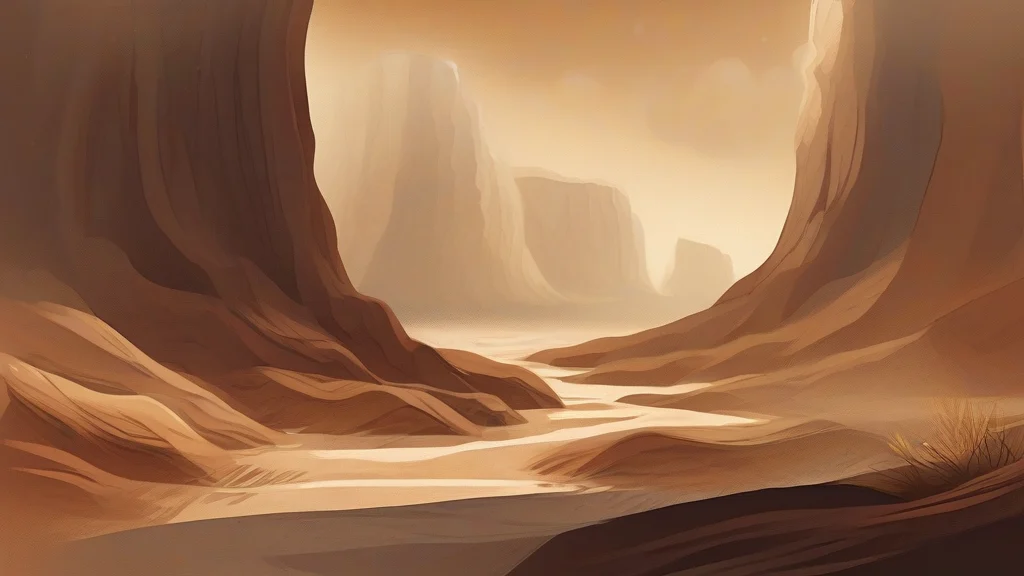
Every erosional landform you've ever admired — from the Grand Canyon to the arches of Utah — is a sculpture carved by nothing more than patient, relentless removal.
Reviewed by Deb Chak, Editor. AI-assisted content curated by RJS Tech Solutions LLP.
Etymology of erosional
Erosional derives from "erosion," which entered English in the mid-16th century from Latin "erosio" (a gnawing away), itself from "erodere" — "e-" (out) plus "rodere" (to gnaw), the same root that gave English "rodent" and "corrode." The adjective form arose later, likely in the 19th century alongside the rise of modern geomorphology. It shares its root with related words such as "erode," "erodible," and "erosive," all pointing back to that vivid image of gnawing.
How erosional is actually used
"Erosional" is primarily a technical term used in geology, geomorphology, and earth sciences, though it appears in popular science writing as well. It is almost always attributive, modifying nouns such as "processes," "landforms," "features," and "surfaces." It is rarely used predicatively (e.g., "the landscape is erosional" sounds awkward). The word carries a neutral, descriptive connotation rather than an emotional one.
Easily confused with erosional
Corrosive refers to chemical destruction of materials (like acid eating metal), whereas erosional refers to mechanical wearing away by natural forces like water and wind.