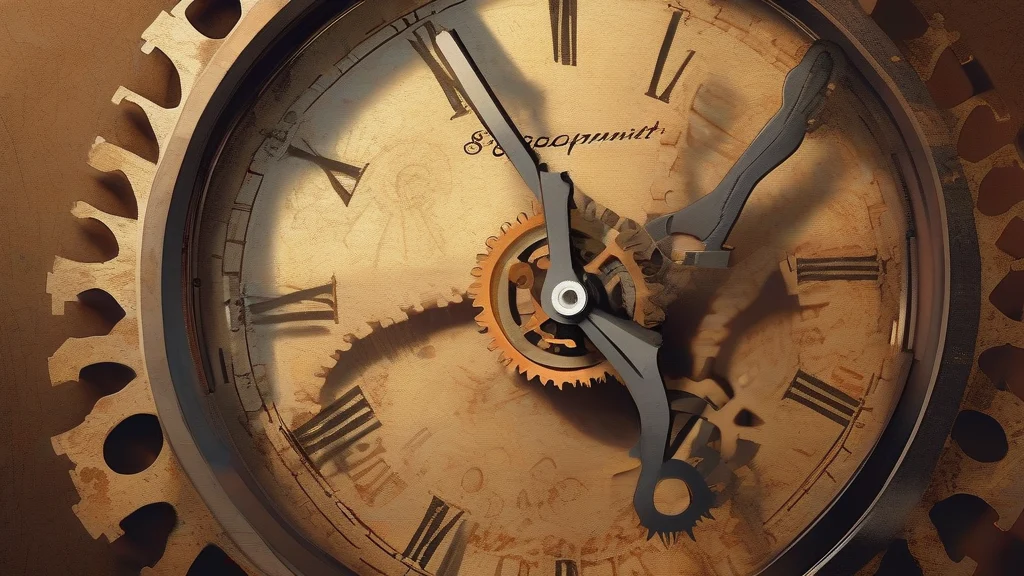
What does escapement mean?
An escapement is a crucial mechanism found in mechanical clocks and watches that governs how stored energy is released in small, precise increments. Acting as the timepiece's regulating heart, it alternately catches and releases the gear train, converting the steady pull of a mainspring or weight into evenly timed beats — which is why the familiar ticking sound of a clock is, in essence, the sound of its escapement at work. Invented and refined over centuries, various designs such as the verge, anchor, lever, and coaxial escapements have each improved accuracy and reliability, enabling everything from pendulum clocks to precision wristwatches. The word belongs mainly to the specialized vocabulary of horology and engineering, though it occasionally appears in broader technical contexts to describe any mechanism permitting controlled, intermittent motion. Understanding the escapement means understanding what makes mechanical timekeeping possible at all.
nounA mechanical device in a clock or watch that regulates the movement of the gears and converts the energy of the mainspring or weight into measured impulses, controlling the release of power so the timepiece keeps accurate time. More broadly, it can refer to any mechanism that permits controlled, intermittent motion.
- A mechanism in a clock or watch that regulates gear movement and converts stored energy into precisely timed impulses.
- By extension, any device that allows controlled, intermittent release of motion or force.
"The watchmaker carefully adjusted the escapement to correct the watch's slight tendency to run fast."
"The anchor escapement, invented in the seventeenth century, made pendulum clocks accurate enough for scientific use."
"Each tick of the grandfather clock marks a single beat of its escapement."
Regular plural formed with -s; used when referring to multiple mechanisms or different types of escapement across timepieces.
"Different escapements offer varying degrees of accuracy and require different maintenance intervals."
The tiny ticking sound of a watch is actually an escapement catching and releasing — it's the heartbeat of every mechanical clock, and without it, no mechanical timepiece could keep time at all.
Reviewed by Deb Chak, Editor. AI-assisted content curated by RJS Tech Solutions LLP.
Etymology of escapement
The word "escapement" derives from the verb "escape," which came into Middle English from Old North French "eschaper," itself rooted in Vulgar Latin *excappare, meaning literally "to get out of one's cape," from Latin "ex-" (out) plus "cappa" (cloak). The noun form arose in English around the mid-seventeenth century as horologists sought a term for the mechanism by which a clock's driving power could periodically "escape" in controlled increments. It thus shares its origin with related words such as "escape," "s cape," and "scapegoat."
How escapement is actually used
Primarily a technical term used in horology (the study and craft of timekeeping), mechanics, and engineering. Rarely encountered in casual conversation; when used figuratively, it usually appears in technical writing. No significant regional variation between British and American English.
Easily confused with escapement
"Escape" is a verb or noun referring to getting free or breaking out, while "escapement" is a specific horological mechanism that controls the release of energy in a timepiece.