
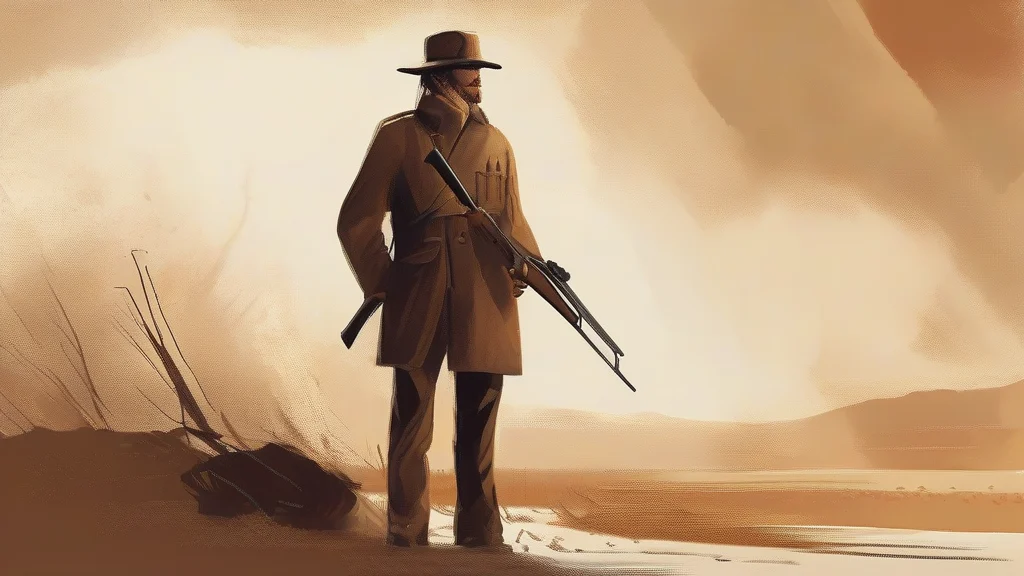
What does escopette mean?
An escopette is a small shotgun, usually one with a double barrel and break action. Although the word can refer broadly to a compact shotgun, it is especially associated with nineteenth-century hunting and exploration in Africa, where portable double-barreled guns were carried by hunters, guides, travelers, and military personnel. In present-day English, escopette is largely historical or specialized rather than a common general term for a firearm. Its appeal lies in the precision of its meaning: it identifies a recognizable kind of compact shotgun rather than every firearm with multiple barrels. The word also evokes the equipment and cultural setting of old African hunting accounts, although such associations can carry the wider implications of colonial history. For readers encountering it in expedition narratives, historical writing, or discussions of antique firearms, escopette provides a concise label for a small, portable, double-barreled shotgun.
nounA small shotgun, typically one with a break-action double barrel. The term is now chiefly historical and is strongly associated with nineteenth-century hunting in Africa.
- A small, usually double-barreled and break-action shotgun, particularly one used in African hunting.
"He shouldered his escopette and set off along the game trail."
"He loaded the escopette carefully before leaving camp."
"The expedition narrative describes a guide carrying an escopette through the bush."
The plural is formed regularly by adding -s.
"The two escopettes were carried separately by the hunters."
In nineteenth-century Africa, the escopette combined the portability of a small gun with the formidable presence of a double-barreled shotgun.
Reviewed by Deb Chak, Editor. AI-assisted content curated by RJS Tech Solutions LLP.
Where does escopette come from?
The English word was borrowed from French escopette, a diminutive formed from escope. The French term became established for a compact double-barreled shotgun, and English adopted it in the nineteenth century, particularly in accounts connected with African hunting and exploration.
How escopette is actually used
This is a relatively rare, chiefly historical term. In modern English it may suggest colonial-era African exploration and hunting rather than contemporary firearms use.