What does estancia mean?
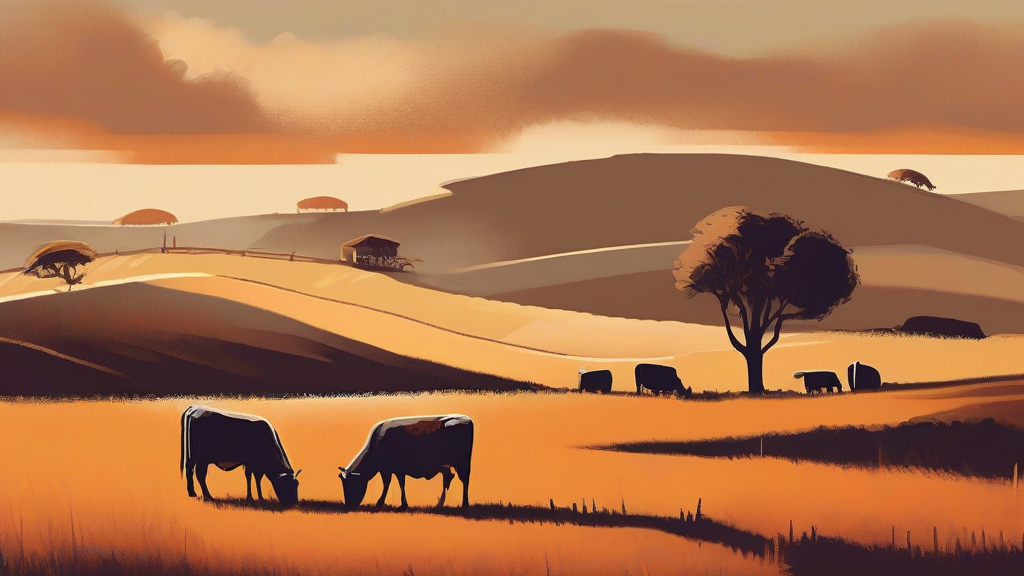
An estancia is a large cattle ranch or livestock estate found primarily in Argentina, Uruguay, and Paraguay, where it forms a central institution of rural life. The word comes from Spanish, ultimately deriving from the Latin 'stare', meaning 'to stand', and entered English through descriptions of South American pastoral life. An estancia typically encompasses thousands of hectares of open grassland, often on the Pampas, where cattle and sheep are raised by skilled horsemen known as gauchos. In English usage, the word evokes romance and tradition — wide horizons, horseback riding, and communal barbecues called asados — and appears frequently in travel writing and literature about South America. It is roughly equivalent to the North American 'ranch' or the Mexican 'hacienda', though each term belongs firmly to its own region. Because it is a specific cultural loanword, using 'estancia' signals familiarity with South American geography and customs, lending colour and precision to writing about that part of the world.
nounA large cattle-ranch or estate, particularly one in Argentina, Uruguay, or Paraguay. The term is used chiefly of the extensive grazing lands and their homesteads worked by gauchos.
- A large cattle ranch or livestock estate in Argentina, Uruguay, Paraguay, or other parts of South America.
- By extension: the homestead or main house on such a ranch.
"After weeks in Buenos Aires, she longed for the open skies of her family's estancia on the Pampas."
"The estancia stretched across thousands of hectares of grassland, its Hereford cattle grazing as far as the eye could see."
"Visitors to the estancia were treated to horseback riding, traditional asado, and folk music under the stars."
Standard English plural, following regular noun inflection; no accent mark is retained in English usage.
"The region's estancias have been passed down through generations of the same families."
The word 'estancia' literally means 'a standing' — a place where you stay put — which makes it fittingly ironic that its most famous inhabitants, the gauchos, were forever on horseback.
Reviewed by Deb Chak, Editor. AI-assisted content curated by RJS Tech Solutions LLP.
Etymology of estancia
Estancia comes directly from Spanish, where it originally meant a dwelling place or abode, derived from the verb 'estar' ('to be, to stay'), itself from Latin 'stare' ('to stand'). The sense evolved in colonial South America to denote the land on which stock was kept and the settlement built there. English borrowed the word during the nineteenth century as British travellers and traders wrote about the great cattle estates of Argentina and Uruguay. It shares its ultimate Latin root with words such as 'distance', 'stance', and 'substantiate'.
How estancia is actually used
Estancia is a loanword from Spanish and retains a distinctly South American flavour; it carries connotations of vastness, tradition, and gaucho culture rather than being a generic term for any farm. It is best reserved for Argentine, Uruguayan, or Paraguayan contexts, where 'ranch' would be the North American equivalent. The word is relatively formal or literary in English prose but common in travel writing.
Easily confused with estancia
An hacienda is a large estate in Spanish-speaking regions, typically in Mexico and involving farming or mining, while an estancia specifically denotes a large livestock ranch in South America.
An instance is a particular example or occurrence of something, whereas an estancia is a South American cattle ranch — they differ entirely in meaning despite similar spelling.