What does estray mean?
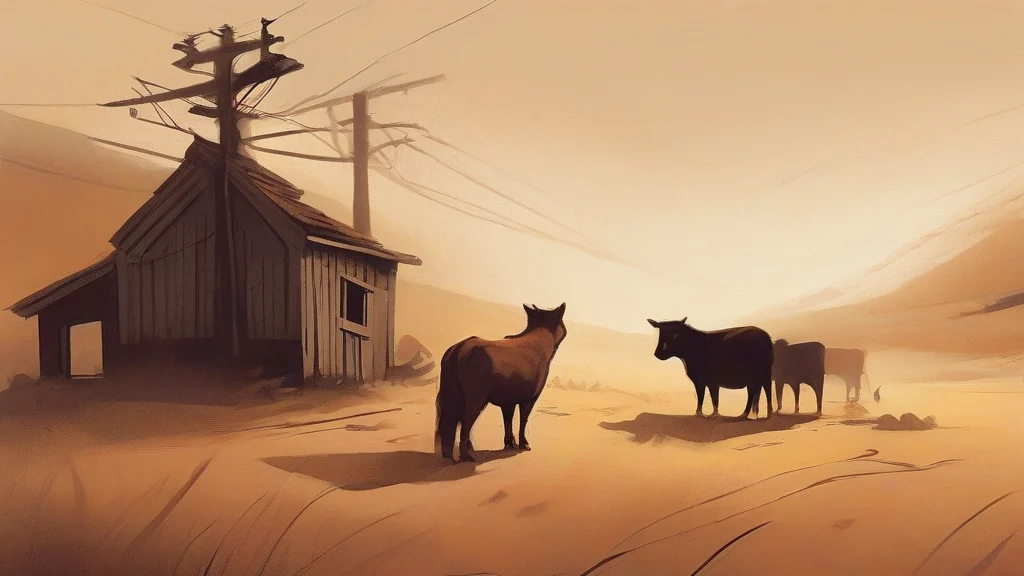
An estray is a domestic animal — typically cattle, horses, sheep, or other livestock — that has wandered away from its owner's property and is found roaming at large. The word is most at home in the legal vocabulary of the American West and Midwest, where stray-livestock laws require anyone who takes up an estray to report it, often by posting a notice, so the rightful owner can reclaim the animal. Beyond this agricultural usage, estray occasionally serves as a literary term for any person or thing that has drifted from its proper place. It derives from Old French 'estraier,' related to 'estrangier' and ultimately Latin 'extraneus,' making it a cousin of words like 'stray' and 'estrange.' Though rare in everyday conversation, it persists in statutes and rural practice, lending it an air of frontier-era formality that makes it a distinctive addition to the English lexicon.
A domestic animal that has strayed from its owner's land, especially one taken up and dealt with under stray-livestock law.
"The sheriff posted notice of the estray at the county courthouse."
Chiefly used in US legal and ranching contexts; plural 'estrays'.
(Rare, dated) To wander or stray.
"Some of the herd had estrayed beyond the boundary line."
This verbal sense is now largely obsolete.
Regular English plural, used when referring to multiple stray animals.
"The roundup collected several estrays from the open range."
In parts of the American West, finding a neighbor's cow isn't just good manners — 'taking up an estray' is a formal legal procedure with its own paperwork.
Reviewed by Deb Chak, Editor. AI-assisted content curated by RJS Tech Solutions LLP.
Etymology of estray
Estray entered Middle English from Old French 'estraier' (to stray), derived from 'estrangier' (to treat as foreign), which traces back to Latin 'extraneus,' meaning 'from outside.' It is thus closely related to 'stray,' 'estrange,' and 'extraneous,' all sharing that root sense of being outside one's proper place. The word has been used in English since the medieval period, particularly in law relating to lost animals.
How estray is actually used
The word survives mainly in American legal and agricultural contexts — stray-livestock statutes in western and midwestern states still use it — and sounds archaic elsewhere. The plural is regular ('estrays'). It can also function as a verb meaning to stray, though this sense is rare and dated.
Easily confused with estray
'Astray' is an adverb meaning 'off course or into error' (as in 'gone astray'), while 'estray' is primarily a noun for a wandering animal.