What does etiolation mean?
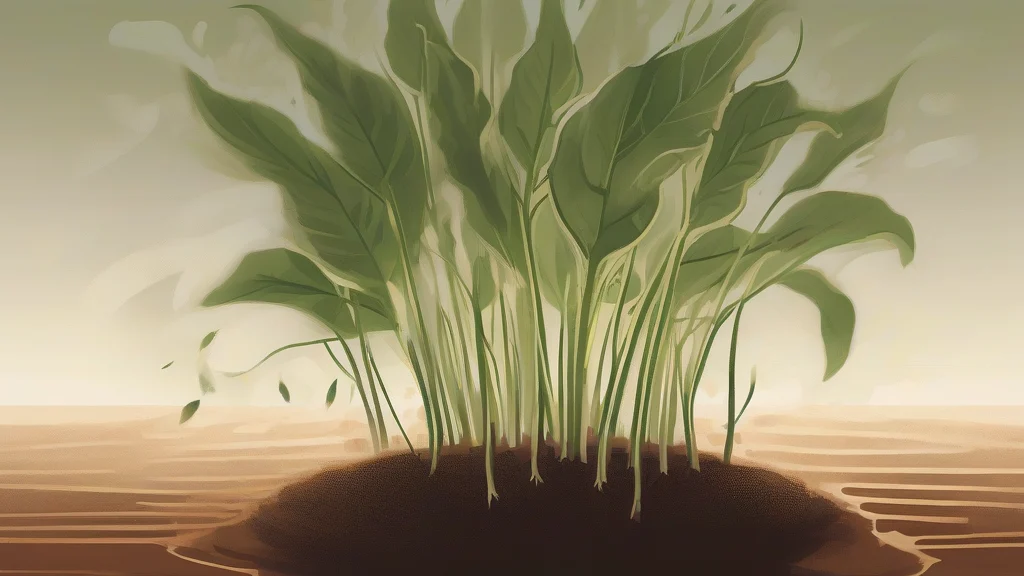
Etiolation refers to the pale, weakened condition that plants develop when grown without adequate light. Starved of sunlight, a plant cannot produce chlorophyll normally, so its stems elongate abnormally while its leaves remain yellowish-white and underdeveloped—a strategy of desperate, spindly growth as the plant stretches toward any available light. Gardeners encounter etiolation whenever seedlings are started in dim conditions, producing leggy, fragile specimens rather than sturdy green ones. Beyond botany, the word has a respected figurative life in formal prose: writers speak of the etiolation of a political movement, a language, or an artistic tradition to convey a slow draining of vigor and substance. This metaphorical extension gives etiolation particular value for anyone seeking precise vocabulary for decline that is gradual rather than dramatic. The term derives ultimately from French étioler, meaning to blanch or stunt, and entered English in the eighteenth century. Related forms include the verb etiolate and the adjective etiolated, which describes both pale plants and, figuratively, anything enfeebled by neglect.
nounThe process by which a green plant becomes pale or whitened due to being grown without sufficient light, resulting in weak, elongated growth. By extension, the weakening, paling, or enfeeblement of something—such as a person's health or an institution—through lack of vitality or nourishment.
- (Botany) The whitening or yellowing and abnormal elongation of a plant grown without adequate light, due to lack of chlorophyll development.
- (Figurative) A gradual weakening, paling, or loss of vigor in a person, institution, language, or tradition.
"The etiolation of the seedlings in the dark cellar left them pale and spindly."
"Potatoes stored in the dark sprout shoots marked by extreme etiolation, pale and fragile from the absence of light."
"Critics described the novel as evidence of the etiolation of a once-vigorous literary tradition."
Usually treated as an uncountable mass noun referring to the process in general. The plural form appears occasionally when referring to multiple distinct instances or types of etiolation, particularly in technical or comparative botanical writing.
"The study documented distinct etiolations across several species grown under identical low-light conditions."
Deprive a plant of sunlight and it doesn't just stop growing—it grows faster, stretching desperately toward light it can't find, becoming taller but weaker: that's etiolation.
Reviewed by Deb Chak, Editor. AI-assisted content curated by RJS Tech Solutions LLP.
Etymology of etiolation
Etiolation derives from the French verb étioler, meaning to cause a plant to become pale or stunted, itself of uncertain further origin but possibly connected to Old Norse or medieval Latin sources. English adopted the noun in the mid-eighteenth century alongside the verb etiolate, initially strictly in horticultural contexts. Over time the word developed its figurative sense of general enfeeblement, mirroring the semantic path of related terms like 'blanching.' Cognates within English include etiolate and etiolated, all sharing the same French root.
Related word forms
How etiolation is actually used
Etiolation is primarily a technical botanical term but is well established in figurative use in formal writing to describe cultural, intellectual, or physical decline. It carries a connotation of gradual, almost passive deterioration rather than sudden collapse. The spelling 'aetiolation' is a chiefly British variant reflecting the older spelling with -ae-, though 'etiolation' now dominates in both varieties.
Easily confused with etiolation
Etiology is the study of causes (especially of disease), while etiolation is the paling and weakening of a plant deprived of light; they share only a superficial resemblance in spelling.