What does evacuee mean?
An evacuee is a person who has been removed from a place of danger, most often under official arrangements during a war, natural disaster, industrial accident, or other emergency. The word carries no judgment about the person; it simply identifies them as having left — or been moved from — a hazardous location for their own safety. It entered widespread everyday use during the Second World War, when millions of British children were relocated from cities to the countryside to escape bombing raids, making 'evacuee' a familiar household term. Today it appears frequently in journalism covering wildfires, hurricanes, and floods, as well as military conflicts. While closely related to 'refugee', an evacuee is usually understood to have been displaced temporarily or within their own country, often as part of a planned evacuation, whereas a refugee has crossed borders fleeing persecution. The word's clear, neutral tone makes it standard in both formal reports and ordinary conversation about disasters.
nounA person who has been evacuated from a dangerous place, especially during a war, natural disaster, or other emergency.
- A person removed from a place of danger, especially by official order during a war or disaster.
- More broadly, anyone who has left a hazardous area for safety.
"Thousands of evacuees were sheltered in school gymnasiums after the hurricane made landfall."
"The Red Cross provided blankets and hot meals for every evacuee arriving at the relief centre."
"As a wartime evacuee, she spent four years living with a farming family in rural Devon."
Regular plural; used when referring to multiple people displaced from a dangerous area.
"The stadium opened its doors to hundreds of evacuees fleeing the wildfire."
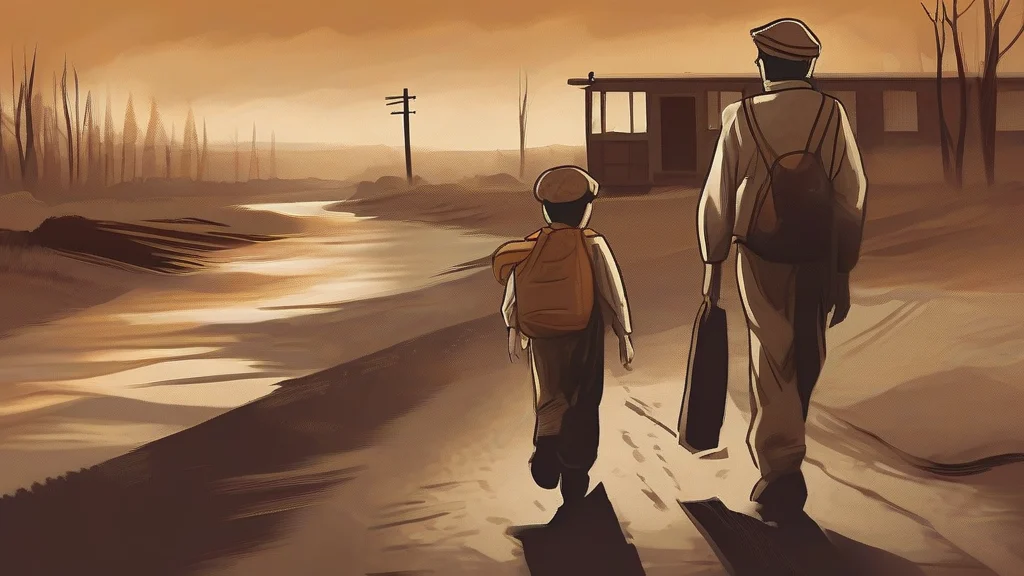
During World War II, over three million British children were evacuated to the countryside — and the word 'evacuee' became a household term almost overnight.
Reviewed by Deb Chak, Editor. AI-assisted content curated by RJS Tech Solutions LLP.
Etymology of evacuee
Evacuee derives from the verb 'evacuate', which comes from the Latin 'evacuare', meaning 'to empty out', formed from 'ex-' (out) and 'vacuus' (empty) — the same root that gives us 'vacuum' and 'vacate'. The noun was formed with the '-ee' suffix, common in English for denoting a person affected by an action (as in 'employee' or 'addressee'). It became firmly established in English during the Second World War, particularly in Britain, where mass evacuation of children from urban areas brought the word into daily use.
How evacuee is actually used
The word is neutral in register and commonly appears in news reporting about fires, floods, hurricanes, and armed conflict. It typically implies temporary removal rather than permanent displacement, which is what chiefly distinguishes it in connotation from 'refugee'.
Easily confused with evacuee
An evacuee is someone moved out of danger, often by authorities as part of an organized evacuation, while a refugee is someone who has fled their home country due to persecution or conflict and cannot safely return.