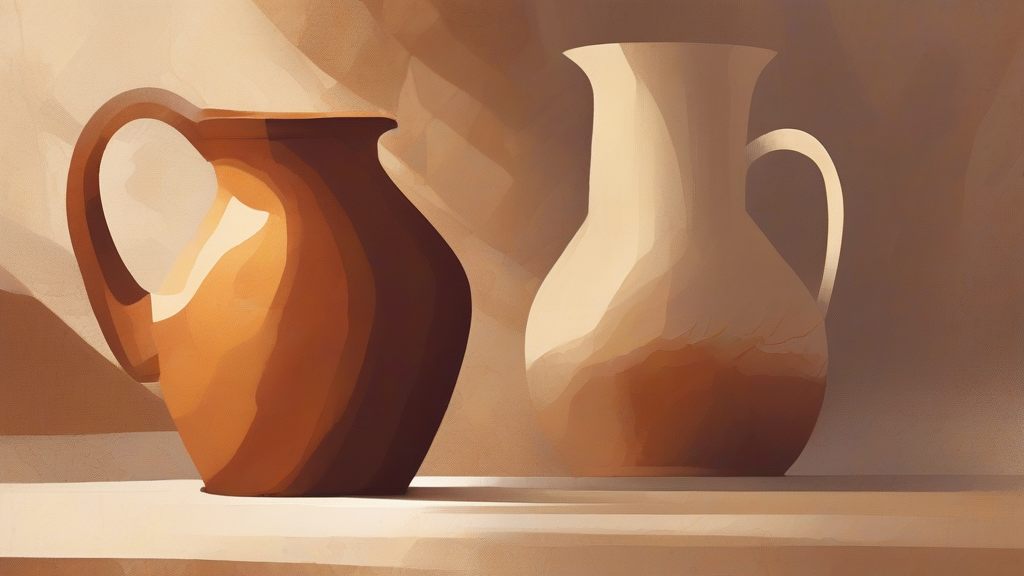
What does ewer mean?
An ewer is a large jug or pitcher with a wide mouth, typically used for holding and pouring water. Historically, ewers were everyday household objects: before indoor plumbing, water was carried in an ewer and poured into a basin for washing. Many ewers were made of precious materials such as silver, pewter, or fine porcelain, and ornate examples survive as antiques or museum pieces. The word carries a distinctly old-fashioned, literary flavor in modern English; it is rarely heard in ordinary conversation but appears readily in historical novels, period dramas, and descriptions of antique collections. It is most commonly paired with 'basin' in the phrase 'ewer and basin', which instantly evokes the domestic rituals of earlier centuries. Though no longer a practical necessity, the ewer remains a useful word for anyone describing historic interiors, tableware, or ceremonial vessels, and it adds an air of elegance and antiquity to writing about them.
nounA large jug with a wide mouth, formerly used for carrying water for someone to wash in.
- A large jug, often decorative, with a wide mouth, used especially (formerly) for holding water for washing.
"The maid filled the silver ewer and set it beside the washbasin."
"She poured water from the porcelain ewer into the basin on the dresser."
"The museum displayed a bronze ewer dating from the medieval period."
Standard plural; used when referring to multiple vessels, as in collections or inventories.
"The collection includes several silver ewers from the seventeenth century."
An 'ewer' is the elegant ancestor of the bathroom tap — before plumbing, this ornate jug delivered your washing water.
Reviewed by Deb Chak, Editor. AI-assisted content curated by RJS Tech Solutions LLP.
Etymology of ewer
The word 'ewer' entered English from Anglo-Norman French 'ewiere' (also appearing as Old French 'evier'), which itself derives from the Latin 'aqua', meaning water — the same root that gives us 'aquarium' and 'aquatic'. It was adopted into English in the Middle Ages to name the vessel from which water was served or poured for washing. The connection to Latin 'aqua' makes it a distant cousin of many other English words relating to water.
How ewer is actually used
'Ewer' is a somewhat formal or literary word today, most often encountered in historical fiction, descriptions of antiques, or museum contexts. It frequently appears in the phrase 'ewer and basin', evoking pre-plumbing domestic life.
Easily confused with ewer
A 'sewer' is an underground pipe that carries away sewage or rainwater, whereas an 'ewer' is a large jug for holding water.