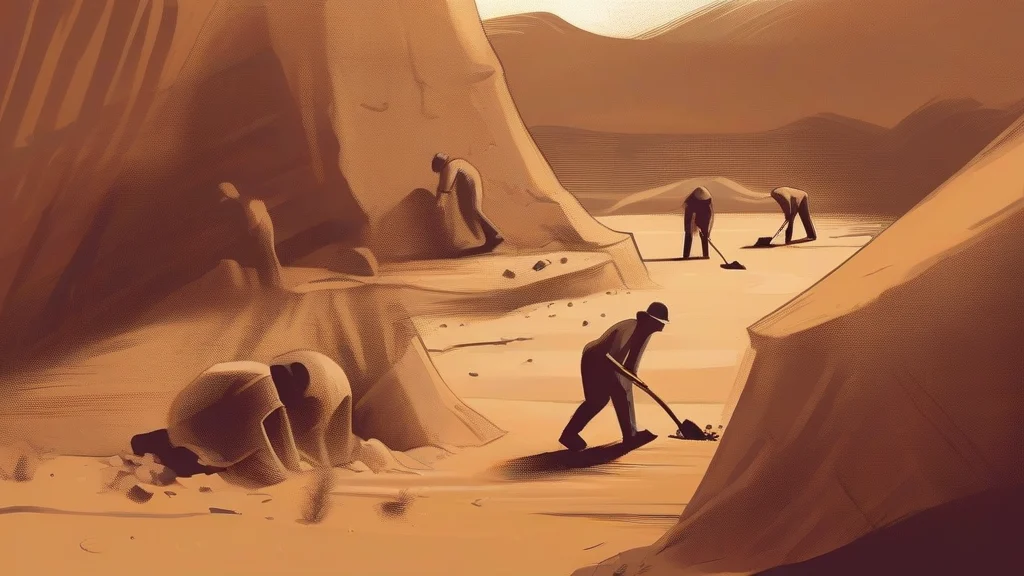
What does excavating mean?
"Excavating" is the present participle of "excavate," meaning to dig out or remove earth, whether on a vast scale — as when machinery clears ground for a building's foundations — or with painstaking delicacy, as when archaeologists uncover fragile ruins and fossils layer by layer. The word also carries a vivid figurative use: writers and therapists speak of excavating memories or emotions, suggesting the careful, deliberate unearthing of things long buried out of sight. Its connotations depend on context — industrial excavation suggests power and disruption, while archaeological excavation evokes patience, precision, and discovery. Derived from Latin roots meaning to hollow out, the word belongs to a family that includes excavation, excavator, and even cave. Whether describing bulldozers at a construction site or a novelist probing the past, excavating consistently implies revealing what has been concealed beneath the surface.
Digging out or removing earth; uncovering buried material or remains.
"They were excavating the tunnel by hand when they struck the old Roman road."
Used both literally (earthworks, archaeology) and figuratively (uncovering hidden truths).
The action or process of excavating; an act of digging out or unearthing.
"Excavating at the desert site continued through the winter months."
Every ancient city we know about — Pompeii, Tutankhamun's tomb, the Terracotta Army — exists only because someone was patiently excavating, one trowel-load at a time.
Reviewed by Deb Chak, Editor. AI-assisted content curated by RJS Tech Solutions LLP.
Etymology of excavating
Excavating comes from Latin excavare, formed from ex- ('out') plus cavare ('to hollow out'), itself derived from cavus ('hollow'). The word entered English via the Latin past participle excavatus, appearing in written English around the early 17th century. It shares its root with words such as cavity, cave, and concave, all tracing back to the same Latin notion of hollowness.
Related word forms
How excavating is actually used
Register is largely neutral but leans formal and technical; in archaeology it carries a precise, careful connotation distinct from casual 'digging'. The figurative sense (excavating one's past) is common in literary and psychological writing.
Easily confused with excavating
Exculpating means clearing someone of blame or guilt, while excavating means digging out earth or uncovering buried material.
Evacuating means emptying an area or removing people from danger, whereas excavating means digging into or unearthing the ground itself.