What does exhedra mean?
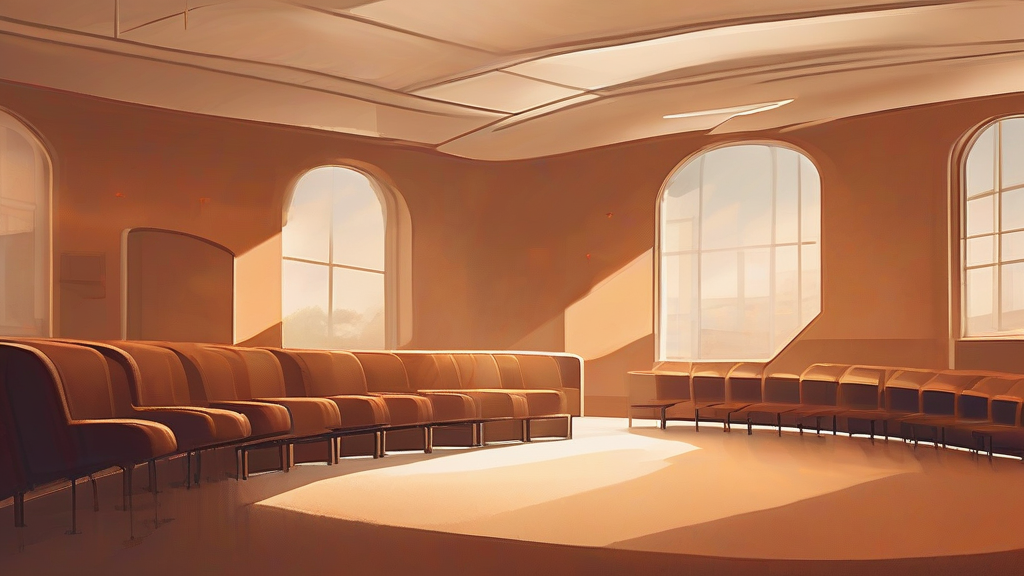
An exhedra is a semicircular recess, alcove, or open-sided portico in classical architecture, usually furnished with a curved bench and intended as a place for seated conversation. A signature feature of ancient Greek and Roman buildings, exhedrae appeared in gymnasia, temples, private villas, and public squares, and Roman examples were often richly decorated with statuary and mosaics. The term also applies to the curved stone seat itself, a form that survives today in parks and formal gardens, where a built-in bench wrapped around a planting or fountain echoes its ancient ancestor. The word carries a distinctly scholarly, classical flavor and is used almost exclusively in architectural history, archaeology, and garden design. Note that "exhedra" is an uncommon variant spelling; the standard dictionary form is "exedra." Its enduring appeal lies in what it represents: architecture designed not merely for shelter but for the pleasure of sitting together and talking.
nounA room, portico, or recess in classical architecture, often semicircular and open to the air, furnished with seats for conversation; also the curved stone bench itself.
- A semicircular recess or open portico in classical architecture, typically fitted with seating for conversation.
- A curved stone bench or garden seat built into such a recess.
"The garden's marble exhedra offered a shaded spot where visitors lingered over long afternoon conversations."
"Philosophers gathered daily in the exhedra at the edge of the gymnasium to debate questions of virtue."
"Landscape architects revived the classical exhedra, setting a stone bench into a semicircular niche of clipped yew."
The anglicized plural "exhedras" is now the common form; the Latin-style "exhedrae" appears mainly in specialist archaeological writing.
"Both exhedras flanking the courtyard were restored during the excavation."
Ancient Greeks designed the exhedra specifically for one thing modern offices still chase: a beautiful place to sit and talk.
Reviewed by Deb Chak, Editor. AI-assisted content curated by RJS Tech Solutions LLP.
Etymology of exhedra
"Exhedra" derives from Greek "exedra," meaning literally a seat out of doors, from "ex-" (out) plus "hedra" (seat or base). The word passed through Latin into Renaissance architectural vocabulary, when scholars describing classical remains adopted the Greek term for the semicircular recesses they found in Roman buildings. English usage dates from around the seventeenth century, with the spelling "exhedra" arising as a variant that preserves more closely the Greek aspirated form. The same root "hedra" also gives us "cathedral," via the Latin "cathedra," meaning a bishop's seat.
How exhedra is actually used
"Exhedra" is a rare variant spelling; the standard form in dictionaries and architectural literature is "exedra." The word carries a scholarly, classical register and appears mainly in discussions of ancient Greek and Roman architecture, gardens, and neoclassical design. The plural is most commonly "exhedras."
Easily confused with exhedra
"Exhedra" is an uncommon variant spelling of "exedra," the standard architectural term; both refer to the same semicircular recess or seat.