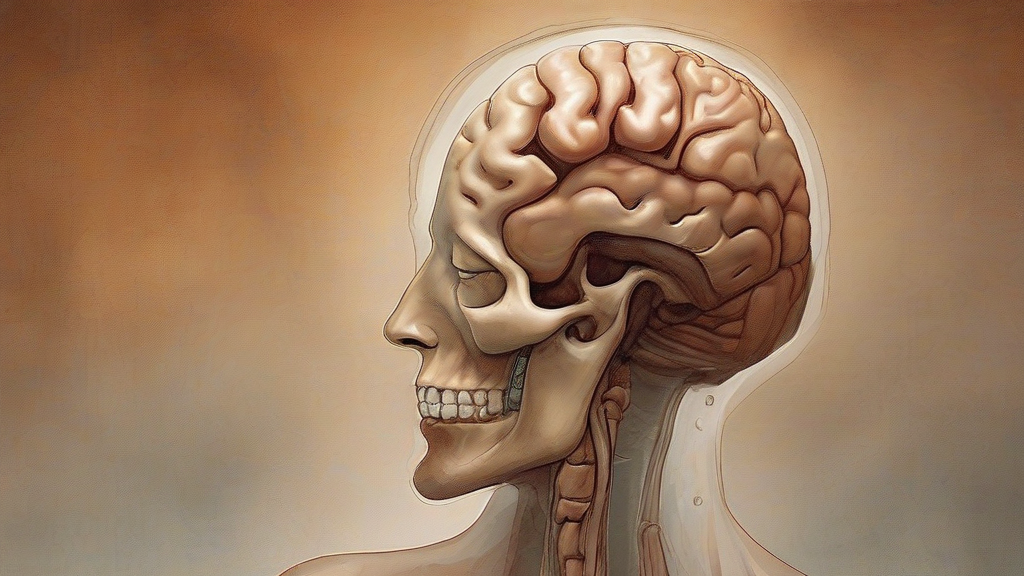
What does extradural mean?
Extradural is a technical adjective meaning situated or occurring outside the dura mater, the tough outermost of the three membranes that surround and protect the brain and spinal cord. It derives from Latin roots: extra- ('outside') combined with dura mater ('hard mother'), so called because of the membrane's tough consistency. The word appears chiefly in anatomy, neurology, and neurosurgery, most famously in the term extradural haematoma (or extradural hemorrhage), a dangerous accumulation of blood between the skull and the dura mater that can follow a head injury and requires urgent surgical drainage. It also describes certain anaesthetic techniques, such as extradural injection, in which medication is delivered into the space just outside the dura. Because the term belongs to specialist register, general readers rarely encounter it outside medical contexts, where its near-synonym epidural is often used instead. Its antonymic counterparts intradural and subdural describe positions inside or beneath the same membrane, making extradural part of a precise anatomical vocabulary for locating structures and pathologies relative to this critical boundary.
adjectiveSituated on or occurring outside the dura mater, the tough outermost membrane enclosing the brain and spinal cord.
- Located outside the dura mater, especially between the dura mater and the skull or vertebral column (anatomy).
- Relating to or occurring in the space outside the dura mater, as in extradural haemorrhage or extradural anaesthesia (medicine).
"The patient was rushed to surgery for an extradural haematoma following the head injury."
"A CT scan revealed a small extradural collection of blood pressing against the skull."
"The anaesthetist administered the drug via an extradural injection to numb the lower body."
An extradural bleed is so named because it happens outside the dura — the toughest of your three brain coverings — and neurosurgeons consider it one of the few true emergencies in medicine.
Reviewed by Deb Chak, Editor. AI-assisted content curated by RJS Tech Solutions LLP.
Etymology of extradural
Extradural combines the Latin prefix extra-, meaning 'outside' or 'beyond', with dura, the abbreviated form of dura mater, the medieval Latin name (literally 'hard mother') given to the outermost meningeal membrane because of its tough texture. The full term thus literally means 'outside the hard membrane'. English adopted the compound alongside related anatomical terms such as subdural and intradural as medical science developed a precise terminology for the layers surrounding the central nervous system. It shares the root durare ('to be hard, to endure') with words such as durable, endure, and obdurate.
How extradural is actually used
Strictly technical vocabulary used almost exclusively in anatomy, neurology, and neurosurgery. 'Epidural' is preferred in many clinical contexts, especially anaesthesia, though 'extradural' remains standard in British medical usage and in radiology reports. In American English 'epidural' dominates both clinical and everyday usage.
Easily confused with extradural
Subdural refers to a location or bleed beneath the dura mater, whereas extradural refers to one outside it, between the dura and the skull.
Epidural is essentially synonymous with extradural but is far more familiar to laypeople from its use for spinal anaesthesia during childbirth.