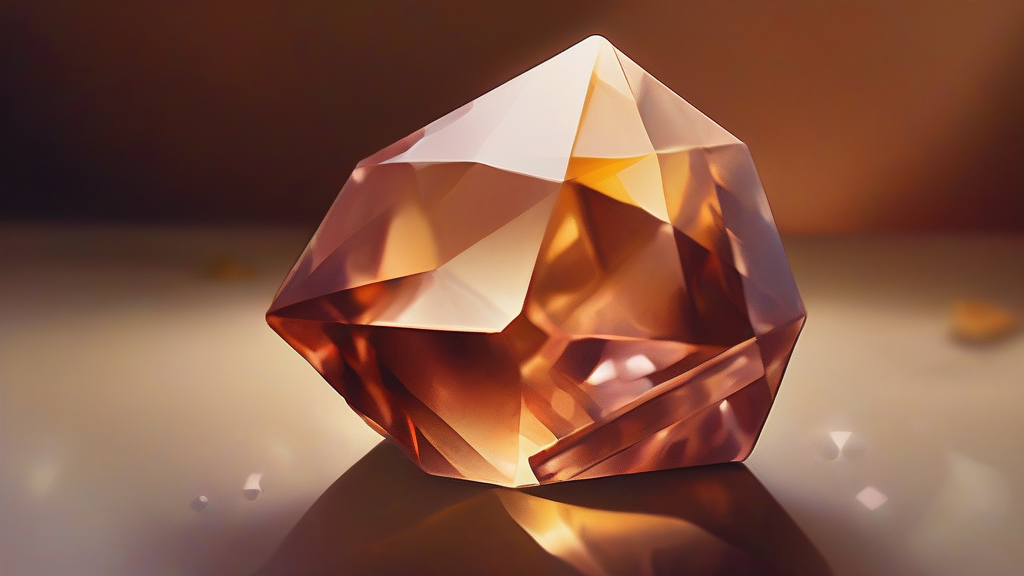
What does faceting mean?
Faceting is the skilled process of cutting a gemstone—or another hard material—into a series of flat, polished surfaces known as facets, each positioned at carefully calculated angles. The purpose is largely optical: well-executed faceting maximizes a stone's ability to reflect and refract light, producing the brilliance and fire prized in diamonds and coloured gems alike. The term derives from the noun "facet," which entered English via French from Latin, where it relates to the idea of a little face or surface. Beyond the jeweller's bench, faceting has taken on figurative uses: in geometry it describes dividing a shape into flat planes, and in software and online retail it refers to letting users filter information along several dimensions at once—so a shopper might narrow products by price, brand, and rating simultaneously. Whether literal or figurative, faceting conveys precision, craftsmanship, and the deliberate breaking of a whole into illuminating parts.
The craft or process of cutting flat, polished faces onto a gemstone or other material, especially to enhance its brilliance and optical beauty.
"Modern faceting of the round brilliant cut requires exacting control over crown and pavilion angles."
Most common in gemmological and lapidary contexts.
In geometry, design, or information management, the division of a whole into distinct facets, planes, or filterable dimensions.
"The catalogue's faceting allows users to refine thousands of listings with a few clicks."
A round brilliant diamond's 57 or 58 facets are cut so precisely that even a fraction of a degree off can mean the difference between dazzling fire and dull glass.
Reviewed by Deb Chak, Editor. AI-assisted content curated by RJS Tech Solutions LLP.
Etymology of faceting
Faceting comes from the verb "to facet," formed from the noun "facet," which English adopted from French facette in the early seventeenth century. The French term ultimately traces back to Latin facies, meaning "face, appearance, or surface," the same root behind words such as "face," "facial," "façade," and "superficial." A facet was thus originally conceived as a small face on a larger surface—a sense that transferred naturally to the polished planes of a cut gem as lapidary techniques developed through the Renaissance and later centuries.
Related word forms
How faceting is actually used
Primarily a technical term used in gemmology, lapidary work, and jewellery-making. In computing and e-commerce, "faceting" describes filtering results along multiple dimensions, borrowed metaphorically from the geometric sense. The British variant spelling "facetting" (with double t) also appears.
Easily confused with faceting
"Facing" refers to the front surface of something or a layer of material applied to a surface, whereas "faceting" refers specifically to cutting flat faces into gems or other materials.