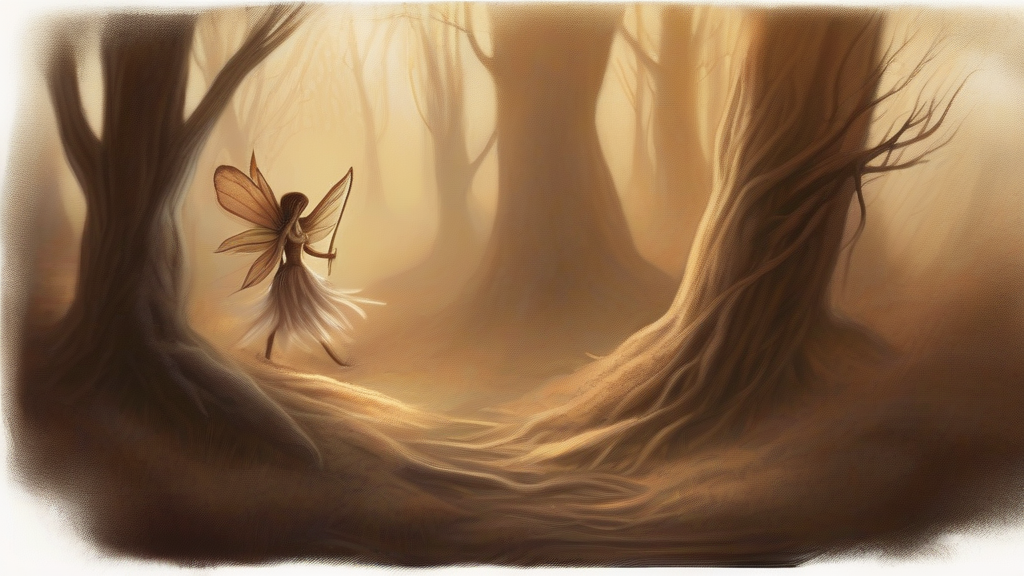
What does faery mean?
"Faery" is a literary and archaic variant spelling of "fairy," referring both to the small supernatural beings of European folklore — typically imagined as human-like figures endowed with magic — and to their enchanted realm, sometimes called faeryland. Though it denotes the same thing as "fairy," the choice of spelling carries real weight: "faery" signals a deliberate turn toward older, richer tradition, evoking the medieval romances of Chaucer and Spenser rather than the diminutive, winged sprite of modern children's books. It often appears in fantasy literature and poetry precisely because it suggests something older, wilder, and less domesticated — the dangerous glamour of the Otherworld rather than harmless whimsy. Used adjectivally in phrases like "faery tales" or "the faery realm," it lends a text an antique, spellbound quality that plain "fairy" cannot quite match.
A supernatural being in folklore, usually depicted as small and human-like, possessing magical powers; a fairy.
"The child left a saucer of milk out for the faeries each night."
Literary or archaic spelling; "fairy" is standard in modern usage.
The enchanted realm or state of magic associated with such beings; fairyland.
"He wandered so long among the hills that he seemed half lost to faery."
Often used without an article in this sense, as in 'lost to faery'.
The plural follows regular English noun inflection; it appears mainly in literary or folkloric contexts, mirroring "fairies."
"Legend held that the faeries came out on moonlit nights to dance in the ring."
"Faery" isn't a misspelling — it's the older, more enchanting spelling that writers like Spenser used to summon a world of magic.
Reviewed by Deb Chak, Editor. AI-assisted content curated by RJS Tech Solutions LLP.
Etymology of faery
"Faery" descends from Old French "faerie," meaning enchantment or the land of enchantment, derived from "fae" (an enchanting spirit), which itself traces back to Latin "fata," the goddesses of fate known as the Fates. The word entered English in Middle English, and forms like "faerie" and "faery" were common until "fairy" became the standard modern spelling. Its cognates include "fairy," "fay," and "fey," all ultimately rooted in the same Latin notion of fate and destiny, reflecting the old belief that these spirits had power over human fortunes.
Related word forms
How faery is actually used
"Faery" is markedly more literary, archaic, or poetic than "fairy" — modern prose almost always uses "fairy." Writers often choose "faery" deliberately to evoke older folklore traditions, a heightened tone, or the darker, stranger fairy lore of medieval romance, distinguishing it from the sanitized winged sprite of children's stories. It can also function attributively, as in "faery tales."
Easily confused with faery
"Fey" means otherworldly, clairvoyant, or doomed to die (and colloquially whimsical), while "faery" refers to the fairy being or its magical realm itself.
"Fair" as an adjective means just, attractive, or unblemished, and sounds similar to the first syllable of "faery," but has no supernatural meaning.