What does fagged mean?
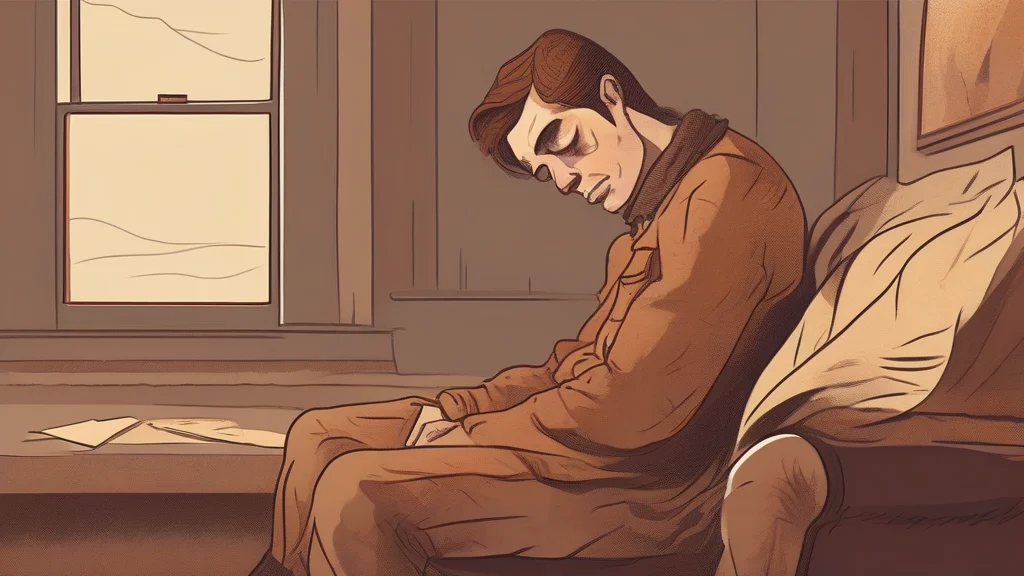
"Fagged" means exhausted — worn out by physical or mental effort. It functions as an adjective and as the past tense and past participle of the verb "fag," an informal British word meaning to toil laboriously or, historically, to perform drudgery for someone else. The word carries a distinctly colloquial register and is heard most often in British English, where phrases like "utterly fagged" or "fagged out" convey a bone-deep tiredness after hard work. Its flavor is somewhat old-fashioned today, evoking mid-twentieth-century speech more than contemporary idiom, and speakers now often reach for alternatives such as "knackered" or "exhausted." The verb "fag" has an obscure origin, though one plausible thread links it to the world of English public schools, where junior pupils known as "fags" performed chores for their seniors — servile labor being the natural root of weariness. Because the base word carries other, sometimes offensive meanings in American usage, care with audience and context matters when choosing this word.
Exhausted or worn out with effort.
"She was too fagged to cook dinner and ordered a takeaway instead."
Informal and mainly British; increasingly dated.
Past tense and past participle of 'fag': to tire or weary, or (historically) to make someone perform menial tasks.
"The long march fagged the troops badly."
In Victorian public schools, a 'fag' was a junior boy doing chores for seniors — the tired sense of 'fagged' likely grew out of that drudgery.
Reviewed by Deb Chak, Editor. AI-assisted content curated by RJS Tech Solutions LLP.
Etymology of fagged
The verb "fag" emerged in English in the sixteenth and seventeenth centuries with the sense of working hard or wearily, and by the eighteenth century it had taken on its distinctive public-school meaning of performing menial tasks for senior pupils. Its ultimate origin is uncertain, though it may derive from the notion of drooping or flagging, akin to "fag-end," the limp last part of a piece of cloth. From this sense of drudgery came the adjectival use of "fagged" to describe someone worn out by toil.
Related word forms
How fagged is actually used
Informal and chiefly British; 'fagged' sounds dated to many younger speakers, who prefer 'knackered' or 'shattered'. In American English it is rare and may be avoided because of the offensive slang sense of the base word 'fag'.
Easily confused with fagged
'Fag' is the base verb and noun with several unrelated senses (a chore, a cigarette in British slang, and a derogatory slur in American English), whereas 'fagged' is specifically its past-tense/adjectival form meaning exhausted.