What does faller mean?
A faller is, at its simplest, someone or something that falls. The word appears most often in descriptive phrases: horse racing enthusiasts label an error-prone horse a 'heavy faller', while doctors and carers refer to 'frequent fallers' when assessing patients — typically older people — at risk of injury. The term also carries a precise occupational meaning in North American forestry, where a faller is the trained worker who cuts down standing trees, a role demanding skill in judging a tree's lean, escape routes, and safety margins. Because English also has 'feller', meaning one who cuts down, the two words invite confusion even though both can describe aspects of the same logging work. Derived straightforwardly from the ancient verb 'fall', 'faller' is a small but versatile word: concrete in its sporting and medical senses, technical in its forestry sense, and instantly understandable once heard.
A person or thing that falls; especially one noted for falling often or heavily.
"The vet advised retiring the gelding, a chronic faller over fences."
Often used attributively in set phrases such as 'a heavy faller'.
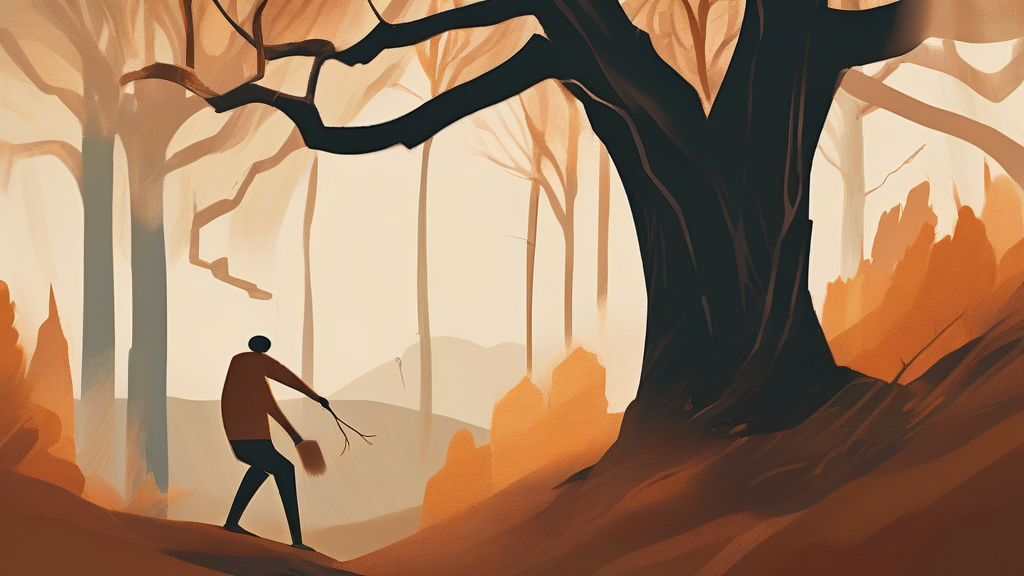
(North American forestry) A worker employed to fell trees.
"Two fallers worked the steep slope while the rest of the crew hauled logs."
Standard occupational classification in US and Canadian logging; less familiar outside North America.
Regular plural; standard in both the general and forestry senses.
"Frequent fallers on the ward were referred to the physiotherapy team."
In the timber industry, 'faller' isn't an accident report — it's a job title for the highly skilled workers who bring down towering trees for a living.
Reviewed by Deb Chak, Editor. AI-assisted content curated by RJS Tech Solutions LLP.
Etymology of faller
'Faller' is formed simply from the verb 'fall' plus the agentive suffix '-er', following the long Germanic pattern that yields 'walker' from 'walk' and 'baker' from 'bake'. The verb itself descends from Old English 'feallan', common Germanic in origin and shared with German 'fallen' and Dutch 'vallen'. The compound-rooted relatives 'nightfall', 'rainfall', and 'pitfall' all preserve the same core word, while the forestry job title arose as a formal alternative to 'feller' in North American logging.
Related word forms
How faller is actually used
Most everyday uses are descriptive rather than formal — racegoers say a horse is a 'heavy faller', and medical or care contexts speak of 'frequent fallers' among patients at risk. The forestry sense is standard occupational terminology in the United States and Canada but unfamiliar elsewhere, where the job is more often called that of a lumberjack or tree feller.
Easily confused with faller
A 'feller' is one who cuts something down (especially trees), while a 'faller' is one who falls or, in logging, the worker whose job is formally titled by the falling of timber.