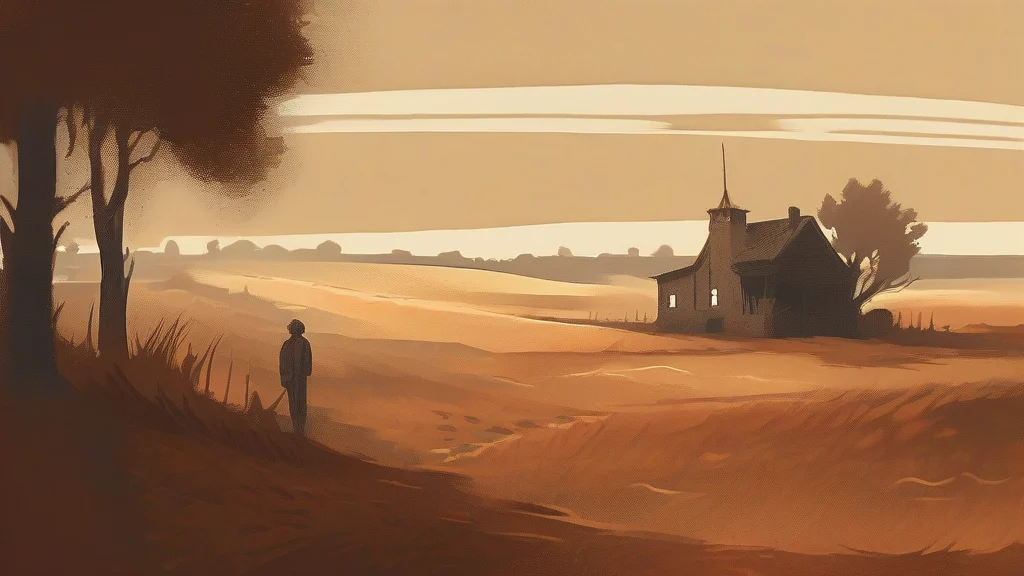
What does fallowness mean?
Fallowness is a noun describing the state of being fallow. In its original agricultural sense, it refers to arable land that has been deliberately left unsown for a season so the soil can restore its nutrients — a practice farmers have used since antiquity to keep fields productive over the long term. By extension, the word has developed a rich figurative life: writers and thinkers use fallowness to describe periods of dormancy or apparent unproductiveness in a person's creative, intellectual, or emotional life. Crucially, this figurative sense tends to be positive, suggesting a restorative pause that precedes renewal rather than mere idleness or failure. The word derives from 'fallow,' which traces back through Middle English to Old English roots of Germanic origin. Though formal in register and uncommon in everyday conversation, fallowness is valuable precisely because English offers few single words for this idea of fruitful emptiness — a season of rest that makes future growth possible. It appears most often in essays, literary criticism, and reflections on work and burnout.
nounThe state or condition of being fallow: either land left unplanted for a period to restore its fertility, or, figuratively, a period of dormancy or unproductivity in a person's life, work, or creative output.
- The condition of arable land left unsown for a season or more so that it may recover its fertility.
- A figurative state of dormancy, rest, or temporary unproductiveness in creative, intellectual, or professional life.
"After years of relentless touring, the musician embraced a season of fallowness, letting new songs take root slowly."
"The fallowness of the eastern field gave the soil time to rebuild its nutrients before spring planting."
"She came to see the fallowness following her divorce not as stagnation, but as necessary rest."
Treat as a mass noun in almost all contexts.
"The essay traced the long fallowness between her two novels."
Farmers have deliberately let fields rest empty for millennia — fallowness isn't failure, it's how soil (and sometimes people) recover.
Reviewed by Deb Chak, Editor. AI-assisted content curated by RJS Tech Solutions LLP.
Etymology of fallowness
Fallowness is formed from the adjective 'fallow' plus the suffix '-ness.' 'Fallow' comes from Old English 'fealga' (used of ploughed but unsown land), a word of Germanic origin whose deeper ancestry and exact cognates remain uncertain among scholars. It passed into Middle English and has described resting farmland since the earliest records, with the abstract noun fallowness developing later alongside the word's figurative extension into human affairs.
Related word forms
How fallowness is actually used
Formal to literary in register; rarely heard in casual speech. The literal agricultural sense is now somewhat technical, appearing mainly in writing about farming history or sustainable agriculture. The figurative sense carries a positive connotation of deliberate, restorative pause rather than mere laziness, and is often found in discussions of creativity and burnout.
Easily confused with fallowness
Though similar in sound, 'following' means coming after or next in sequence, while 'fallowness' describes the dormant, unplanted state of land or an unproductive interval.