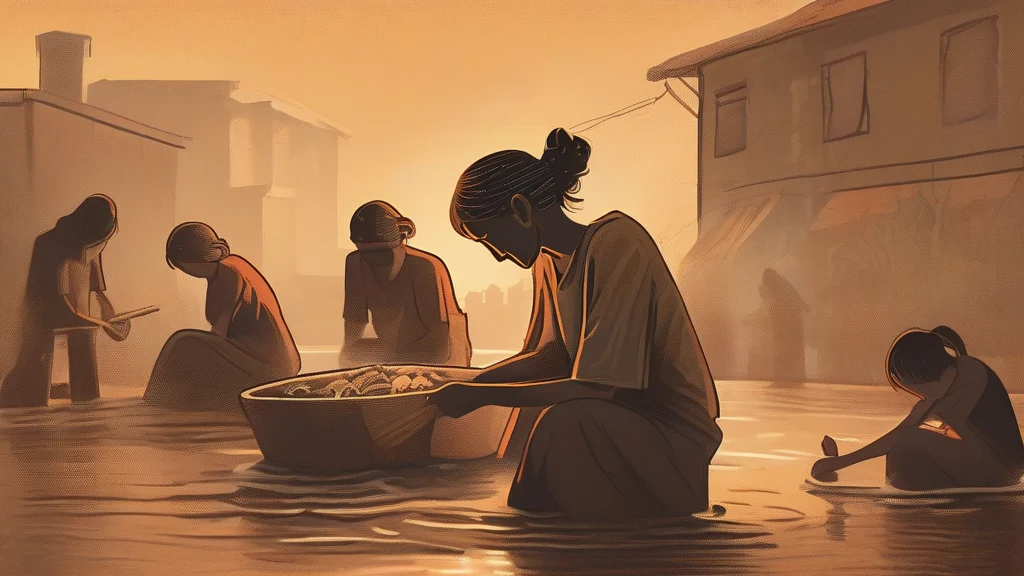
What does famishing mean?
"Famishing" is the present participle of the verb "famish," which means to starve or suffer severe hunger. In modern usage it survives mostly in two registers: the informal, often humorous exclamation "I'm famishing!" — a heightened way of saying one is extremely hungry — and more serious literary or historical writing describing people or animals actually wasting away from want of food. The word carries connotations of urgency and extremity: a famishing person is well beyond merely peckish. It derives ultimately from the Latin "fames," meaning hunger, the same root behind "famine," which gives it a family resemblance to one of history's gravest words. Its close cousin "famished" is now the more common everyday form, so encountering "famishing" often signals either lively colloquial speech or deliberate literary effect. It remains a vivid, expressive choice for conveying hunger at its most acute.
Present participle of "famish": suffering extreme hunger or starving; also, in transitive constructions, the act of depriving of food.
"The besieged city was famishing by the time aid finally arrived."
Most familiar today in the colloquial phrase "to be famishing" (extremely hungry).
Experiencing severe hunger; ravenous.
"The famishing travellers devoured the simple meal in minutes."
"Famish" has been making characters dramatically hungry since Shakespeare's day — and it traces back to the same Latin root as the word "famine."
Reviewed by Deb Chak, Editor. AI-assisted content curated by RJS Tech Solutions LLP.
Etymology of famishing
The verb "famish" came into Middle English in the medieval period, likely by way of Old French forms such as "affamer" (to make hungry), ultimately rooted in the Latin noun "fames," meaning hunger — the same source that gives us the word "famine." From the Middle Ages onward, "famish" was a standard way to describe both starving and being made to starve, appearing frequently in early modern English literature, including Shakespeare's plays. Today the verb itself sounds somewhat old-fashioned outside its participial forms "famished" and "famishing," which remain current in everyday speech.
Related word forms
How famishing is actually used
In contemporary use, "famishing" is largely confined to the informal, slightly playful exclamation "I'm famishing" (especially common in British speech) and to literary or historical descriptions of starvation. The related form "famished" is far more frequent as an everyday adjective meaning "very hungry."
Easily confused with famishing
"Finishing" means bringing something to an end, while "famishing" describes suffering extreme hunger — they look and sound similar in passing.
"Famished" is the past tense/past participle form describing a state of extreme hunger, while "famishing" is the ongoing present participle form.