What does fanfare mean?
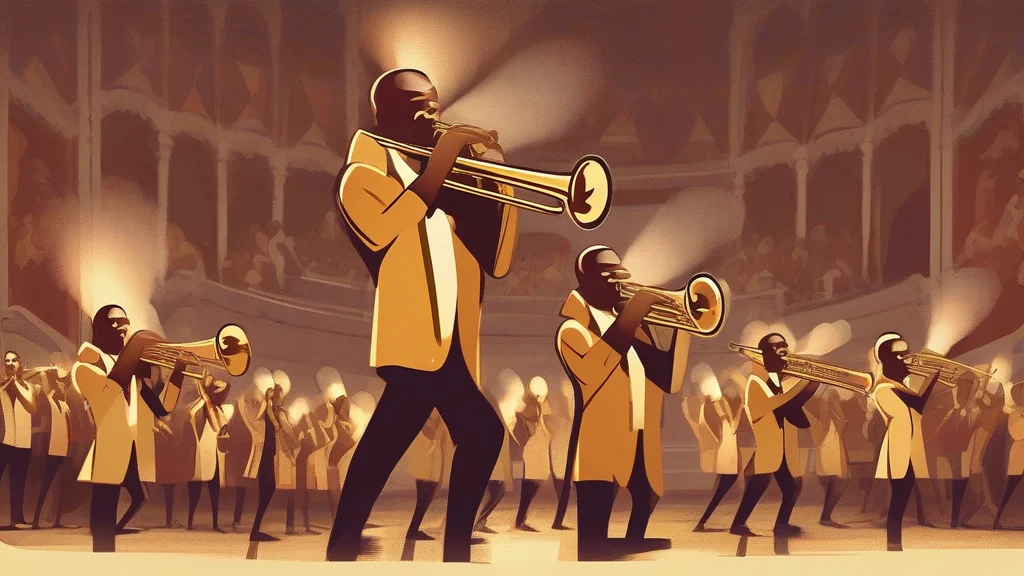
A fanfare is, in its original musical sense, a brief and brilliant composition for brass instruments—usually trumpets—played to announce the arrival of an important person or to open a ceremony. Its bright, attention-commanding sound made it the traditional signal of royal entrances, military occasions, and grand public events. From this literal use grew a figurative one: a fanfare is now any conspicuous public display or celebratory commotion surrounding an event, as in 'the store opened with great fanfare.' Just as often the word appears in the negative: something done 'without fanfare' happens quietly and without ceremony, a contrast journalists find especially useful. The word thus spans both sound and spectacle, carrying connotations of grandeur, publicity, and sometimes deliberate showiness. Whether describing a trumpet flourish at a coronation or the hype around a product launch, fanfare remains a vivid shorthand for the noise we make when we want the world to pay attention.
nounA short, lively ceremonial tune played on brass instruments, especially trumpets, to announce an important person or event. By extension, an elaborate or ostentatious public display or celebration surrounding something.
- A short ceremonial piece of music for brass instruments, typically trumpets, performed to announce or honor someone or something.
- An ostentatious or elaborate public display or celebration marking an event.
"The new product launched with great fanfare, complete with confetti and a live brass band."
"A resounding fanfare greeted the president as he stepped onto the balcony."
"After years of quiet research, the team published its findings without any fanfare."
Regular plural; used both for multiple musical flourishes and, less commonly, for multiple displays or celebrations.
"The day was marked by fanfares across the capital."
Every time a bride walks down the aisle or a champion takes the podium to a burst of trumpets, you're hearing a tradition that echoes back centuries of heralds announcing royalty.
Reviewed by Deb Chak, Editor. AI-assisted content curated by RJS Tech Solutions LLP.
Etymology of fanfare
Fanfare entered English in the early 17th century, borrowed from French fanfare, which itself came from Italian fanfara, meaning a trumpet call or the trumpet used for one. The ultimate origin is uncertain—it may be echoic of a trumpet's blare—but the word spread across Europe in closely related forms, giving Spanish fanfarria and feeding into English fanfaronade, a term for boastful talk. The figurative sense of a showy public display developed naturally from the word's association with ceremonial announcement.
How fanfare is actually used
The figurative sense ('with much fanfare', 'without fanfare') is very common in journalism and often carries a slightly ironic tone when contrasted with modest or underwhelming events; saying something happened 'without fanfare' implies it was deliberately low-key.
Easily confused with fanfare
Fanfare is a ceremonial trumpet tune or showy display, while fanfaronade means boastful, swaggering talk.