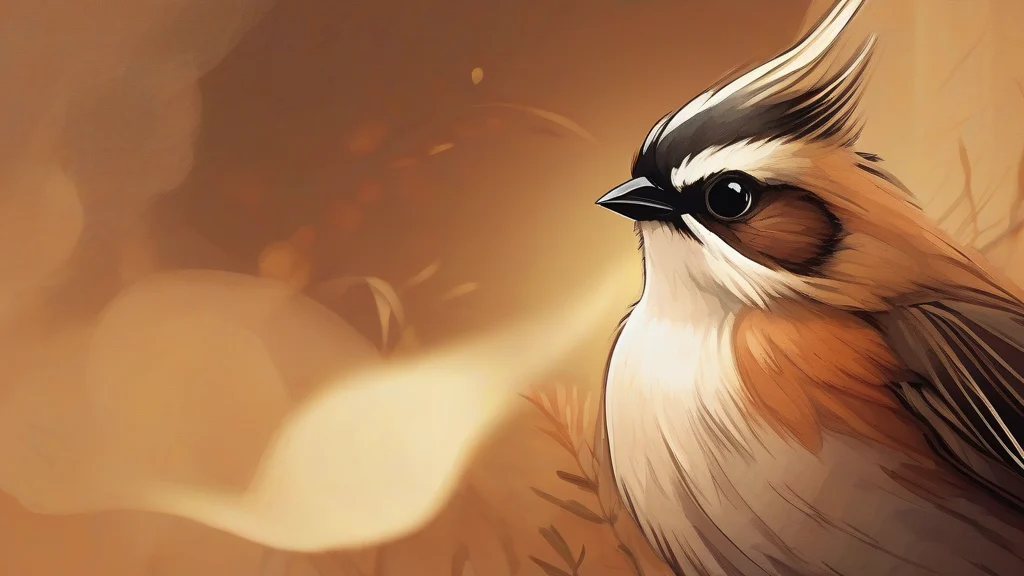
What does fantail mean?
Fantail is a compound word describing anything marked by a broad, fan-shaped tail, but in practice it names several distinct things: a family of small, lively insect-eating birds of Australasia and southern Asia, notably the New Zealand fantail, which constantly spreads its tail as it flits through the understorey; a breed of ornamental pigeon bred over centuries for its enormous, upward-fanning tail; a popular variety of fancy goldfish with a graceful, flowing double tail; and, in traditional milling, the small auxiliary windwheel that automatically turned windmill sails into the breeze. The word is descriptive rather than emotive, valued chiefly by birdwatchers, fanciers, and historians of technology. Because it appears across such varied fields — natural history, animal husbandry, and vernacular engineering — "fantail" rewards anyone interested in how a single vivid image, the open fan, can name creatures and machines alike across quite different worlds.
nounA fantail is a bird, breed of animal, or structure characterized by a broad, fan-shaped tail — most commonly a small songbird of Australasia and southern Asia with a fan-shaped tail held open while foraging, or a breed of fancy domestic pigeon bred for its large fan-like tail.
- A small insectivorous songbird of the genus Rhipidura, found in Australasia and southern Asia, with a broad tail spread like a fan; e.g. the New Zealand fantail.
- A breed of domestic pigeon selectively bred for its large, upright, fan-shaped tail.
- A variety of fancy goldfish with a long, flowing, fan-shaped tail fin.
- A windmill whose fantail automatically keeps the sails facing into the wind.
- The fan-shaped overhang at the stern of some vessels, especially paddle steamers.
"The fantail flitted about the garden, fanning its tail to flush insects from the foliage."
"A friendly New Zealand fantail followed the trampers down the track, darting after the insects they disturbed."
"Her prize-winning fantail pigeons paraded across the coop roof with their tails spread like open fans."
Regular plural formation; used when speaking of more than one bird, pigeon, goldfish, etc.
"Fantails are among the friendliest native birds in New Zealand gardens."
The fantail goldfish isn't a wild fish at all — it's a centuries-old product of selective breeding in China, prized purely for that flowing double tail.
Reviewed by Deb Chak, Editor. AI-assisted content curated by RJS Tech Solutions LLP.
Etymology of fantail
Fantail is straightforwardly an English compound of "fan" and "tail", formed to describe a tail that spreads like the folding fan. The word emerged in English usage around the late sixteenth and early seventeenth centuries, first applied broadly to any creature or thing with such a tail before settling into the specific named uses familiar today. Its root word "fan" traces back through Old English "fann" to Latin "vannus", the winnowing implement, which also gives us related terms such as "van" in winnowing contexts. Cognates are therefore other English derivatives of that same Latin root rather than parallel compounds in other languages.
How fantail is actually used
Almost always used as a common noun naming a type of thing rather than an abstract concept; the word is most familiar in birding circles (especially in New Zealand and Australia) and among hobbyists keeping fancy pigeons or goldfish. It carries no particular connotation beyond its literal descriptive sense. In Britain, "fantail" also has a long-standing technical use for the automatic tailing device on windmills.
Easily confused with fantail
"Fan tail" (two words) refers simply to a fan-shaped tail in general, whereas "fantail" as one word names specific birds, breeds, or things that have such a tail.
A wagtail is a different songbird that characteristically wags its long tail up and down, while a fantail is named for the fan-like spread of its tail.