
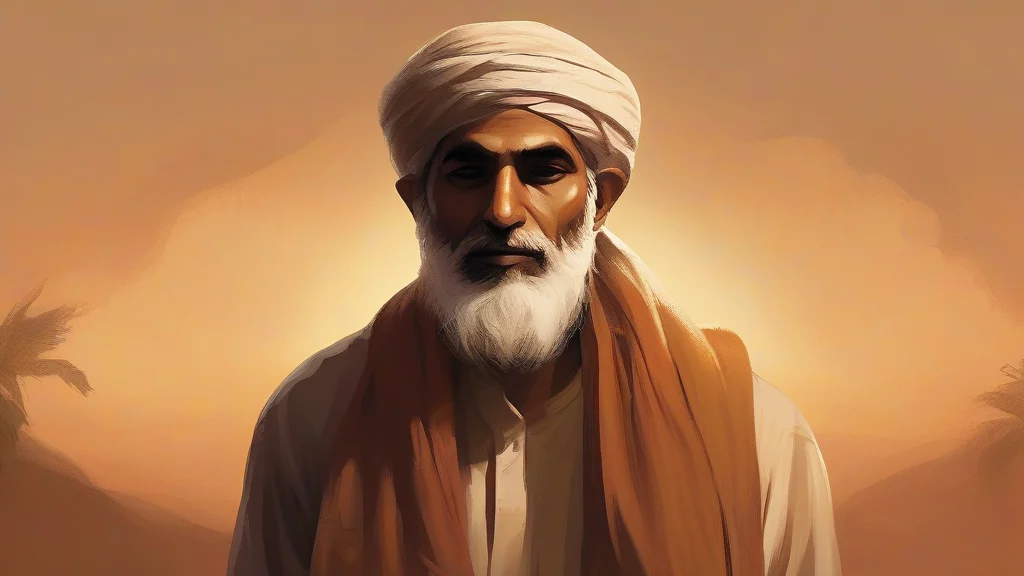
What does faqir mean?
A faqir is a religious ascetic — typically a Muslim mendicant, though the term was also extended to Hindu holy men — who has renounced worldly possessions and commonly supports himself by begging. The word derives from the Arabic 'faqir', meaning 'poor', reflecting the spiritual ideal of poverty at its heart; it entered European languages during the era of colonial contact with South Asia and the Middle East, appearing frequently in nineteenth- and early twentieth-century travel and adventure writing. In contemporary English the spelling 'fakir' has largely displaced 'faqir', and both are used far less often than in the past. The word evokes austerity, devotion, and detachment from material life, and it is sometimes conflated in the popular imagination with conjurors or snake-charmers, though its core meaning remains that of a mendicant seeker of God.
nounA faqir is a Muslim (and in some usage, Hindu) ascetic or mendicant holy man who has renounced worldly goods, often living by begging. It is a chiefly historical and literary term, now most often encountered as a variant spelling of 'fakir'.
- A Muslim ascetic or mendicant who has renounced material possessions and often lives by begging.
- By extension, a Hindu itinerant ascetic or religious beggar (a sense borrowed through the same route and shared with the spelling 'fakir').
"The traveller described meeting a gaunt faqir who had sat in meditation at the mosque gate for years."
"A barefoot faqir stood at the shrine entrance, palms outstretched and eyes lowered."
"In colonial-era travel writing, the faqir appears almost as an emblem of the mysterious East."
Standard English plural; no special irregular form exists.
"Several faqirs gathered outside the mosque after evening prayers."
The word 'faqir' literally comes from the Arabic for 'poor' — these holy men wore their poverty as a badge of spiritual devotion.
Reviewed by Deb Chak, Editor. AI-assisted content curated by RJS Tech Solutions LLP.
Etymology of faqir
The word traces to the Arabic 'faqir' (فقير), meaning 'poor' or 'needy', derived from the root f-q-r associated with poverty. It passed into Persian and was transmitted to English in the early seventeenth century through travel and trade accounts, where the parallel form 'fakir' also took hold. The related Arabic term 'faqr' denotes spiritual poverty, the ideal embraced by Sufi ascetics, and this devotional context shaped how European writers understood the figure.
How faqir is actually used
Largely literary and historical today; in modern prose the spelling 'fakir' predominates. The word carries connotations of piety, self-denial, and poverty, though colonial-era accounts sometimes used it loosely or sensationalised it.
Easily confused with faqir
'Fakir' is simply the more common modern spelling of the same word, so they denote the same thing; confusion arises mainly over which spelling to use, with 'fakir' preferred in contemporary writing.
A faker is someone who pretends or counterfeits, whereas a faqir is a genuine religious ascetic.