What does farinha mean?
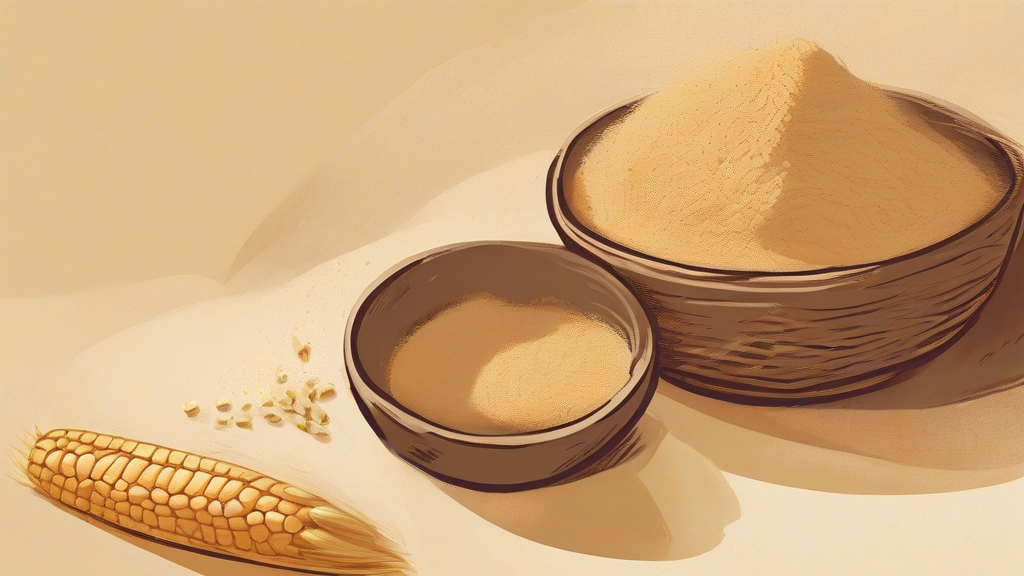
Farinha is a coarse meal made from grated cassava (manioc), best known as a cornerstone of Brazilian cooking, where it appears at nearly every table — sprinkled over beans and stews such as feijoada, stirred into dishes like farofa, or eaten on its own as a side. The word is borrowed directly from Portuguese, where it simply means 'flour', and it entered English primarily through culinary writing about South America. Derived ultimately from the Latin farina, meaning flour or ground grain, it belongs to the same family as English 'farina' and 'farinaceous'. Farinha carries warm, rustic connotations of traditional home cooking and regional identity, and it is typically used untranslated in English, much like other loanwords for culturally specific foods. For cooks and readers of travel writing alike, it names something that has no exact English equivalent.
nounA coarse meal or flour made from grated cassava (manioc), widely used in Brazilian and other South American cuisine; by extension, the Portuguese word for flour generally.
- Coarse toasted meal made from cassava, a staple foodstuff in Brazil and parts of South America.
- (In Portuguese contexts) flour or meal of any grain.
"She sprinkled toasted farinha over the feijoada just before serving."
"The waiter brought a bowl of golden farinha to accompany the grilled fish."
"In northern Brazil, farinha is as fundamental to the daily meal as bread is elsewhere."
Rarely used; the word usually functions as an uncountable mass noun in both English and Portuguese.
"The market stalls sold several farinhas made from different roots and grains."
The same Latin root that gives us 'farina' travelled to Brazil and became farinha — the crunchy cassava staple Brazilians sprinkle on almost everything.
Reviewed by Deb Chak, Editor. AI-assisted content curated by RJS Tech Solutions LLP.
Etymology of farinha
Farinha comes directly from Portuguese farinha, meaning 'flour' or 'meal'. The Portuguese term descends from Latin farina ('flour, ground grain'), itself derived from far, the Latin word for spelt or coarse grain. English shares this heritage through cognates such as farina and farinaceous, which came via the same Latin root. The word was applied to cassava products in South America, where Portuguese colonists encountered indigenous manioc processing techniques.
How farinha is actually used
In English usage, 'farinha' is a loanword that appears chiefly in discussions of Brazilian and Portuguese cuisine; it retains its Portuguese form rather than being anglicised. The plural 'farinhas' exists but is rarely needed outside culinary writing.
Easily confused with farinha
Farina is a fine wheat-based cereal meal (as in hot breakfast porridge), whereas farinha specifically refers to cassava-derived meal used in South American cooking.