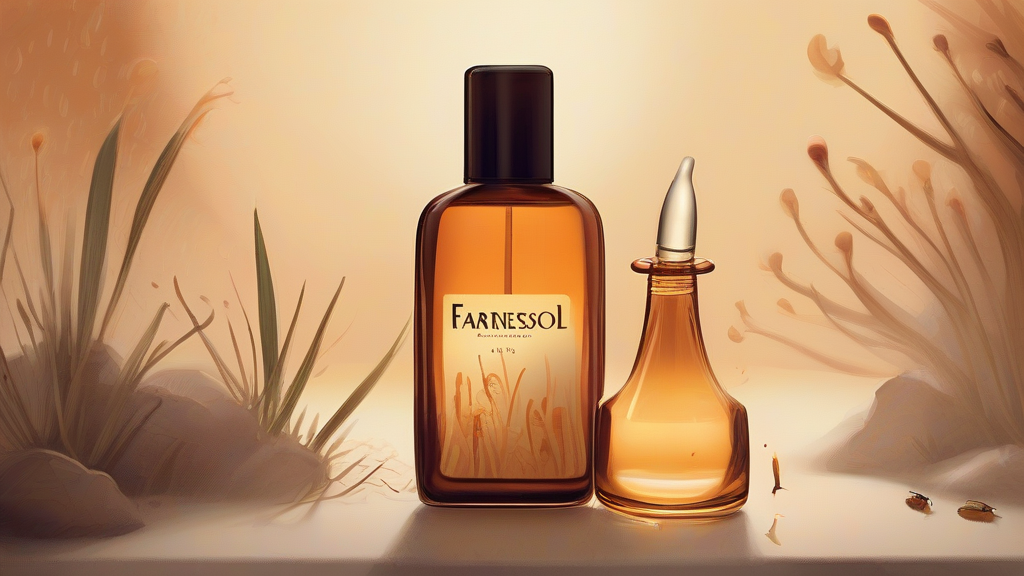
What does farnesol mean?
Farnesol is a naturally occurring organic compound belonging to the class of acyclic sesquiterpene alcohols, with the chemical formula C₁₅H₂₆O. It is found in the essential oils of numerous plants, including rose, neroli, citronella, and lily of the valley, where it contributes a gentle, warm, floral aroma. This has made farnesol a valued ingredient in perfumery and cosmetics, where it also serves as a deodorising agent and a natural preservative booster; within the European Union it must be declared on product labels because it can cause allergic reactions in sensitive individuals. Beyond fragrance, farnesol plays an important role in biochemistry as an intermediate in the mevalonate pathway, the metabolic route by which organisms synthesise cholesterol and other sterols. The name derives from the Farnese acacia, a plant whose scientific epithet honours the Italian Farnese family. Though unfamiliar to most speakers, farnesol is a precise, well-established term across chemistry and industry.
nounA naturally occurring acyclic sesquiterpene alcohol, formula C₁₅H₂₆O, found in the essential oils of many plants such as rose, neroli, and citronella. It is widely used in perfumery as a floral fragrance ingredient and is also an intermediate in the biosynthesis of cholesterol.
- A colourless, acyclic sesquiterpene alcohol (C₁₅H₂₆O) present in many flower essential oils, used in perfumery for its delicate floral scent.
- A biochemical intermediate in the mevalonate pathway, converted to farnesyl pyrophosphate on the way to sterols such as cholesterol.
"The perfumer noted that a trace of farnesol gave the blend its soft, powdery lily-of-the-valley character."
"Neroli oil owes much of its lingering sweetness to its high farnesol content."
"In the laboratory, the cells converted farnesyl pyrophosphate into farnesol before continuing along the sterol pathway."
Rarely pluralised; used only when referring to distinct stereoisomers or structural variants of the compound.
"The four farnesols differ in the geometry of their double bonds."
Named after the Farnese acacia — yet the tree's name actually honours a 16th-century Italian cardinal's family, making this perfume ingredient a fragrant footnote to Renaissance Rome.
Reviewed by Deb Chak, Editor. AI-assisted content curated by RJS Tech Solutions LLP.
Etymology of farnesol
Farnesol was so named because it was identified in the essential oil of the Farnese acacia, Acacia farnesiana, a plant named after the influential Italian Farnese family of the Renaissance. The element -ol reflects standard chemical nomenclature for alcohols, signalling the compound's hydroxyl group. Its sibling terms farnesene and farnesyl share the same root, all arising from late nineteenth- and early twentieth-century chemical literature.
Related word forms
How farnesol is actually used
Farnesol is a technical term used chiefly in chemistry, biochemistry, perfumery, and cosmetics labelling; it rarely appears in general conversation. In regulatory contexts it is listed among fragrance allergens that must be declared on cosmetic products in the EU.
Easily confused with farnesol
Farnesol is an alcohol with a hydroxyl group, whereas farnesene is its closely related hydrocarbon counterpart lacking that functional group.