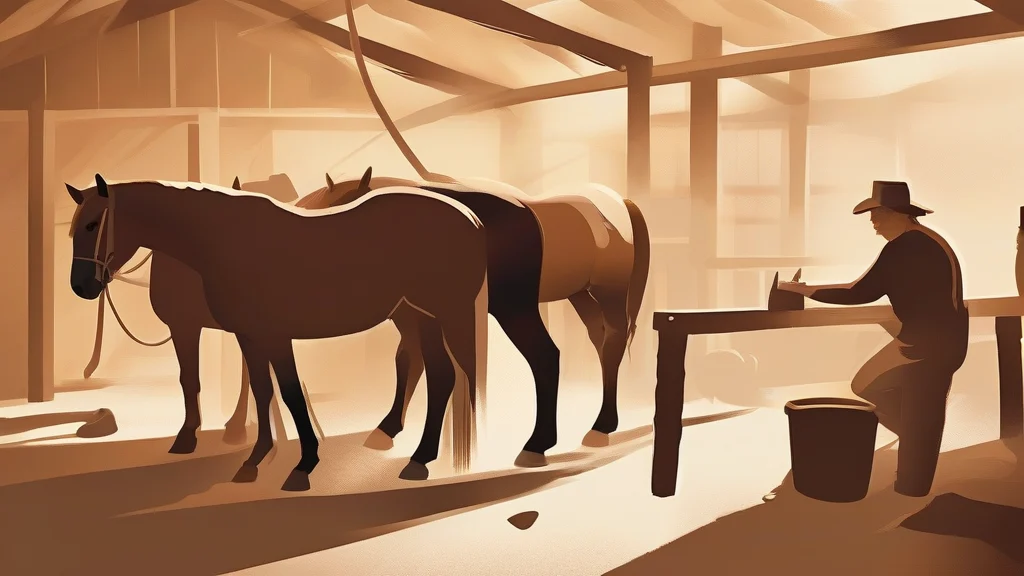
What does farriery mean?
Farriery is the craft of shoeing horses — the skilled work of shaping, fitting, and nailing horseshoes, together with the routine trimming and care of the hoof. A practitioner of this trade is called a farrier, and good farriery is widely regarded as essential to a horse's comfort, balance, and long-term soundness, since poorly fitted shoes can cause lameness. The word carries a technical, slightly traditional flavour, appearing most often in equestrian contexts, trade publications, and discussions of heritage crafts. Historically, farriery meant more than shoeing: until veterinary surgery emerged as a separate profession, the farrier was also the person owners called upon to treat a horse's ailments, and books of farriery were staples of any stable library. That older sense survives mainly in historical writing. The term derives ultimately from the Latin ferrum, iron, a reminder that the trade grew out of blacksmithing, even though modern farriers work alongside veterinarians rather than replacing them.
nounThe craft or practice of shoeing horses and caring for their hooves, including the treatment of minor ailments of the foot; historically, it also encompassed veterinary treatment of horses more broadly.
- The craft or trade of fitting horseshoes and trimming horses' hooves.
- (Historical) The branch of practice concerned with treating diseases and injuries of horses' feet, formerly extending to horse medicine generally.
"After decades in farriery, he could read a horse's gait at a glance."
"Good farriery keeps a working horse sound and comfortable."
"In the eighteenth century, treatises on farriery were standard reading for anyone who owned horses."
Rarely used; the noun is typically treated as uncountable when referring to the craft. A plural form may occasionally appear referring to multiple practices or establishments.
"Several farrieries in the county offer emergency shoeing services."
Farriery was once so essential that 'farrier' and 'veterinary surgeon' were effectively the same job — for centuries, if your horse went lame, the man with the hammer and nails was your doctor.
Reviewed by Deb Chak, Editor. AI-assisted content curated by RJS Tech Solutions LLP.
Etymology of farriery
Farriery derives from 'farrier', which came into English in the Middle Ages via Old French 'ferrier', from Latin 'ferrarius', meaning 'of iron' or 'blacksmith', itself formed on 'ferrum', iron. The term reflects the trade's origins in blacksmithing, since early practitioners both forged the shoes and fitted them. As the role specialized in equine hoof care, 'farriery' came to denote the craft itself, and its once-broader medical sense faded as formal veterinary science developed.
Related word forms
How farriery is actually used
The word has a somewhat formal, technical register, common in equestrian and trade literature. Its historical sense, covering general horse doctoring, is now largely obsolete since veterinary medicine became a distinct profession.
Easily confused with farriery
A farrier is the practitioner who shoes horses, while farriery is the craft or profession that such a person practices.