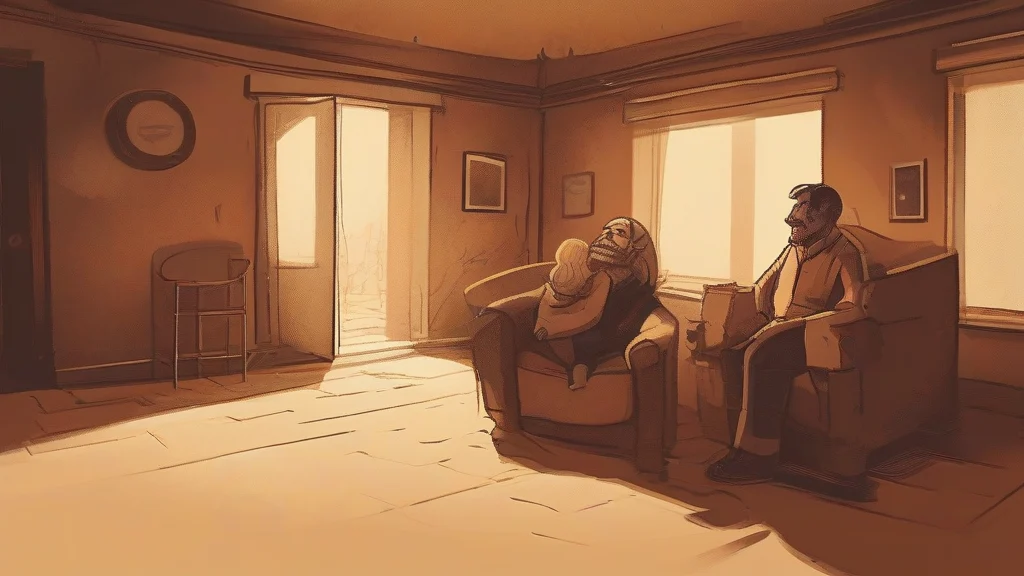
What does fathered mean?
'Fathered' is the past tense of the verb 'to father', meaning to have become the parent of a child — to have sired or begotten offspring. Its most common use is literal: reports might state that a man fathered three children, or that he fathered a child outside marriage. The word also has a well-established figurative sense, describing someone who originated or nurtured a field, invention, or movement, as when an innovator is said to have fathered modern chemistry. In its literal sense the word is neutral in polite contexts but can carry moral weight, particularly in discussions of paternity claims, absent parents, and child support. In its figurative sense it is complimentary, honouring founders and originators. Derived from Old English 'fæder', it belongs to an ancient Germanic root whose Latin cousin 'pater' gives us words like 'paternal' and 'paternity'. The form is standard across British and American English.
Past tense and past participle of 'father': to have become the father of a child by begetting offspring.
"He fathered two daughters and a son."
Almost always literal in modern use; occasionally used figuratively for founding or originating something.
To have originated, founded, or acted as the creative progenitor of something such as a movement, discipline, or invention.
"She is remembered as the scientist who fathered the field of molecular gastronomy."
Formal and honorific; more often expressed through nouns like 'founder' or 'pioneer' in contemporary writing.
The same man who 'fathered' a child may also have 'fathered' an idea — English lets one verb cover both the cradle and the creation.
Reviewed by Deb Chak, Editor. AI-assisted content curated by RJS Tech Solutions LLP.
Etymology of fathered
'Fathered' derives from 'father', which comes from Old English 'fæder', tracing back to Proto-Germanic '*fadēr'. This Germanic root and the Latin 'pater' (source of 'paternal', 'paternity', and 'patriarch') are widely held to descend from a common Proto-Indo-European ancestor, making 'father' and 'paternal' distant cousins rather than direct borrowings. The verb 'to father', meaning both to beget a child and figuratively to originate something, developed within medieval and early modern English usage, and its past tense 'fathered' has served both meanings ever since.
Related word forms
How fathered is actually used
In everyday use, 'fathered' almost always refers to biologically producing a child, often carrying connotations of responsibility — or its absence, especially in phrases about men who fathered children out of wedlock. The figurative sense ('fathered' a movement or field) is respectful and formal, typically applied to pioneers and originators.
Easily confused with fathered
'Fathomed' means understood or measured depth (from the noun 'fathom'), while 'fathered' means sired a child or originated something.